
Introduction
Bathroom cabinets rarely become messy because of limited space alone. They become chaotic when toiletries, skincare, and cleaning supplies share shelves without clear placement or visibility. A well-planned cabinet relies on layered storage, defined zones, and clear containers so daily items stay accessible instead of buried behind backups. When storage feels intentional, routines move faster and maintenance becomes easier. Whether you’re working with a compact vanity or deep shelving, structuring categories prevents clutter from rebuilding. If the room still feels tight after reorganizing cabinets, pairing this setup with ideas from 25 Creative Bathroom Storage Ideas to Maximize Space helps expand vertical storage while keeping the layout calm and functional.
1. Vertical Shelf Layering for Small Cabinet Spaces
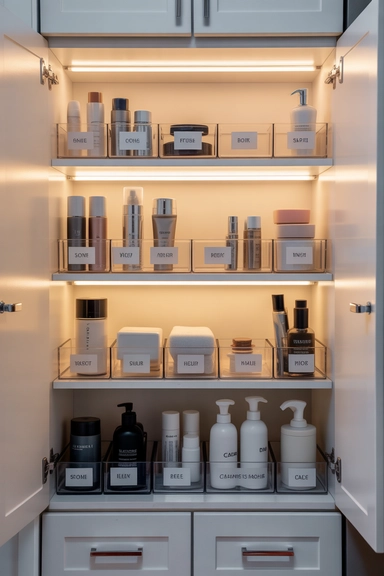
Small cabinets often feel cramped because everything sits at the same height and blocks visibility. Creating vertical layers with shelf risers allows items to stack without hiding each other. When toiletries, skincare, and daily-use products remain visible, cabinets stay easier to maintain and less likely to become cluttered again. Vertical layering turns one shelf into multiple usable levels and prevents items from being pushed to the back.
Place daily essentials on the lower level where they remain easy to reach. Move backups to upper tiers or the rear of the cabinet. Add clear containers for smaller items so they stay grouped and accessible. Structured layering ensures every product has a defined place and prevents overcrowding. Small cabinets feel significantly more functional when vertical space is used intentionally.
2. Zoned Under-Sink Storage That Keeps Categories Separate
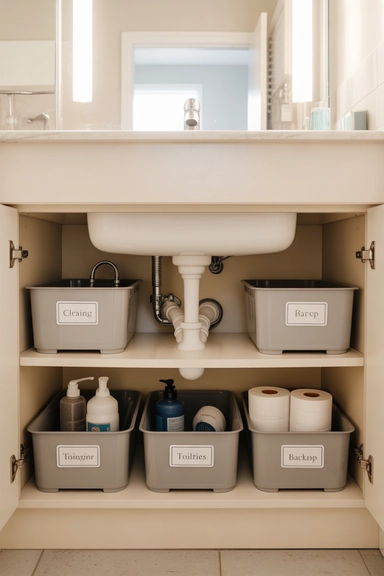
Under-sink cabinets become disorganized quickly when everything shares the same space. Dividing the area into zones for cleaning supplies, personal items, and backup products keeps storage manageable. Zoning prevents items from sliding into the back and makes daily routines more efficient. When each category has a dedicated section, cabinets remain easier to maintain over time.
Use stackable bins or sliding trays that fit around plumbing. Keep frequently used items toward the front and backups behind. Add labels to maintain consistency so items return to the correct section after use. Structured zoning ensures every category has a clear place and reduces clutter buildup. Organized under-sink storage supports long-term functionality.
3. Modular Inserts That Adapt to Changing Storage Needs
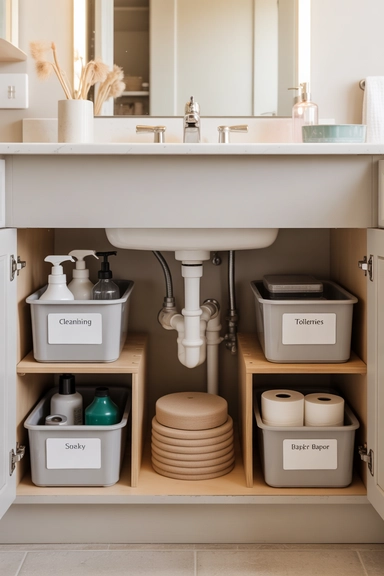
Cabinet storage works best when it can adjust to different product sizes and routines. Modular inserts create flexible compartments for skincare, grooming tools, and small accessories. Adjustable dividers prevent items from mixing together and help maintain structure. When storage adapts easily, cabinets stay organized longer and require less maintenance.
Place taller bottles in deeper sections and smaller items in shallow compartments. Use drawer organizers to keep accessories contained and visible. Matching container sizes maintain visual order and prevent clutter from spreading across shelves. Flexible layouts ensure cabinets remain functional even as products change. Adaptable storage keeps cabinets efficient without constant rearranging.
4. Pull-Out Solutions for Deep Cabinet Visibility
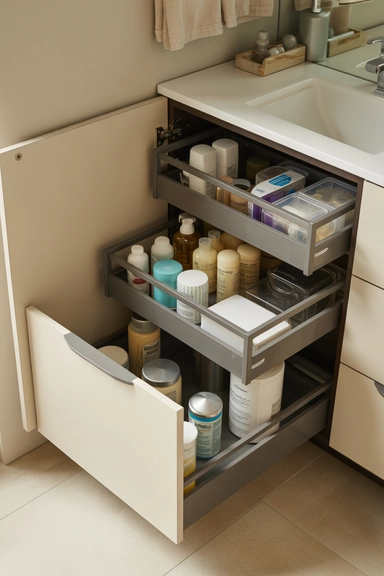
Deep cabinets often hide items behind larger bottles, making them difficult to reach. Installing pull-out trays or sliding bins improves visibility and accessibility. When products move forward easily, cabinets remain easier to maintain and less likely to accumulate forgotten items. Pull-out storage ensures every product can be reached without rearranging the entire shelf.
Keep daily essentials in the front section and store backups toward the back. Add clear containers inside sliding trays to separate smaller products. Structured depth allows items to remain visible and prevents clutter from forming. Deep cabinets become far more practical when access is simple and consistent.
5. Coordinating Cabinets and Drawers as One System
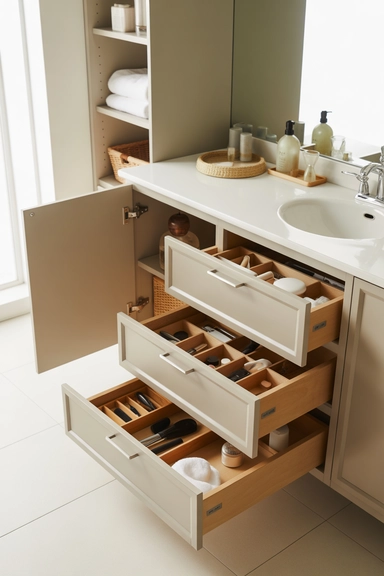
Cabinets and drawers work best when they support each other instead of functioning separately. Assign drawers to smaller items like cosmetics and grooming tools, while cabinets hold bulkier supplies and backups. This separation keeps toiletries, accessories, and towels from mixing together. Coordinated storage ensures everything has a clear home and stays easy to locate.
Use drawer organizers to divide smaller products into sections. Keep extra paper goods and cleaning items in cabinet zones. Maintaining consistent placement across both spaces prevents clutter from spreading. When cabinets and drawers operate as one system, storage remains efficient and easier to maintain long term.
You May Also Like
If you’re organizing your bathroom cabinets, these guides can help you build a complete storage system across the rest of the space:
- 25 Creative Bathroom Storage Ideas to Maximize Space
- 21 Over the Toilet Storage Ideas That Actually Maximize Small Bathrooms
- 21 Cleaning Supplies Organization Ideas That Actually Work
6. Clear Container Systems That Keep Products Visible
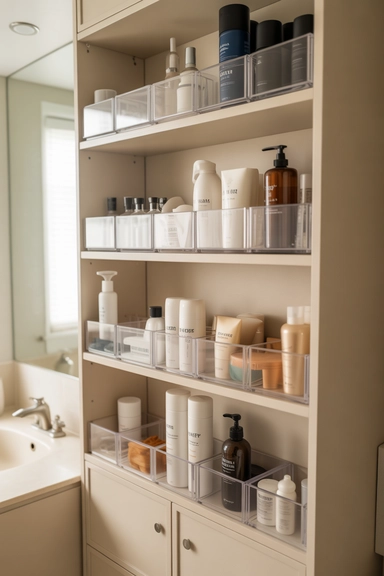
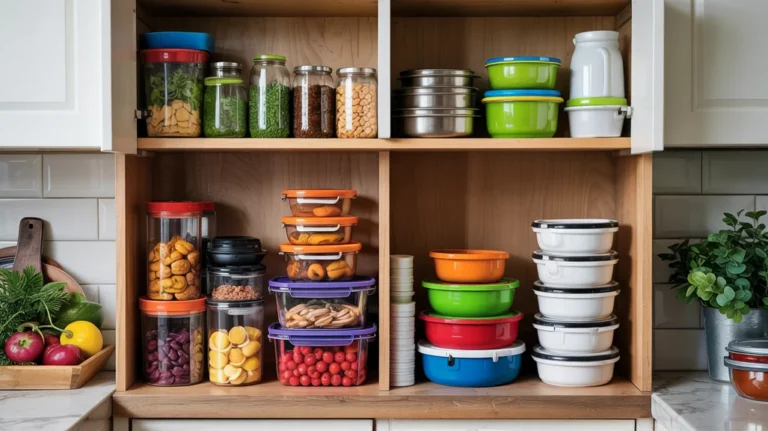
Cabinets stay organized longer when items remain visible instead of stacked behind each other. Using clear containers allows you to see toiletries, skincare, and grooming products without digging through layers. Visibility prevents duplicates from building up and makes daily routines faster. When products are easy to spot, they’re also easier to return to their proper place after use.
Choose containers that fit the shelf depth and group similar items together. Place frequently used products at the front and backups toward the back. Keep container sizes consistent so the cabinet maintains visual order. Clear storage systems reduce clutter because each item has a defined section and can be located quickly.
7. Basket Storage for Flexible Cabinet Organization
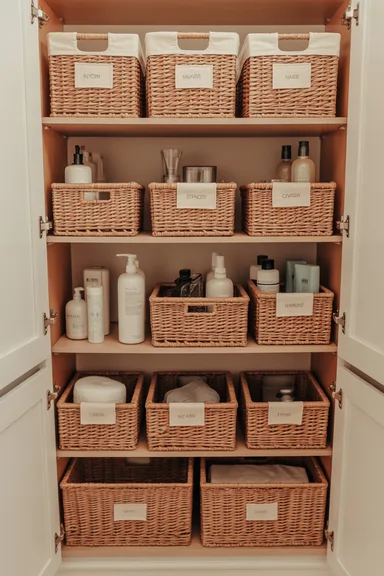
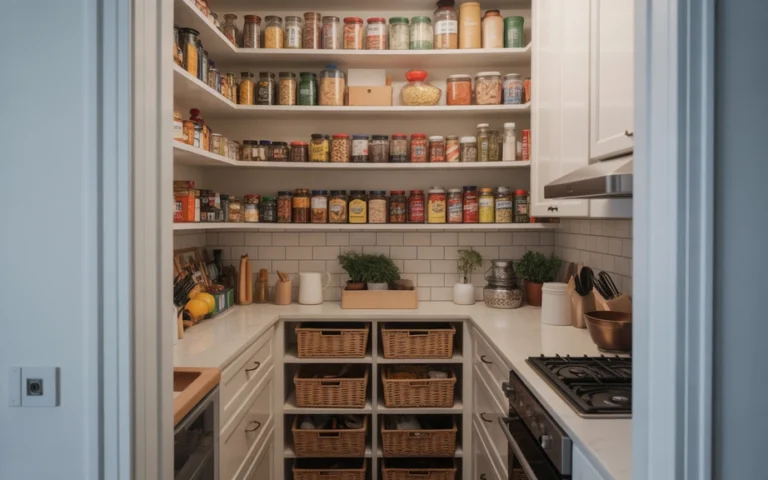
Baskets provide flexible storage that adapts to changing routines. Using baskets inside cabinets keeps categories contained while allowing quick adjustments when product collections change. Grouping toiletries, hair products, and extra supplies into separate baskets ensures items don’t mix together or spread across shelves.
Place baskets by frequency of use so daily items stay accessible. Use smaller baskets for accessories and larger ones for bulkier products. Add simple labels to maintain consistency. Basket storage works well because it can shift easily while still maintaining structure. Cabinets remain easier to maintain when items stay grouped and contained.
8. Dedicated Zones for Daily Essentials
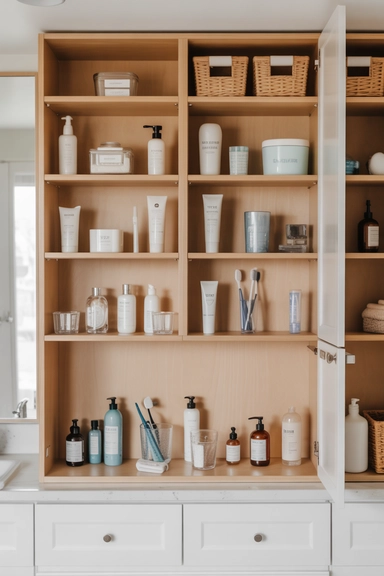
Cabinets feel more functional when daily-use items have a designated space. Creating a front section for daily essentials like skincare, toothbrushes, and grooming tools keeps routines efficient. When frequently used items stay accessible, cabinets remain organized and require less effort to maintain.
Place everyday products at eye level or within easy reach. Move backups to higher shelves or the rear of the cabinet. Keep categories separated so items don’t overlap. Dedicated zones prevent clutter from spreading and ensure each product returns to the same place after use. Structured placement keeps cabinets manageable.
9. Shelf Dividers for Structured Cabinet Layers
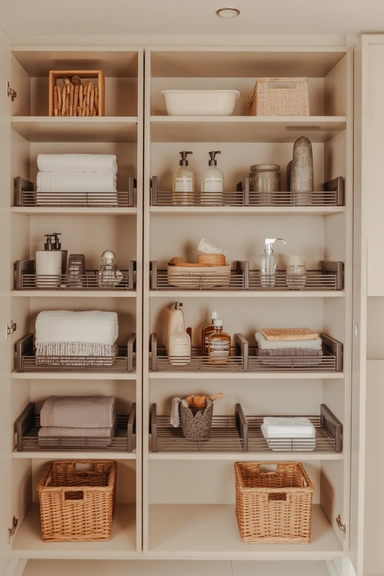
Shelf dividers help separate categories without requiring drawers. Installing dividers creates clear sections for toiletries, towels, and backup supplies. Divided shelves prevent products from leaning into each other and make it easier to keep items visible. Structured layers ensure cabinets remain functional and accessible.
Use adjustable dividers that match the cabinet width. Place frequently used items in front sections and backups behind. Add trays for smaller items so they stay contained. Divided shelving keeps categories clear and prevents clutter from rebuilding. Cabinets remain easier to maintain when each section has a defined purpose.
10. Labeling Systems That Maintain Long-Term Order
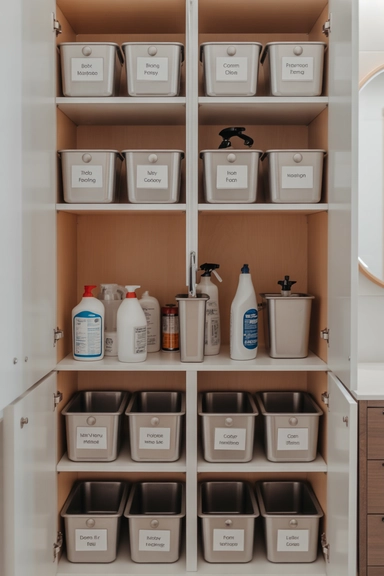
Labels reinforce structure and make it easier to maintain organized cabinets. When bins and containers are labeled clearly, items return to their correct place after use. Labeling prevents confusion in shared spaces and helps maintain consistency across storage zones.
Use simple, readable labels for categories like toiletries, cleaning items, and backups. Place labels on the front of bins or shelves for quick identification. Consistent labeling reduces clutter because each item has a defined destination. Cabinets remain easier to maintain when categories stay visible and structured.
11. Sliding Trays That Improve Access in Deep Cabinets
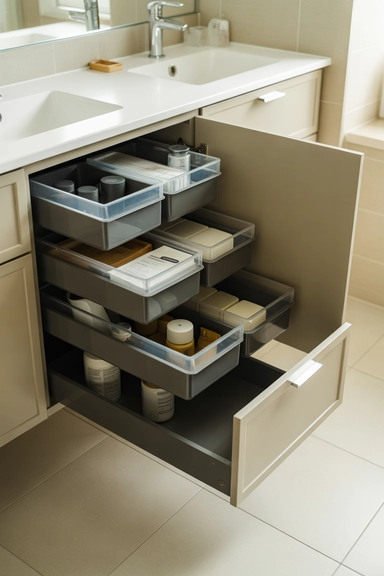
Deep cabinets waste space when products sit behind one another and become hard to reach. Installing sliding trays or pull-out bins brings items forward so everything remains visible and accessible. When toiletries, grooming tools, and backup supplies move easily, cabinets stay easier to maintain and products are less likely to be forgotten. Better access reduces clutter buildup and improves daily routines.
Choose trays that fit the cabinet width and allow full extension. Keep daily essentials in the front section and store backups toward the rear. Use clear containers inside trays to separate smaller items so they don’t shift when the tray moves. Structured access ensures deep cabinets remain functional and prevents clutter from accumulating in hidden areas.
12. Acrylic Drawer Systems for Smaller Items
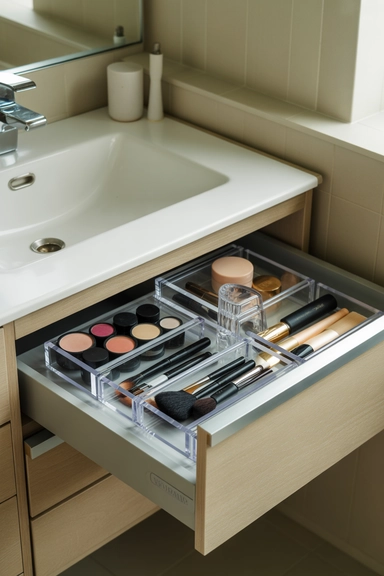
Small products create clutter quickly when stored loosely. Using acrylic drawer systems inside cabinets keeps items like cosmetics, dental products, and accessories contained and visible. Clear acrylic compartments maintain visibility and prevent smaller items from spreading across shelves. When everything has a defined space, cabinets remain easier to maintain.
Divide drawers into sections for different categories and keep similar items together. Place frequently used products in front compartments and backups behind. Consistent sizing helps maintain visual order and keeps products easy to locate. Acrylic systems support long-term organization by making smaller items easier to store and return after use.
13. Tiered Storage for Tall Bottles and Containers
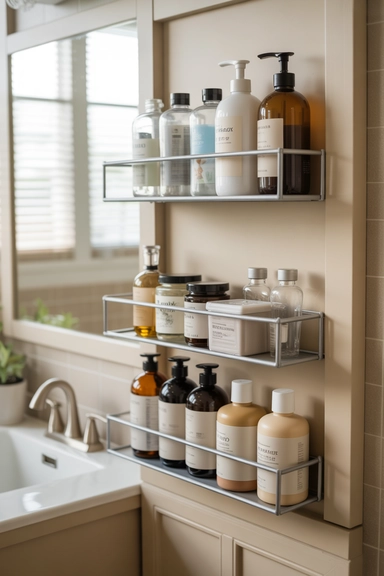
Tall bottles often block smaller items behind them, making cabinets difficult to manage. Tiered storage creates staggered levels so each item remains visible and accessible. When products are layered intentionally, cabinets stay functional and easier to maintain. Tiered systems prevent items from stacking directly on top of each other.
Place taller bottles at the back of the tiered shelf and smaller items in front. Use clear containers for loose items so they remain grouped. Keep frequently used products on the lowest level for easy access. Structured tiers ensure cabinets remain organized and prevent clutter from forming behind larger items.
14. Cabinet Door Storage for Extra Capacity
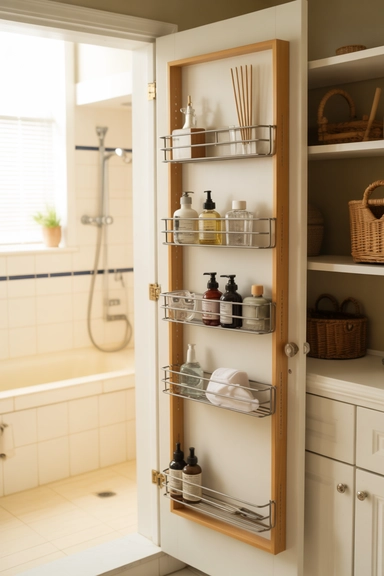
Cabinet doors provide additional storage space when used intentionally. Installing small racks or containers on the inside of doors creates extra room for lightweight items like brushes, wipes, or smaller bottles. This prevents shelves from becoming overcrowded and keeps frequently used items within reach.
Use slim organizers that won’t interfere with shelf contents when the door closes. Store lightweight items only to avoid strain on hinges. Keep categories consistent so items remain easy to locate. Door storage expands capacity without changing cabinet size and helps maintain overall organization.
15. Rotating Storage for Hard-to-Reach Corners
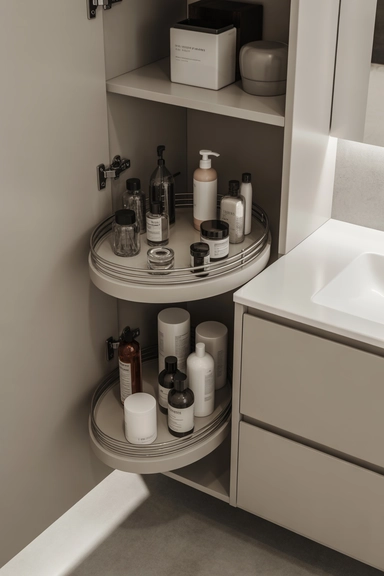
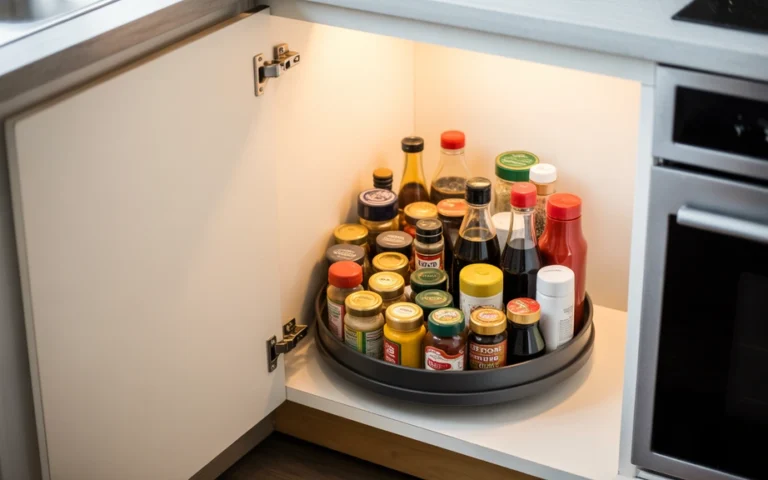
Corner sections inside cabinets often become wasted space when items are difficult to access. Rotating trays or turntables allow products to move forward easily so nothing gets hidden in the back. When items remain visible, cabinets stay easier to maintain and products are less likely to be forgotten.
Place smaller toiletries and frequently used products on rotating trays. Keep backups behind or on higher shelves. Use consistent containers to maintain visual order. Rotating storage improves accessibility and ensures cabinets remain functional even in awkward layouts.
16. Daily-Use Front Zones That Keep Cabinets Functional
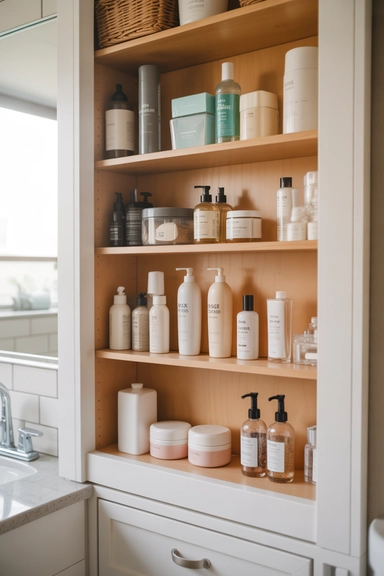
Cabinets stay organized longer when daily essentials have a predictable front-zone location instead of being scattered across shelves. When items like toiletries, skincare, and grooming tools remain in one consistent section, routines become faster and cabinets are easier to reset after use. A front-zone system prevents frequently used items from mixing with backups and keeps shelves from becoming crowded.
Create a dedicated front row for everyday products and reserve deeper sections for refills or rarely used items. Use shallow clear containers so smaller items remain visible and easy to grab. Keeping daily-use zones consistent ensures items return to the same place after use. This structure reduces clutter buildup and keeps cabinets functional over time.
17. Stacked Bin Systems for Vertical Cabinet Depth
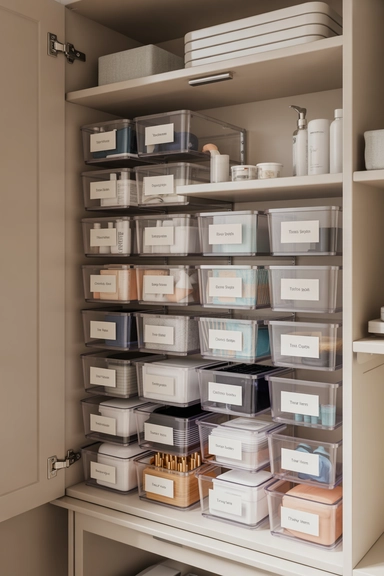
Vertical stacking allows cabinets to hold more without feeling overcrowded. Using stackable bins creates multiple storage levels so toiletries, extra paper goods, and accessories remain visible. Stacking prevents items from being pushed behind larger products and helps maintain order across deeper shelves. When vertical depth is structured, cabinets stay manageable and accessible.
Choose stackable bins that fit the cabinet height and allow easy removal. Place frequently used items in lower bins and backups above. Use labeled bins to maintain category separation and ensure items return to the correct place. Structured stacking keeps cabinets efficient and prevents clutter from forming.
More Bathroom Organization Ideas
If you’re improving cabinet storage, these guides will help you organize the rest of the bathroom so everything works together:
- 23 Entryway Organization Ideas That Instantly Reduce Clutter
- 21 Under Sink Kitchen Storage Ideas That Actually Work
- bathroom cabinet organization ideas
18. Shared Cabinet Systems for Multi-User Bathrooms
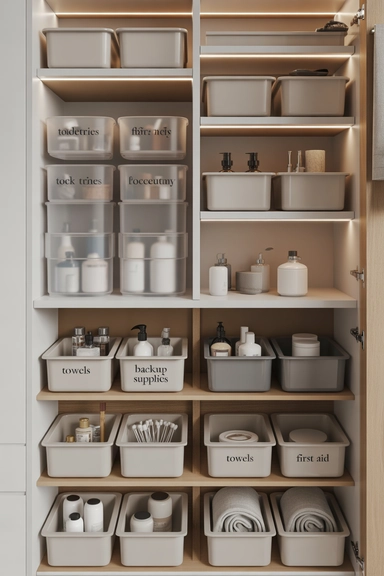
Shared cabinets require clear separation to prevent products from mixing together. Assigning dedicated zones for each person’s toiletries, grooming tools, and accessories keeps cabinets organized and routines efficient. When storage is divided intentionally, cabinets remain easier to maintain and less likely to become overcrowded.
Use labeled bins or containers for each person and keep shared items in central sections. Place frequently used items at accessible heights for all users. Maintaining defined sections ensures products return to the correct place after use. Structured shared storage prevents clutter from spreading and supports long-term organization.
19. Contained Makeup and Hair Tool Storage
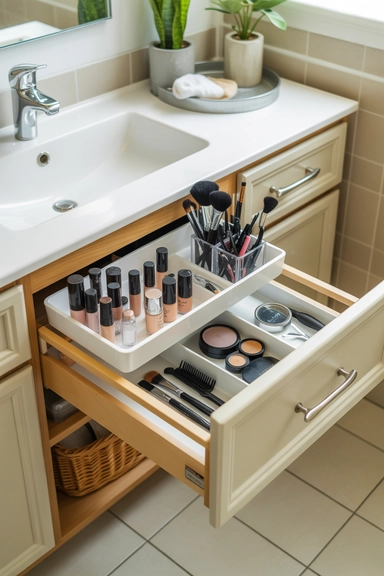
Makeup and styling tools create clutter quickly without defined containment. Using drawer organizers, trays, and bins keeps brushes, palettes, and accessories separated and easy to find. When these items remain grouped, cabinets stay organized and daily routines move faster. Structured containment prevents smaller items from spreading across shelves.
Store heat tools in designated sections and keep cosmetics inside shallow trays. Use clear containers so products remain visible and accessible. Place frequently used items toward the front and backups behind. Contained storage ensures grooming products remain organized and prevents cabinets from becoming overcrowded.
20. Clear System Resets That Maintain Order Weekly
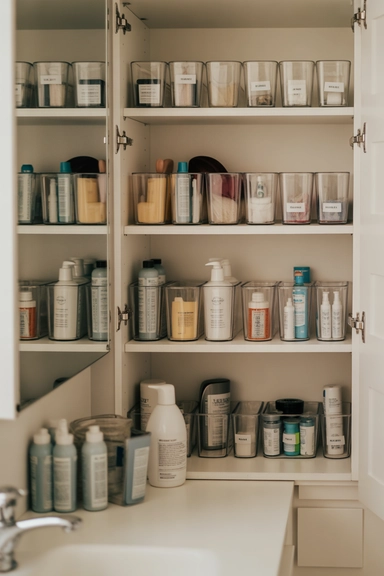
Even the best cabinet system needs occasional resets to maintain structure. Weekly checks help ensure toiletries, cleaning supplies, and accessories remain in their assigned zones. When items drift out of place, quick resets prevent clutter from rebuilding. Maintenance keeps cabinets functional without requiring major reorganizing.
Return misplaced items to their labeled sections and remove empty containers. Wipe shelves and adjust bins if needed. Maintaining structure ensures cabinets remain easy to use and prevents products from piling up. Regular resets support long-term organization and keep storage systems efficient.
21. Long-Term Placement Systems That Prevent Clutter Return
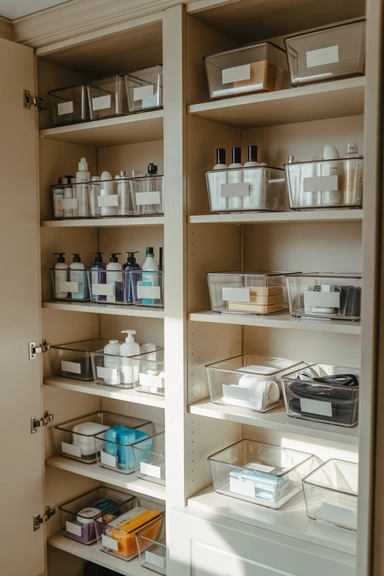
A cabinet stays organized when placement remains consistent over time. Creating permanent zones for toiletries, backups, and accessories ensures products always return to the same section. Consistency prevents clutter from rebuilding and keeps storage manageable. When placement becomes routine, cabinets remain functional without frequent adjustments.
Keep frequently used items in accessible sections and store extras separately. Use labeled bins and clear containers to reinforce structure. Maintaining consistent placement ensures cabinets stay organized long term and continue supporting daily routines without becoming chaotic again.
Conclusion
A well-organized cabinet depends on visibility, defined zones, and consistent placement rather than size alone. When toiletries, grooming tools, and backups are stored in layered sections with clear containers and structured zones, cabinets remain easier to maintain and faster to use. Creating daily-use areas, vertical stacking, and flexible storage systems ensures everything stays accessible. With consistent resets and clear placement, cabinet organization becomes sustainable rather than temporary, helping bathrooms feel calmer, more efficient, and easier to manage every day.