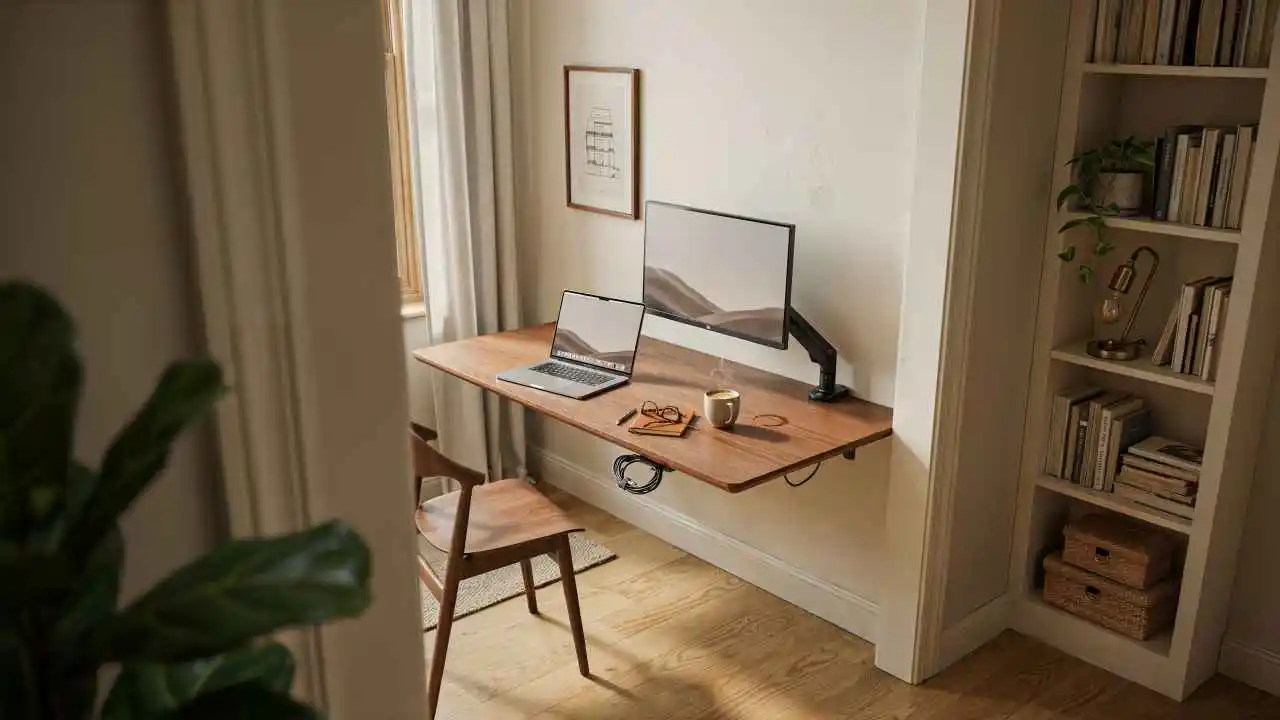
Your desk consumes half the room. A chair pulled out blocks the doorway. Your monitor sits inches from your face because there’s nowhere else for it to go. Small rooms force impossible compromises—until you realize the desk itself isn’t the problem.
Most people buy a smaller desk and wonder why the room still feels suffocating. The issue isn’t the furniture—it’s the setup. Cables tangle under your feet. Your chair has nowhere to roll back without hitting something.
This article covers 19 desk setups that actually fit small rooms. Skipping small-apartment-organizing-ideas is exactly how people end up moving to a bigger place.
The Narrow Desk That Runs the Length of One Wall
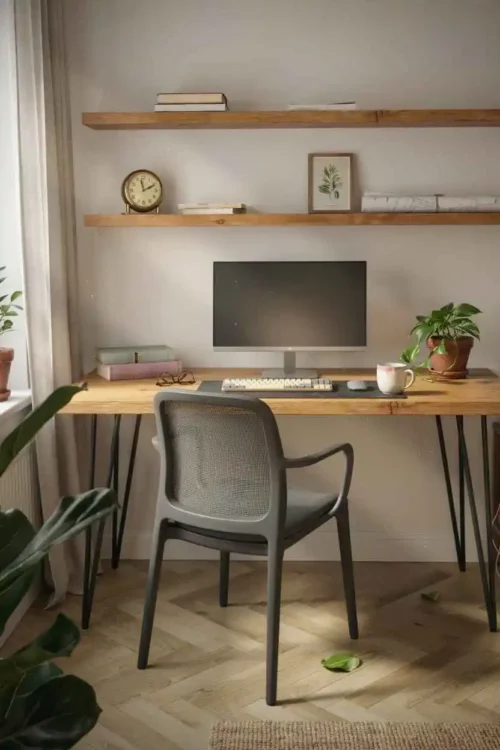
A slim desk stretches along the longest available wall instead of jutting into the room. Depth stays minimal—24 to 30 inches maximum—but the length gives you actual workspace. Your chair stays tucked underneath when not in use.
A long, shallow desk works better than a square one in small spaces because it follows the natural lines of the room. Your monitor, keyboard, and one small project fit comfortably. Everything else lives in wall-mounted shelving above or beside the desk.
The risk: this setup only works if you maintain ruthless minimalism. A small surface fills instantly with papers, cables, and forgotten coffee cups.
The Desk That Fits Under a Window
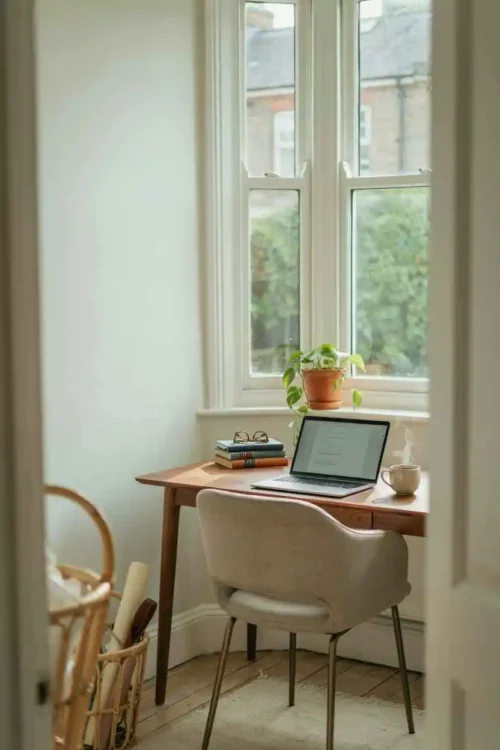
Your desk sits directly beneath a window, using wall space that’s technically wasted otherwise. Natural light falls on your work without creating monitor glare. The window becomes your visual anchor instead of a blank wall stealing your attention.
A window desk solves two problems at once: you gain light and fill dead space. Your eyes rest on the outdoors during mental breaks instead of blank drywall. The sill holds a small plant or a single item, creating visual interest without clutter.
This setup fails if the window faces a busy street or a neighbor’s wall. You need a view worth looking at, or you’re just staring at chaos during breaks.
The Floating Desk Mounted to the Wall
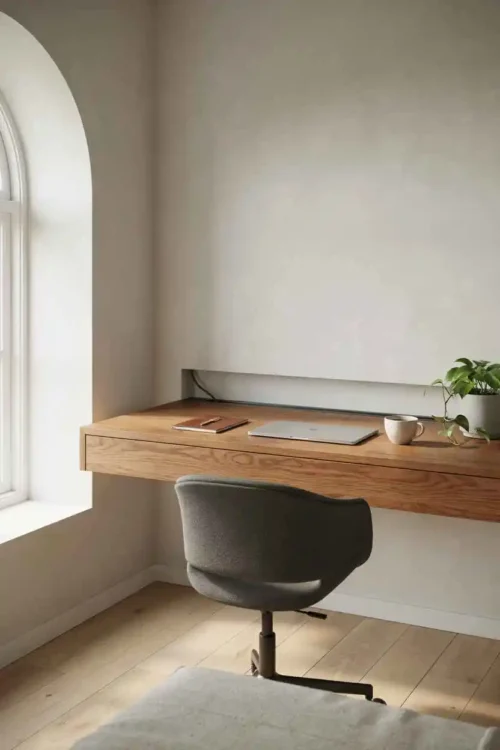
A desk mounts directly to the wall brackets instead of sitting on legs. This creates the illusion of more floor space because you see beneath it. Your chair slides underneath, and the room feels less crowded even though the desk exists.
Wall-mounted desks save precious floor real estate. You can roll your chair completely under the desk and the room opens up. The negative space underneath creates visual lightness that leg-based desks can’t match.
The downside: wall mounting requires studs or serious anchors. Cheap wall mounts wobble, and a wobbly desk destroys focus completely.
The Corner Desk That Wraps Two Walls
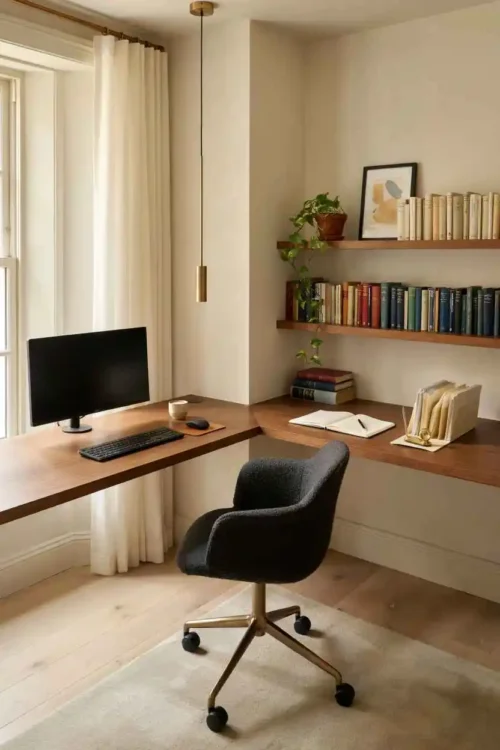
An L-shaped desk fits snugly into a corner, using two walls that would otherwise serve no purpose. You gain more surface area than a single-wall desk without taking up more floor space. The corner becomes functional instead of dead.
A corner desk turns the most awkward part of any small room into your primary workspace. Your monitor sits at one end while paperwork or a second task lives on the other. Your chair pivots between zones instead of forcing you to stand up.
This only works if your corner has at least 48 inches on each side. Anything shorter feels cramped, and your elbows hit the walls every time you turn.
The Fold-Down Desk Attached to the Wall
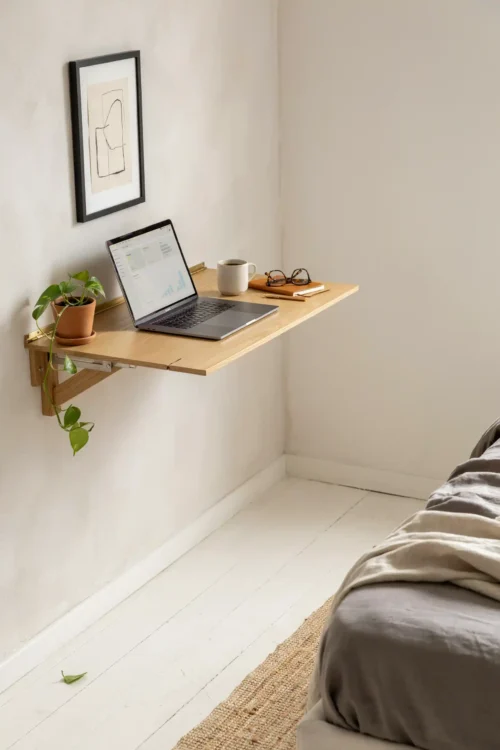
A desk folds down from the wall when needed and disappears when you’re done. The room transforms from workspace to living space within seconds. Your office exists only when you’re actively using it.
Fold-down desks suit rooms that serve multiple functions. A bedroom becomes a bedroom again at night. A guest room actually hosts guests because the desk vanishes. The wall returns to being a wall.
The trade-off: you can’t leave work in progress. Every session ends with clearing the surface completely, which suits some workflows but kills others.
The Desk Built Into a Closet
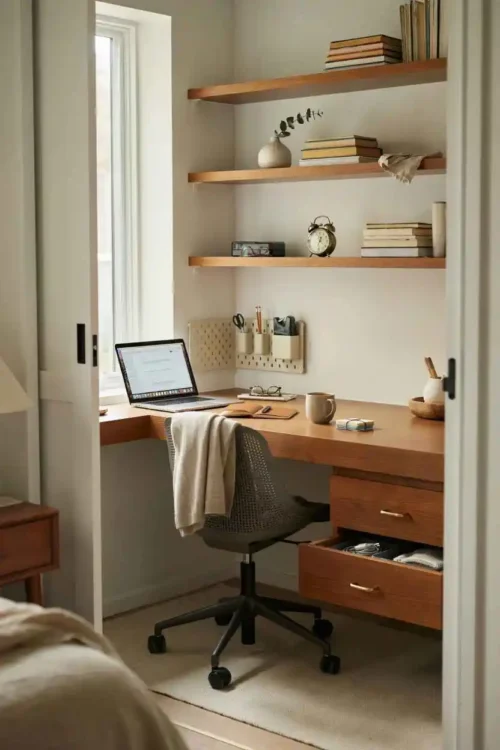
Your desk lives inside a closet, transforming an unused storage space into a dedicated office. Closing the doors hides the workspace entirely when you’re not working. The walls of the closet create natural acoustic dampening.
A closet desk creates instant separation between work and home life. You step inside to work and close the doors when you’re done. The contained space forces minimalism because you can’t accumulate beyond what fits.
Closet offices fail for anyone claustrophobic. The walls feel close after a few hours, and the lack of natural light affects mood by mid-afternoon.
The Desk With a Vertical Shelving Tower
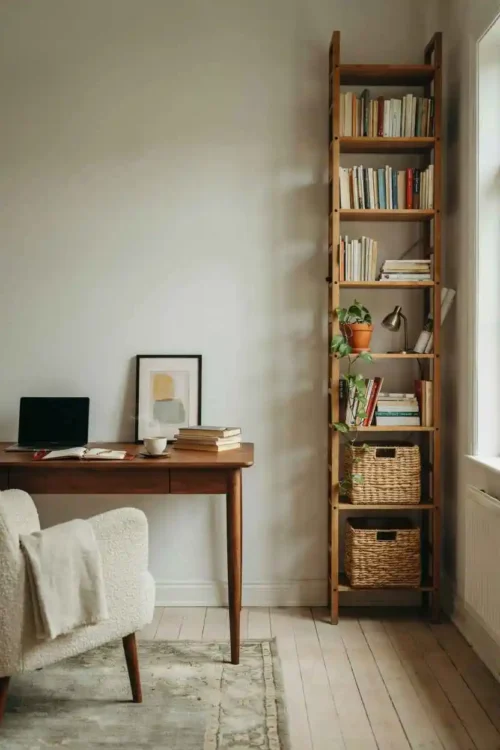
A tall, narrow shelving unit sits beside your desk instead of behind it. Books, supplies, and reference materials stack vertically rather than spreading horizontally. The floor footprint stays small while storage capacity stays large.
Vertical storage solves the small-room storage problem without eating wall depth. A 12-inch deep tower holds what a 24-inch deep bookcase would, freeing up critical floor space. Your supplies live within arm’s reach without sprawling.
The shelving has to stay organized or it becomes a visual chaos magnet. Open shelving means everything you own is on display, so curation matters more than capacity. if you are keen to vertical shelving we have a detailed guide on it you won’t want to miss.
The Desk With Pegboard Above
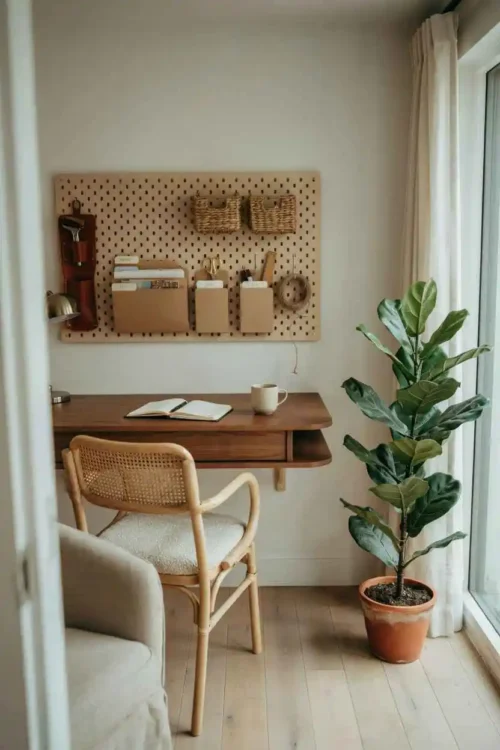
A pegboard mounts on the wall directly above the desk, holding tools, supplies, and small storage bins. The wall becomes functional storage instead of decorative space. Your desk surface stays clear because supplies hang vertically.
Pegboards adapt to changing needs without requiring new furniture. You move hooks and shelves as your workflow shifts. The vertical organization keeps supplies visible, which means you actually use them instead of forgetting they exist in drawers.
A messy pegboard looks worse than no pegboard. The system requires visual discipline—random hanging items create chaos faster than no organization at all.
The Desk That Doubles as a Nightstand
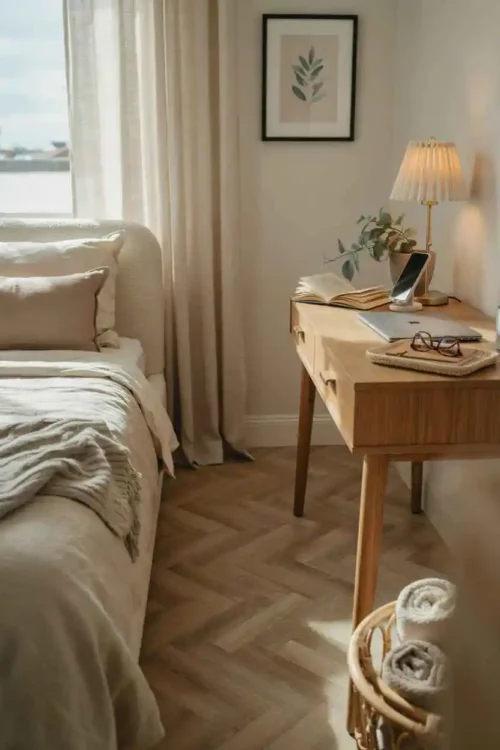
In bedrooms that serve as offices, a desk positioned beside the bed functions as both workspace and nightstand. One piece of furniture handles two needs. The room loses no square footage to dual-purpose design.
Combined furniture saves serious space in studio apartments or small bedrooms. The desk holds a lamp, your phone charger, and a book at night. During the day, it transitions to a workspace without requiring reorganization.
This blurs the line between work and rest in ways that affect sleep. Some people thrive with this setup. Others lose the ability to disconnect, which destroys both productivity and sleep quality.
The Rolling Desk on Casters
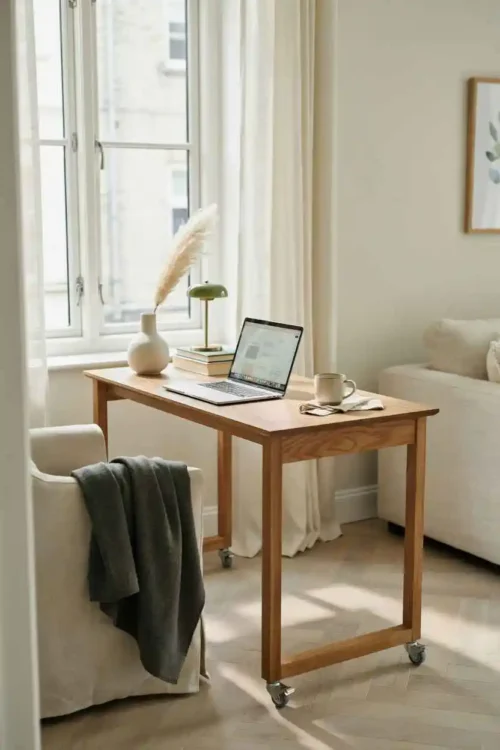
A small desk on locking wheels moves wherever you need it. Roll it into the corner when not working, pull it to the window for natural light, push it against the bed when guests arrive. Flexibility solves the small-room problem.
Mobile desks adapt to your actual life instead of forcing your life around the desk. You position it differently for different tasks. The wheels lock in place so the desk doesn’t drift while you work.
Quality matters here. Cheap casters stick, scratch floors, and lock unreliably. A wobbly rolling desk is worse than a fixed one.
The Desk Tucked Behind a Couch
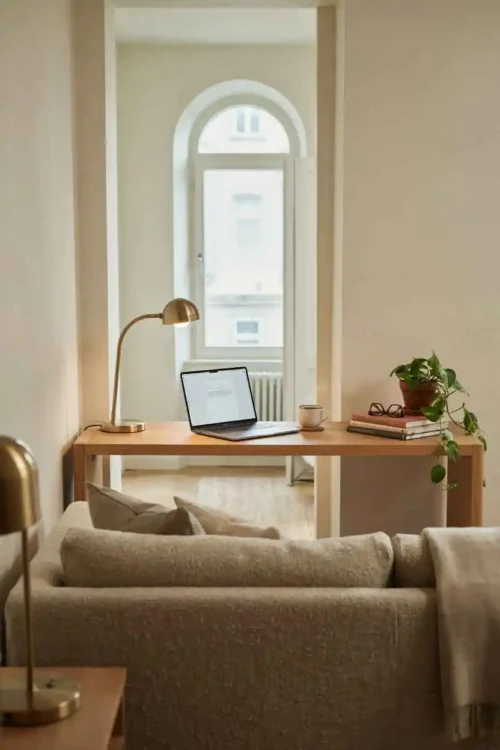
In open-concept small spaces, a narrow desk slides behind the back of a couch. The couch back creates a visual divider between living and working zones. The desk uses space that would otherwise sit empty.
Behind-couch desks work in studio apartments where every square foot serves a purpose. You face away from the living area, which creates focus during work hours. The couch back acts as a built-in privacy screen.
This setup demands a thin desk—usually 18 inches deep or less. Standard desks are too bulky and ruin the visual flow of the room.
The Desk With Drawers Replacing Legs
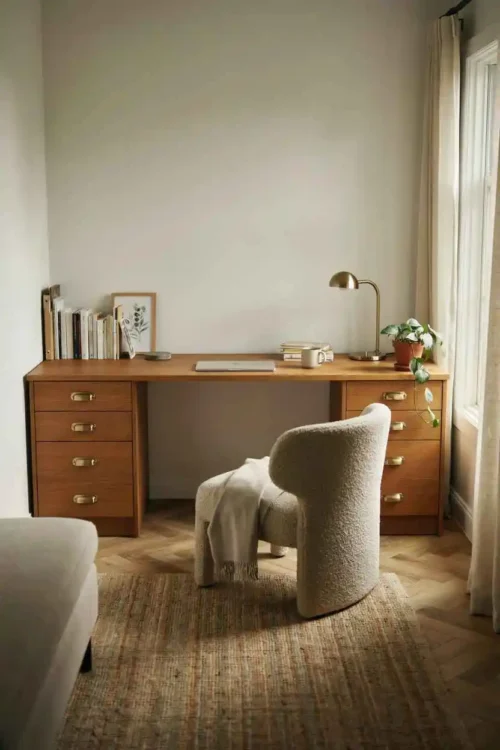
Instead of legs, the desk sits on two small drawer units. Storage hides exactly where wasted space usually exists. You gain a desk and dresser combined into one footprint.
Drawer-based desks maximize every cubic inch. The space under the surface holds supplies, files, or small office equipment. Nothing sprawls because storage is built into the structure itself.
Heavier drawer desks can’t move easily. Once positioned, they stay. Make sure you love the spot before committing.
The Desk With a Pull-Out Keyboard Tray
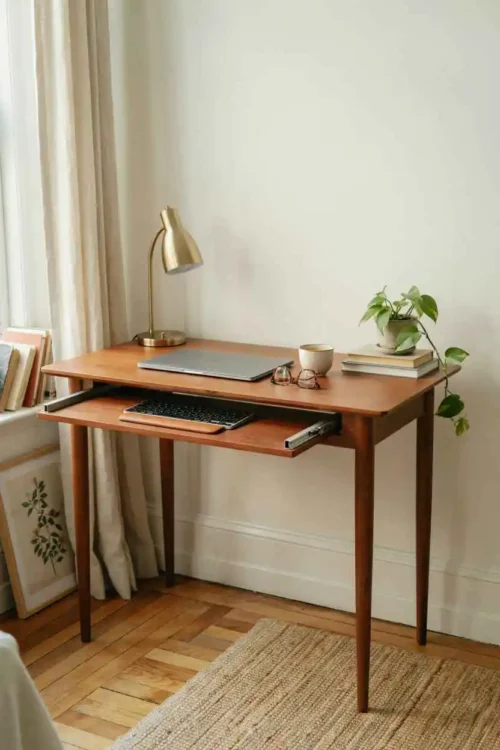
A keyboard tray slides out beneath the desk surface, recovering the depth that a keyboard normally consumes. Your desktop stays clear for actual work surfaces. Your wrists drop to a more ergonomic angle naturally.
Pull-out keyboard trays expand functional desk depth without adding physical depth. You gain six inches of usable surface above the keyboard. The tray hides when you’re not working, keeping the room visually clean.
Cheap trays sag and stick. Spend on a quality slide mechanism, or the tray frustrates more than it helps.
The Desk With a Mounted Monitor Arm
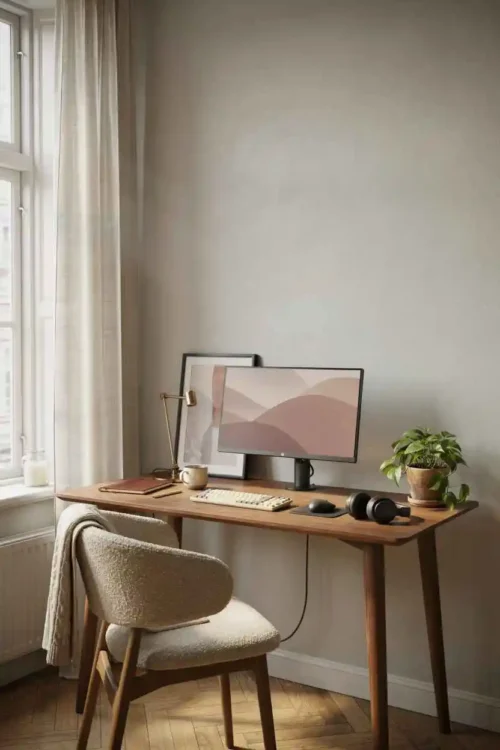
Your monitor floats above the desk on an articulating arm instead of sitting on a stand. The surface beneath becomes usable workspace. The arm adjusts height and angle for proper ergonomics without consuming desk depth.
Monitor arms transform small desks into productive workspaces. Six inches of recovered desk depth makes the difference between cramped and functional. Cables run through the arm instead of tangling on the surface.
Mount the arm to a sturdy desk edge. Particle board desks crack under the weight, and you’ll lose both desk and monitor.
The Desk That Slides Into a Niche or Alcove
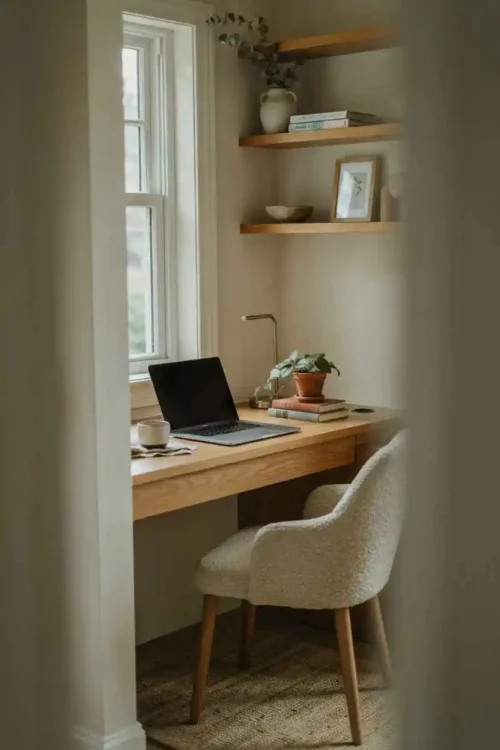
A small desk fits perfectly into an architectural niche, alcove, or recessed area in the wall. The desk uses space that’s already there but typically ignored. The walls of the niche create natural boundaries around your workspace.
Niche desks turn architectural quirks into functional zones. A 30-inch recess between two walls becomes a perfect micro office. The contained space focuses attention because your peripheral vision stops at the walls.
Measure carefully before buying. Niches rarely match standard desk dimensions, so custom or modified furniture often becomes necessary.
The Standing Desk Converter on a Small Surface
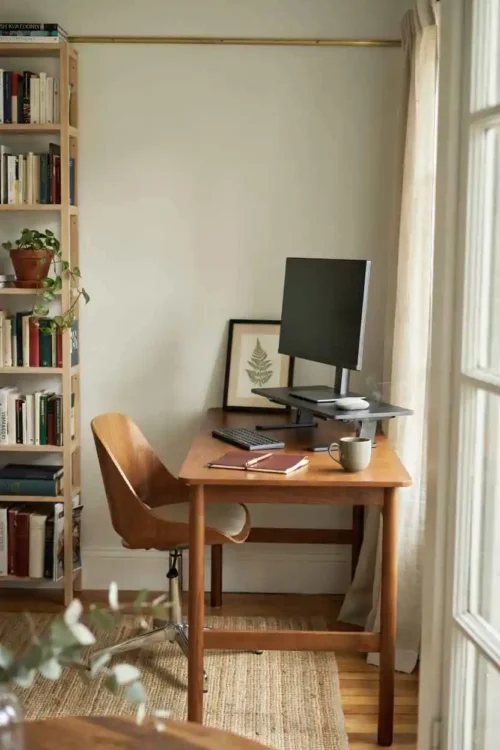
Instead of a full standing desk, a converter sits on top of a regular small desk. It raises your monitor and keyboard when you want to stand. The base desk stays small while functionality expands.
Converters offer flexibility without committing to a large standing desk. You stand when you need energy and sit when you need focus. The unit lowers back down completely when not in use.
Some converters wobble at full extension, especially cheaper models. Test stability before buying, or you’ll feel seasick by mid-morning.
The Desk With Cable Management Built In
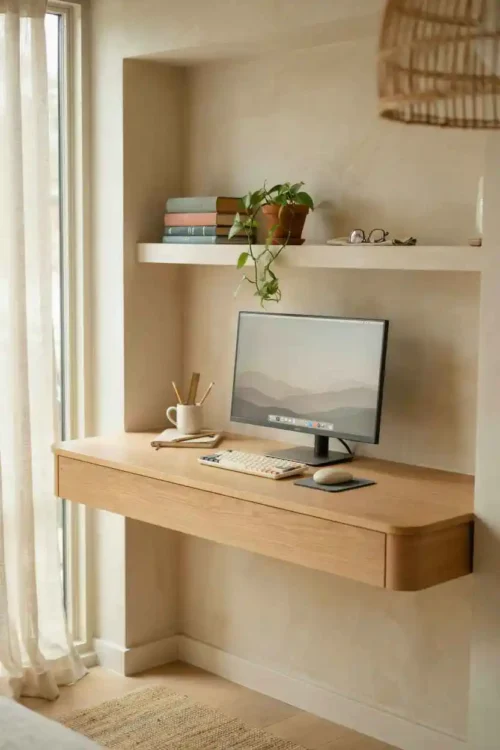
A desk with internal cable channels or trays keeps cords completely hidden. No cables snake across the floor or pool behind the desk. The visual cleanliness makes a small room feel less chaotic.
Hidden cable management transforms how a small room reads visually. Exposed cables make any space look cluttered, especially small ones where everything is visible. Built-in management removes the visual noise entirely.
Retrofit cable management onto existing desks with adhesive channels or under-desk trays. You don’t need to replace the desk to gain the benefit.
The Convertible Desk That Becomes a Console Table
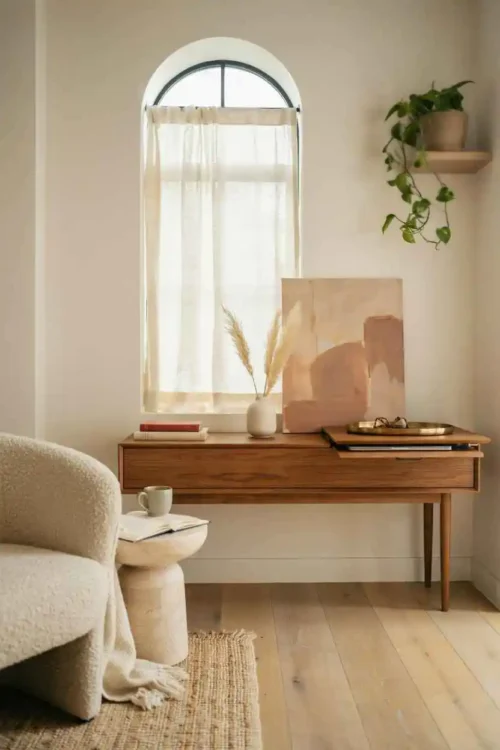
A desk transforms into a console table or shelf when work ends. Drawers close, panels fold, and the workspace disappears. The room reads as a finished living space instead of an office.
Convertible furniture suits homes where work and living truly mix. A desk that becomes attractive furniture serves dual purposes without compromise. Guests see a console, not a workspace.
The transformation requires actual effort. If converting takes more than a minute, you’ll stop bothering, and the desk stays in work mode permanently.
The Built-In Desk Along a Wall
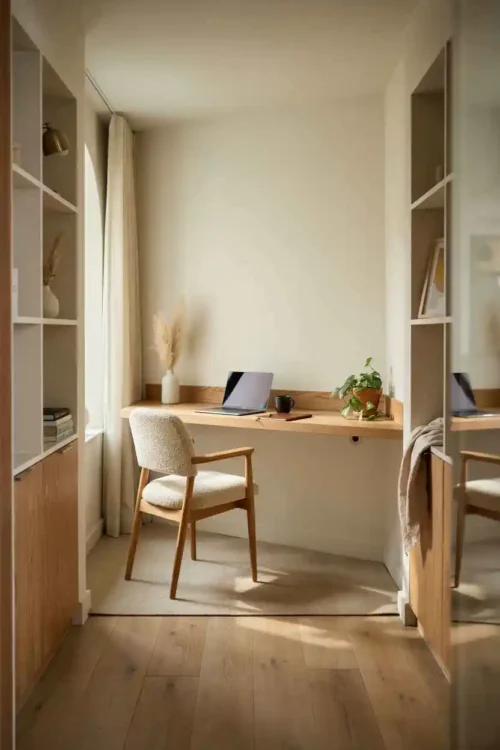
A custom or semi-custom desk gets built directly into the wall, often with surrounding shelving and storage. The desk becomes architectural rather than freestanding furniture. Every inch serves a specific purpose.
Built-ins maximize tight spaces because they fit exact dimensions instead of accepting standard furniture sizes. The desk, storage, and shelving work as one system. Visual flow stays smooth because nothing looks added on.
Built-ins commit you to the layout permanently. If your needs change, redesigning means construction, not just rearranging furniture.
Final Thoughts on Small Room Desk Setups
The right desk setup doesn’t make a small room feel bigger—it makes the room feel intentional. Square footage isn’t the enemy. Wasted space, awkward placement, and clutter are. A 60-square-foot office can work brilliantly if the desk fits the actual room.
Most small-room desk failures come from buying furniture before understanding the space. Measure twice. Sit in the room and imagine the desk before purchasing. The desk that works in a showroom rarely works in your specific corner.
FAQ About Small Room Desk Setups
How small is too small for a functional home office?
A workspace can function in surprisingly tight quarters—even 4 feet of wall space handles a narrow desk and chair. The real constraint isn’t square footage but ceiling height and access. If you can’t push your chair back without hitting something, the space becomes unworkable regardless of how much desk surface you have.
Should I prioritize desk size or storage in a small room?
Storage usually wins. A small desk with adequate storage beats a large desk with no storage every time. You can work on a 36-inch desk indefinitely, but you can’t function in chaos. Vertical storage above or beside the desk preserves floor space while solving the clutter problem.
Is it worth investing in a custom-built desk for a small room?
Custom builds make sense when the room has unusual dimensions or architectural features that standard furniture can’t accommodate. For straightforward rectangular rooms, off-the-shelf desks work fine with thoughtful placement. Custom becomes essential when niches, slanted walls, or odd corners exist.
Sarah Mitchell’s Take
I spent six months convinced my office was too small until I realized I’d been buying desks meant for bigger rooms. Once I swapped to a 24-inch deep desk with vertical shelving above, the room transformed without losing a single square foot. The desk you don’t fight with is the desk that actually works.