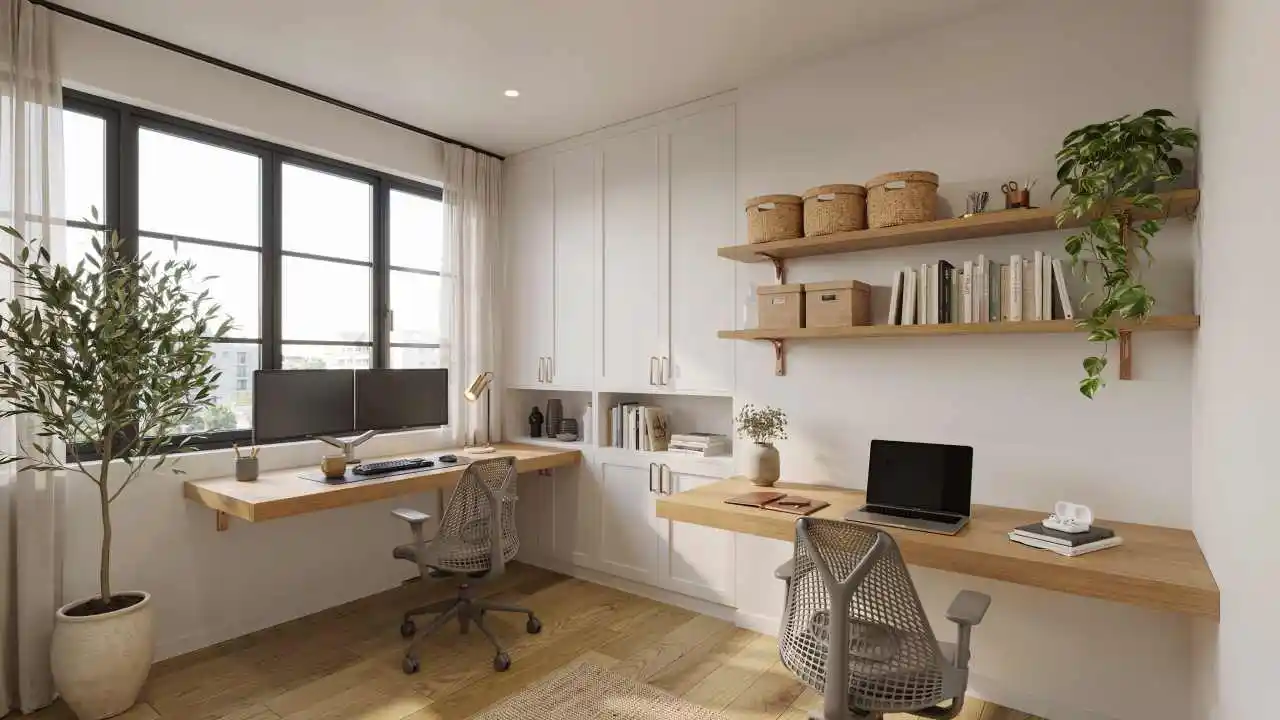
A single desk crammed into a bedroom corner isn’t an office — it’s a desk that happens to exist near your bed. My partner and I learned that the hard way — two people in that same corner means someone’s always bumping elbows and pretending to focus.
Most small shared offices fail for one reason: people treat them like scaled-down versions of big ones. I’ve tried that approach, and it doesn’t work. Tiny spaces need different logic vertical storage, acoustic tricks, and layouts that stack functions instead of spreading them out. Skipping small apartment organizing ideas is exactly how people end up with desks that don’t fit the room at all.
Wall-Mounted Desks at Different Heights
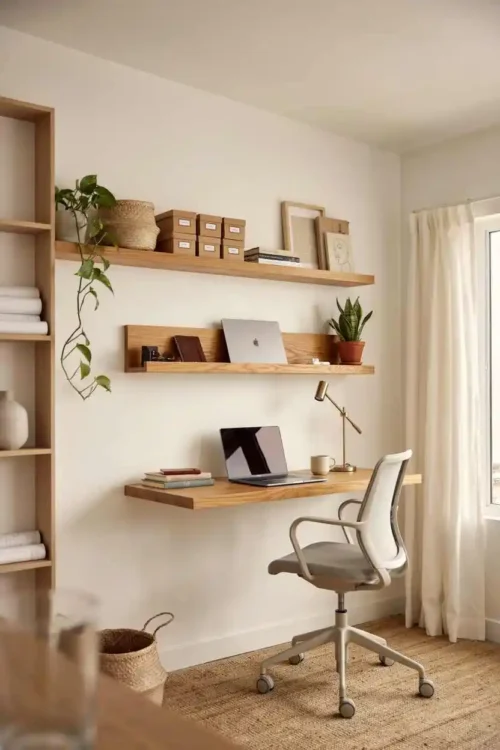
One desk mounted at standard height, another at 36 inches creates two work surfaces without eating floor space. The higher desk can stay narrower because your legs don’t need clearance underneath.
Both desks occupy the same wall, leaving the rest of the room open. This is one of the few layouts that works in rooms smaller than 120 square feet.
The visual separation happens naturally because you’re literally working at different elevations. Your sightlines stop colliding.
Fold-Down Desks That Disappear Completely
Wall-mounted drop-down desks fold flat against the wall when you’re done working. Two desks on perpendicular walls create separate workstations that vanish after office hours.
When both desks fold up, the room becomes usable again. Guest room, craft space, reading nook, whatever you actually need that room to be.
Fold-down desks also force better habits. Papers stop piling up because there’s nowhere to leave them spread across the surface.
Corner Desks That Use Dead Space
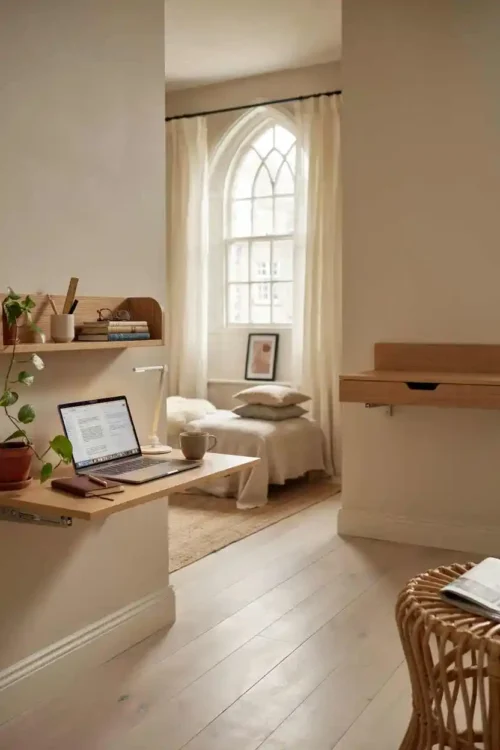
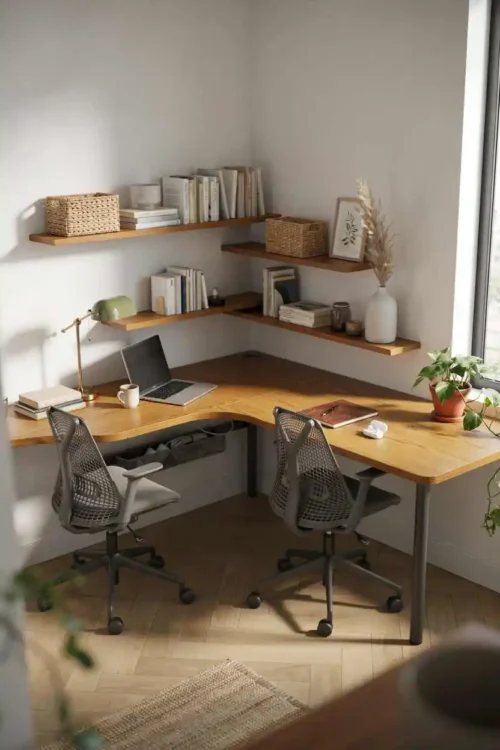
An L-shaped desk tucked into the corner uses space that normally collects random junk. One person takes the long section while the other uses the short return.
The walls naturally soften sound compared to desks floating in the middle of the room. Keyboard noise doesn’t bounce directly across the space.
Corners also create psychological separation. Each person feels like they have their own defined zone instead of sharing one oversized desk.
Slim Desks With Shallow Depth
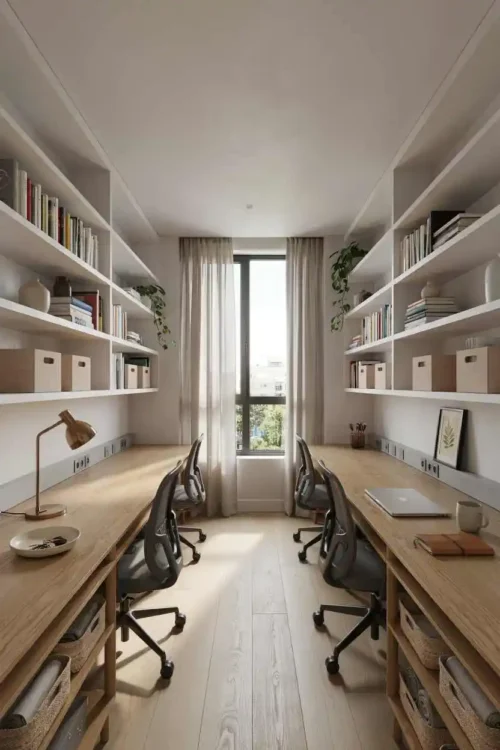
Most desks are deeper than they need to be. A standard 30-inch desk swallows half the room before you even add chairs.
Slim desks around 16 to 18 inches deep leave enough room for a monitor, keyboard, and lamp without destroying your walking path. The room immediately feels less suffocating.
Two shallow desks often work better than one oversized setup. You’re removing wasted surface instead of sacrificing functionality.
Back-to-Back Desks With Storage Between
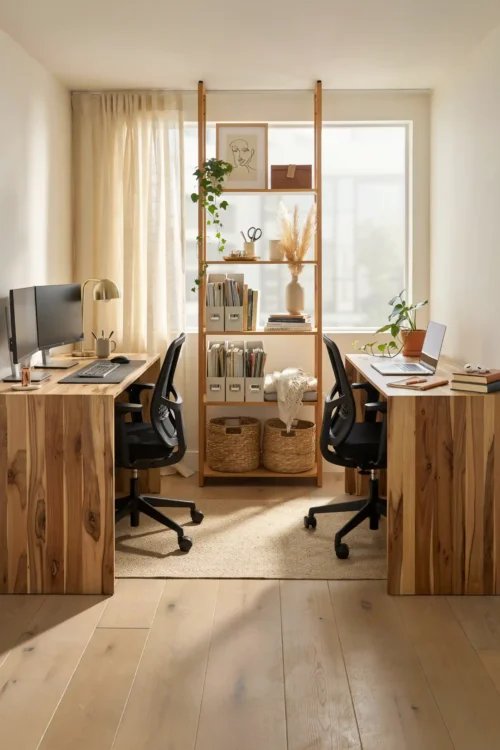
Position two narrow desks back-to-back with a slim shelving unit between them. The shelf becomes shared storage without blocking natural light.
This arrangement pushes both workstations toward the room’s perimeter instead of wasting the center. Floor space stays usable instead of feeling trapped by furniture.
The divider also solves visual clutter problems. One person’s cables and coffee mugs stop invading the other person’s line of sight.
Desk and Shelving Combo Units
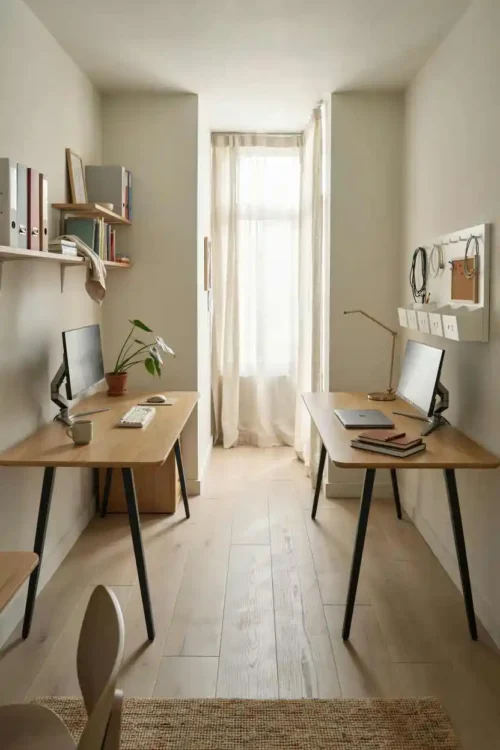
Desk units with shelving above the surface eliminate the need for separate storage furniture. Everything stays vertical instead of spreading across the room.
Two combo units take less floor space than one traditional desk plus a bookshelf. The shelves also absorb some sound between workstations.
This setup works because everything stays within arm’s reach. Chargers, notebooks, headphones, and supplies stop migrating across the room.
Rolling Carts That Double as Workstations
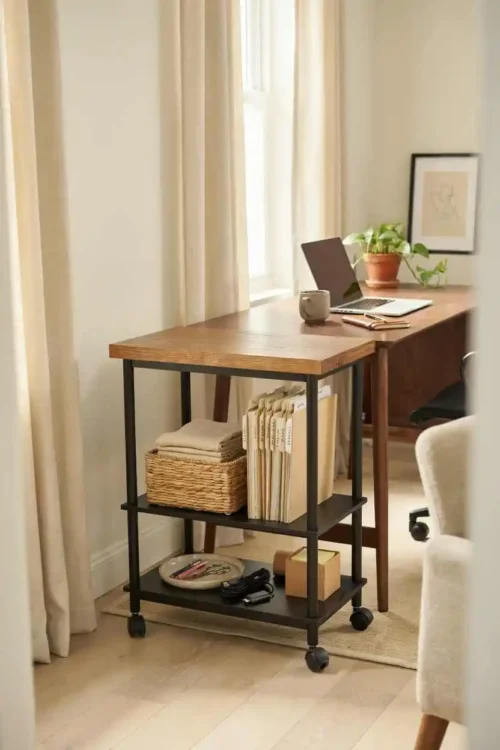
A slim rolling cart with a solid top surface becomes instant secondary workspace. Roll it beside the main desk during work hours, then move it away afterward.
The lower shelves hold files, chargers, or storage baskets while the top surface handles a laptop or writing setup. One piece handles two functions.
This works well in apartments where space changes constantly throughout the day. The room never feels permanently locked into office mode.
Wall-Mounted Keyboard Trays for Tiny Rooms
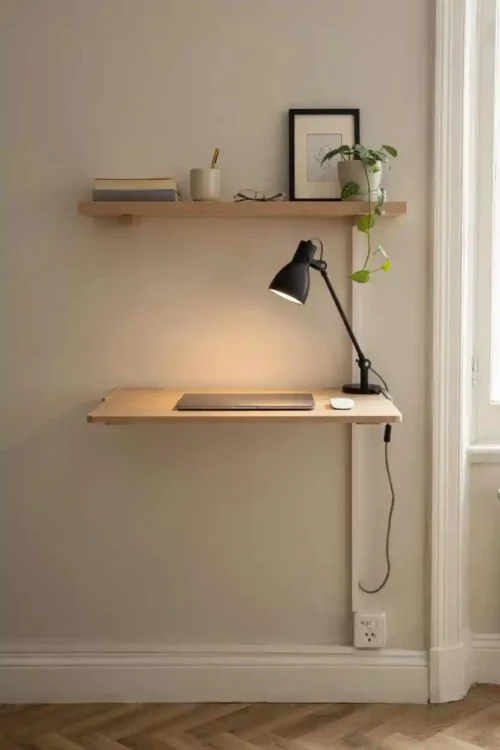
Some rooms genuinely don’t fit two full desks. One person uses the main workstation while the other works from a wall-mounted keyboard tray.
A shallow floating shelf underneath holds a mouse pad, charger, and notebook. The setup takes almost no floor space at all.
This only works if one person mainly handles emails, calls, or light laptop work. Dual-monitor setups need something larger.
Opposite Corner Desks That Face Inward
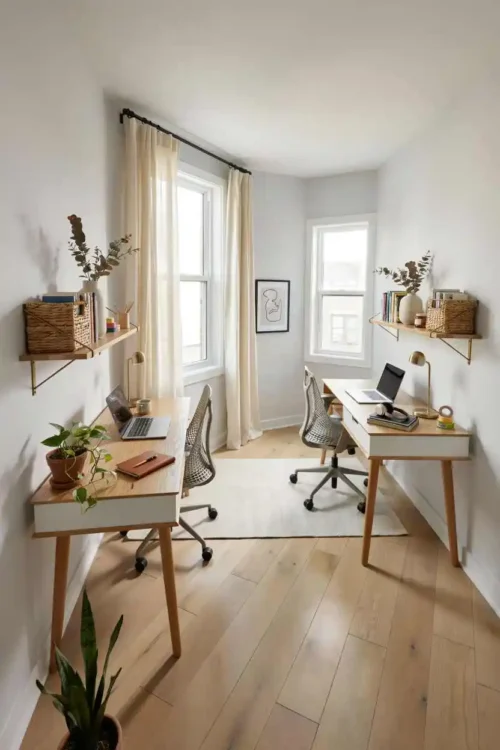
Two compact desks placed diagonally across the room create immediate separation. The angled positioning feels less cramped than side-by-side layouts.
Each desk gets its own acoustic pocket created by the surrounding walls. Sound stops traveling directly from one keyboard to the other.
The center of the room stays open too. That matters more than people realize in small spaces.
Desk Hutches That Build Upward
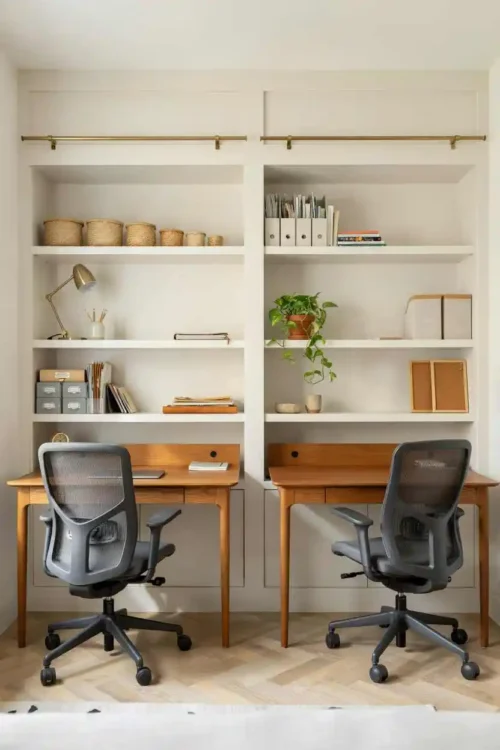
A desk hutch creates vertical storage directly above the workspace. Supplies move upward instead of covering the desktop itself.
The extra shelving holds books, baskets, and office tools without adding more furniture to the room. Everything stays contained above eye level.
Hutches also block visual distraction naturally. You’re not constantly staring into the other person’s workspace.
Nesting Desks That Slide Together
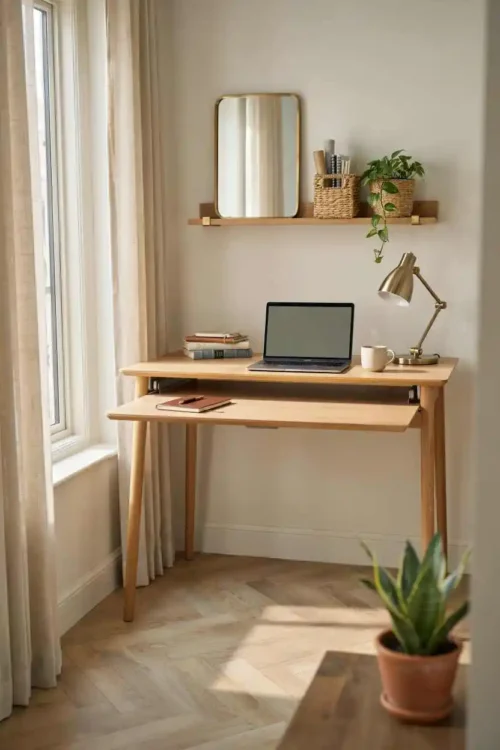
Two nesting desks partially stack into each other when one person isn’t working. The footprint shrinks almost in half during downtime.
This setup works especially well for staggered schedules. One person can spread out while the other desk stays tucked away.
The flexibility matters in smaller apartments. Permanent oversized furniture kills the room fast.
Under-Window Workstations That Feel Lighter
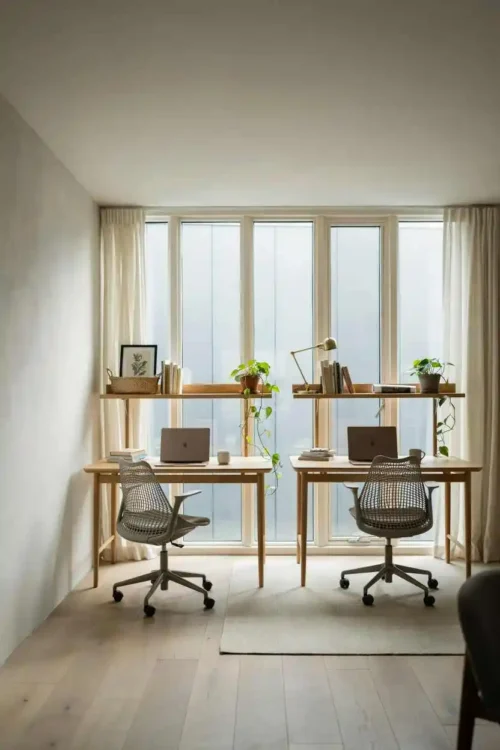
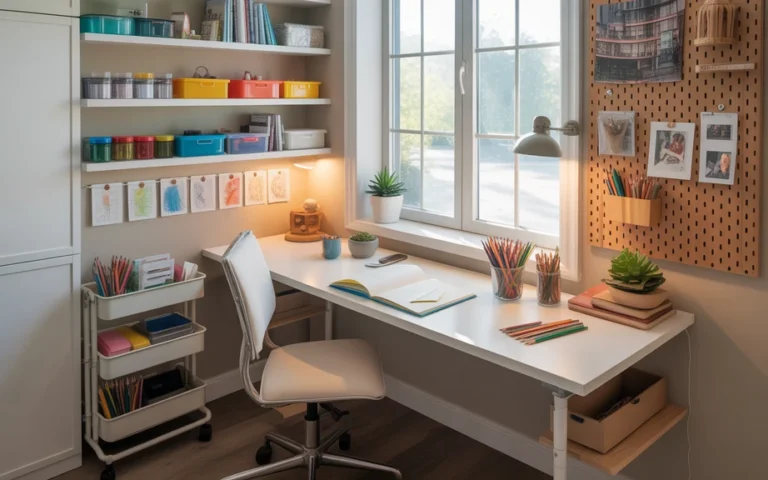
A desk under the window uses wall space that often stays empty. Natural light also makes cramped rooms feel less boxed in.
Two slim desks beneath separate windows create distinct work zones without heavy dividers. The light itself separates the setups visually.
This layout works especially well in apartments where every wall already fights for storage space.
One Standing Desk and One Sitting Desk
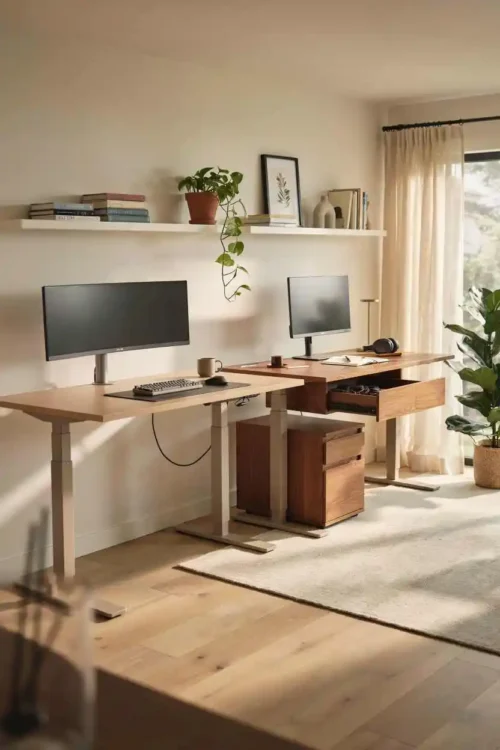
A standing desk beside a traditional desk creates natural separation through height difference alone. You stop feeling like you’re sitting shoulder-to-shoulder.
Standing desks also need less clearance because there’s no chair rolling backward constantly. That saves more space than people expect.
This setup works especially well if one person takes frequent calls or moves around more during the workday.
Floating Shelf Desks That Feel Invisible
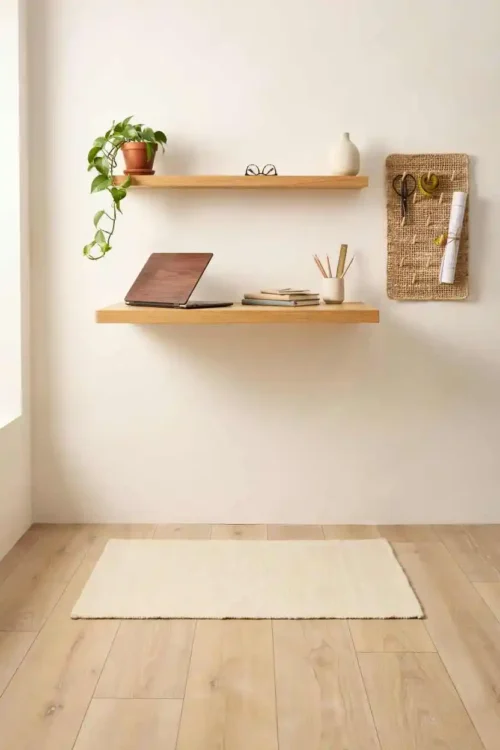
Wall-mounted floating desks keep the floor visible underneath. That visual openness tricks the room into feeling larger.
Traditional desks create bulky visual blocks. Floating surfaces feel lighter because your eyes can travel underneath them.
The downside is storage. You need strong wall organization because there’s nowhere to hide clutter underneath.
Split-Level Workstations on One Wall
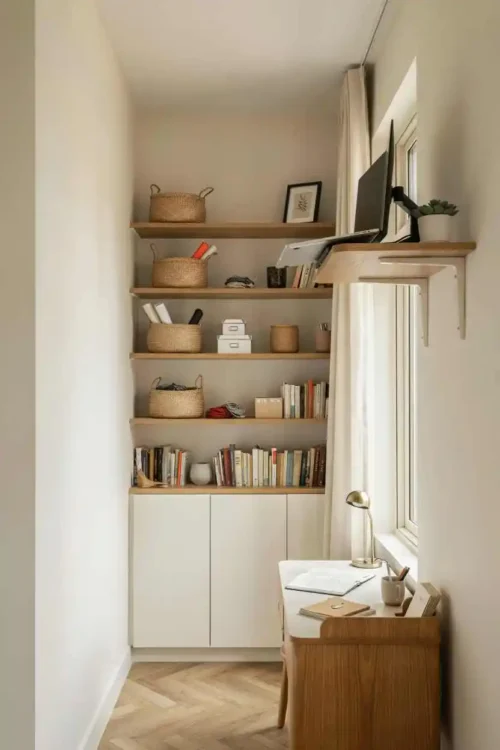
One narrow standing-height shelf mounted above a traditional desk creates two work zones vertically instead of horizontally. The room footprint barely changes.
The upper surface handles laptop work or monitor placement while the lower desk supports paperwork and storage. Both people get independent surfaces.
This arrangement works because small rooms usually waste vertical space completely.
Console Desks Along the Room Perimeter
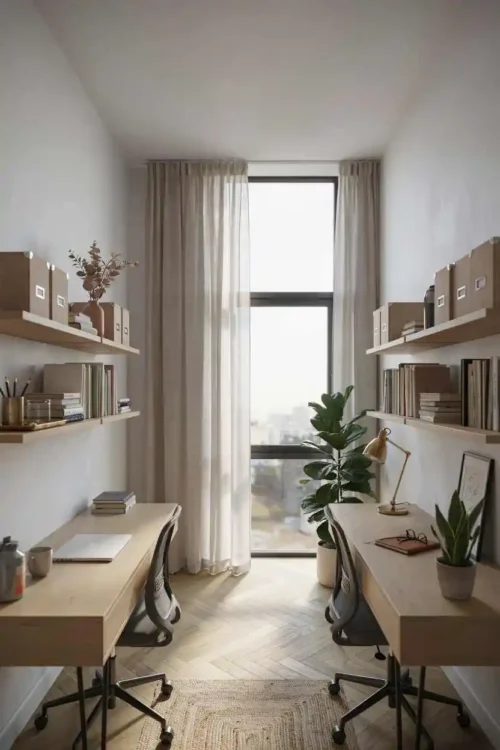
Slim console desks only extend about 12 to 15 inches from the wall. Running them along the room perimeter keeps the center open.
Two people can work on opposite walls without creating a furniture maze in the middle. The room feels calmer immediately.
Console desks also double as storage surfaces after work hours. The setup blends into the room instead of screaming office.
Privacy Screens Built Into the Desk
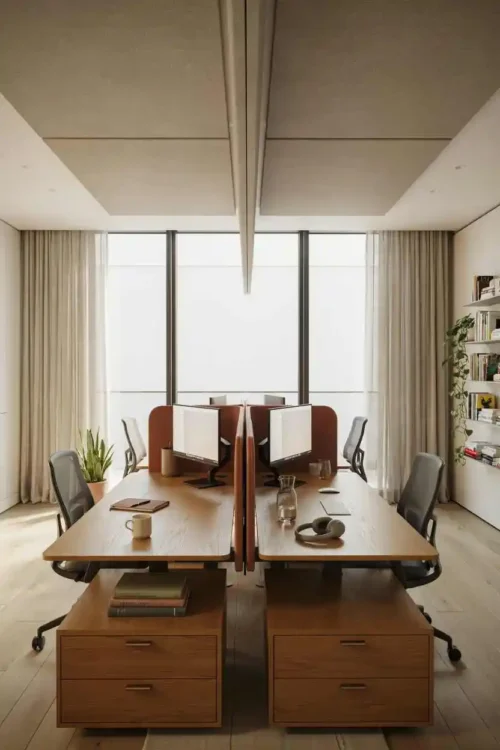
A curved privacy screen attached directly to the desk creates separation without adding another furniture piece. One workstation feels enclosed while the other stays open.
The screen blocks visual distraction and softens sound at the same time. Video calls stop bouncing directly across the room.
This works better than bulky room dividers in smaller apartments because the separation stays attached to the workstation itself.
Magnetic Wall Workspaces That Replace Drawers
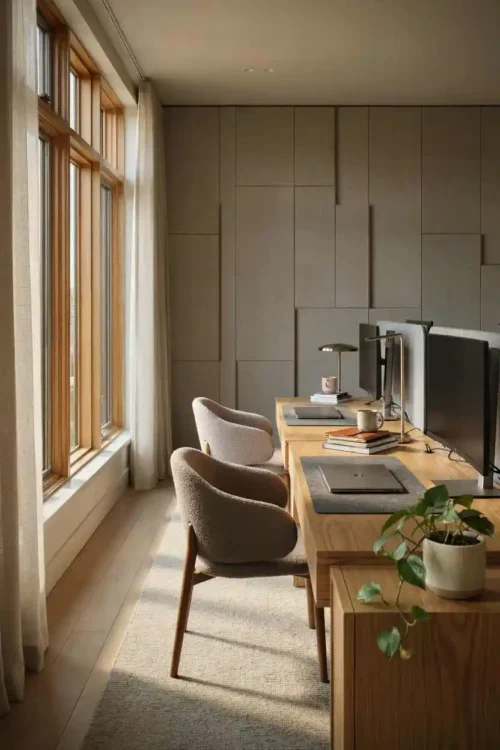
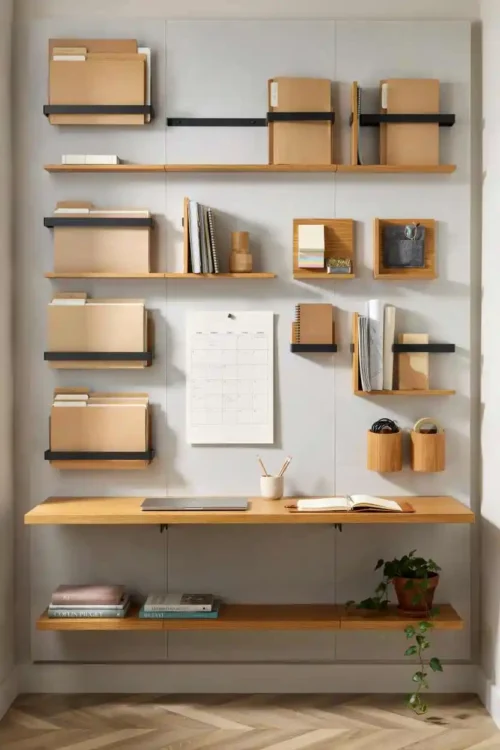
A magnetic wall board with organizers replaces bulky filing cabinets and desk drawers. Papers, notes, and supplies stay vertical instead of buried.
One person can work entirely from the magnetic wall while the other uses a traditional desk setup. The room instantly feels less crowded.
This works particularly well for paper-heavy work that normally spreads across every surface nearby.
Split-Level Platforms That Separate Zones
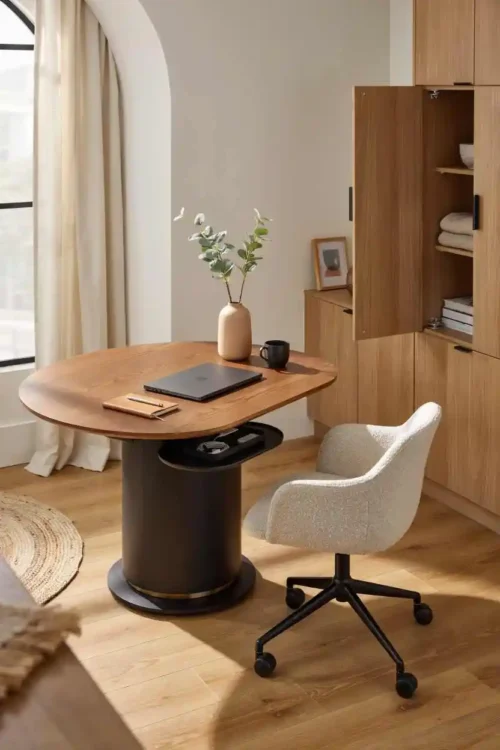
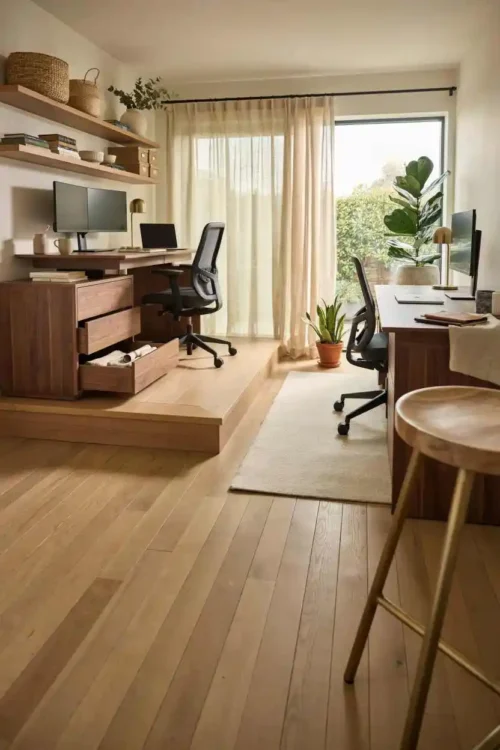
Raising one desk on a low platform creates instant separation in the same footprint. One workstation feels elevated while the other stays grounded.
The height difference changes the room psychologically. You’re no longer sharing one flat workspace.
Storage underneath the platform also helps recover some lost floor space. Hidden printer storage works especially well there.
Rotating Desk Stations for Flexible Layouts
A rotating desk surface changes direction throughout the day without moving the furniture itself. One quick turn changes your visual environment immediately.
This setup works best for staggered schedules instead of simultaneous full-time work. The desk shifts based on who needs the better angle or lighting.
The movement also helps small rooms feel less static. Tiny spaces get mentally exhausting when nothing changes visually.
Noise-Dampening Accessories That Quiet Everything
Dense desk mats, soft keyboard pads, and cable sleeves reduce more noise than most people expect. Loose cables knocking against desk legs create constant background irritation.
A thick rug underneath both chairs absorbs rolling sounds and softens echo immediately. Hard apartment floors amplify everything.
This is the part people usually skip. They buy more furniture before fixing the noise problem first.
Final Thoughts on Shared Home Office Spaces
The small shared office that actually works treats space like something valuable. Every wall, corner, and vertical surface needs a purpose without making the room feel buried in furniture.
Most setups fail because people try to shrink a large office into a tiny room. Small spaces need completely different logic. Lighter furniture, vertical storage, better sightlines, and layouts that leave breathing room matter more than oversized desks ever will.
FAQ About Shared Home Office Spaces
Can two people actually work productively in one small room?
Yes, but the layout matters more than the square footage itself. Most shared offices fail because the desks face each other directly or compete for the same storage space.
What is the minimum room size for two desks?
Around 100 to 120 square feet works realistically for two permanent desks plus walking space. Smaller rooms usually need fold-down desks or staggered workstations.
How do you reduce noise in a shared office?
Soft materials matter more than expensive soundproofing. Rugs, desk mats, curtains, and proper desk positioning absorb far more sound than people expect.
Sarah Mitchell’s Take
I watched two people try to work from matching oversized desks in a tiny apartment office once. The desks looked beautiful online and completely destroyed the room in real life. We replaced one with a fold-down desk and suddenly both people could actually move around without bumping into each other.