
Introduction
A cluttered pantry wastes time, hides food, and makes everyday cooking harder than it needs to be. When shelves overflow and items disappear into the back corners, space feels smaller than it really is. The solution is not a bigger pantry, but smarter structure that keeps everything visible, reachable, and easy to reset. These pantry organization ideas focus on real kitchen behavior, not showroom perfection. Before building new systems, strengthen your foundation with Dollar store pantry organizing ideas.
1- Use Clear Storage Containers for Dry Goods
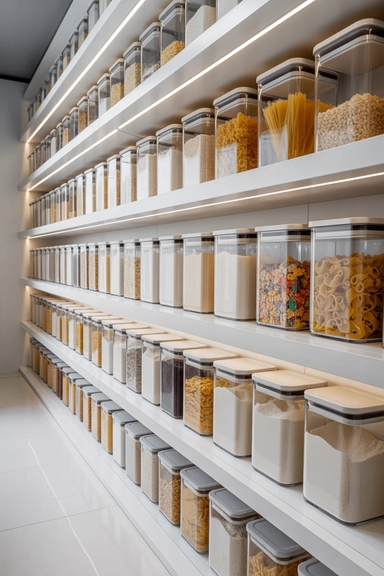
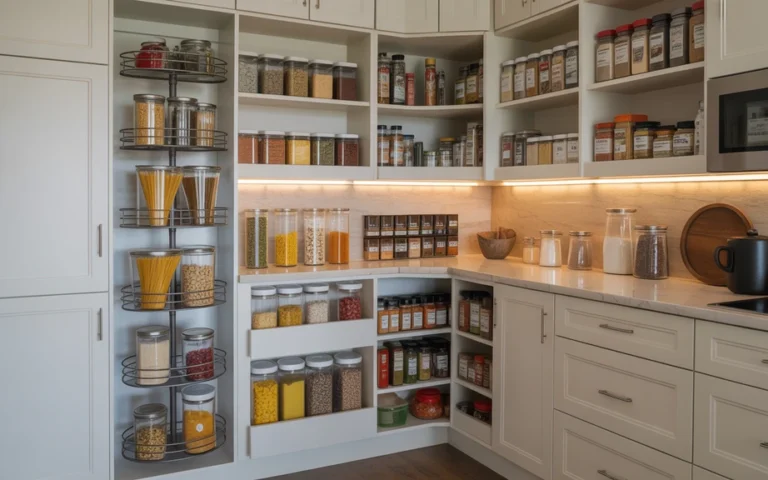
Original packaging is one of the main reasons pantries feel chaotic. Bags tear, boxes collapse, and half-open packets spill into surrounding shelves. Clear airtight containers replace mismatched packaging with uniform shapes that stack efficiently and reveal contents instantly. This prevents duplicate purchases and keeps shelf depth fully usable instead of wasted behind slumped boxes.
Clear containers also preserve food freshness and protect against pests. When every grain, cereal, or snack has a sealed home, shelves stay cleaner and odors stay contained. Over time, consistent container sizing creates a modular system where space is maximized and daily access becomes effortless.
2- Install Tiered Shelf Risers
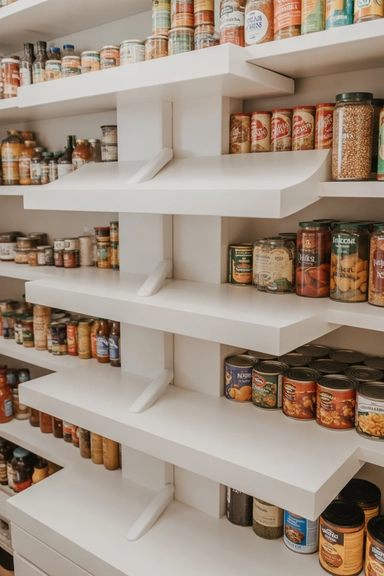
Flat pantry shelves hide items at the back, causing forgotten food and unnecessary clutter at the front. Tiered risers elevate rear items so everything stays visible in a single glance. This eliminates stacking that blocks labels and forces constant reshuffling.
Risers also improve category separation. Canned goods, jars, and condiments gain defined rows instead of scattered clusters. When restocking groceries, you place items directly into visible zones without moving existing stock. The result is a pantry that maintains order even during busy weeks.
3- Assign Zones by Food Category
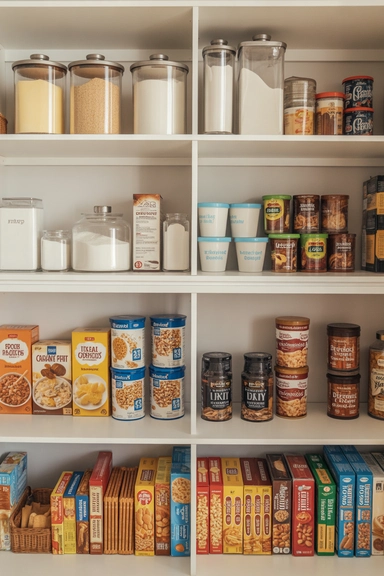
A pantry without zones turns into a catch-all cabinet. Grouping food by category — baking supplies, snacks, breakfast items, canned goods — gives every product a fixed home. This prevents wandering items that slowly dismantle organization.
Zoning also speeds up meal prep. You no longer search across multiple shelves for ingredients because each category lives in one place. Over time, category zones create predictable flow: groceries go in correctly, food gets used before expiring, and shelf space stays balanced.
4- Use Pull-Out Baskets for Deep Shelves
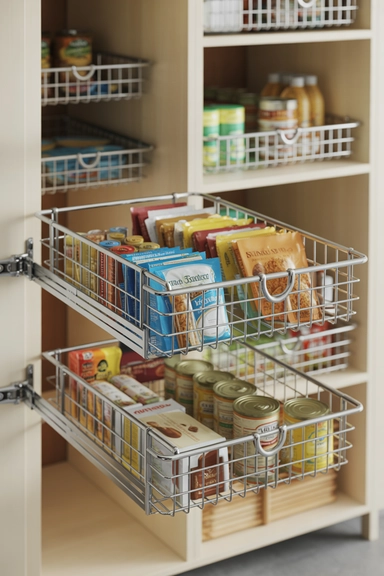
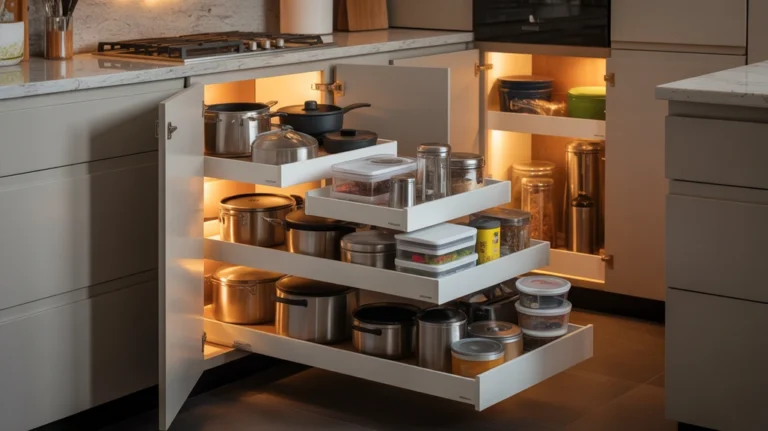
Deep pantry shelves trap items behind others, forcing constant unloading to reach what’s hidden. Pull-out baskets solve this by sliding contents forward in one motion. Snacks, packets, and small items stay contained yet fully reachable.
These baskets also prevent small products from falling sideways into unused corners. When everything moves as a unit, shelves stay neat and gaps stop collecting clutter. Over time, pull-out storage protects pantry order from daily rummaging.
5- Store Heavy Items on Lower Shelves
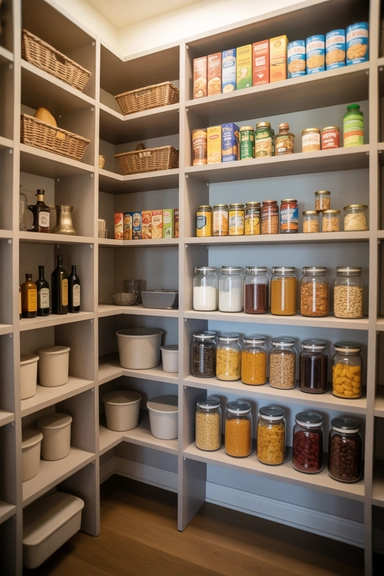
Large bottles, bulk containers, and appliance-sized items strain shelves and block lighter goods when placed at eye level. Assigning heavy items to lower shelves keeps upper zones free for frequently used food. This improves safety and accessibility.
Lower placement also stabilizes shelf balance, reducing bowing or collapse over time. When weight distribution is intentional, your pantry remains functional long-term without constant shelf adjustment or reorganization.
6- Add Lazy Susans for Corner Access
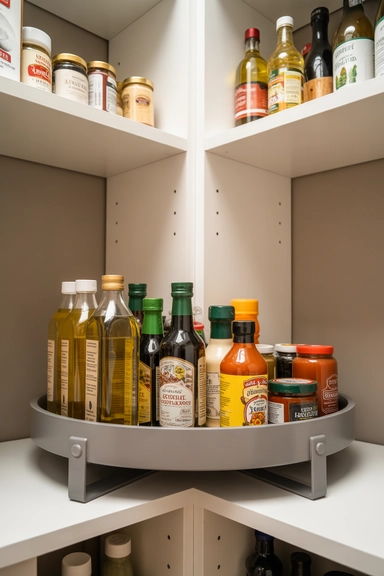
Pantry corners often become dead zones where jars and bottles disappear into unreachable space. A lazy susan turns these wasted corners into rotating access points where every item comes forward with a simple spin. Oils, sauces, and condiments stay visible instead of hidden behind taller containers.
This also prevents sticky buildup and scattered spills. When bottles live on a rotating tray, leaks are contained and cleaning becomes easier. Over time, lazy susans eliminate forgotten items and make corner shelves work as efficiently as front-facing storage.
7- Hang Door Racks for Extra Storage
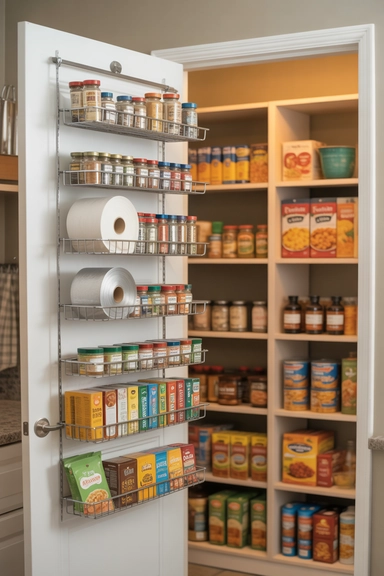
The inside of a pantry door is valuable real estate that is often ignored. Hanging door racks create vertical storage for spices, small snack packs, foil, or wraps without using shelf space. This keeps frequently used items reachable without overcrowding shelves.
Door storage also reduces visual clutter inside the pantry itself. When smaller products move to the door, shelf zones stay dedicated to larger categories. Over time, this creates breathing room that keeps your pantry from feeling jammed even as grocery volume increases.
8- Group Snacks in Portable Bins
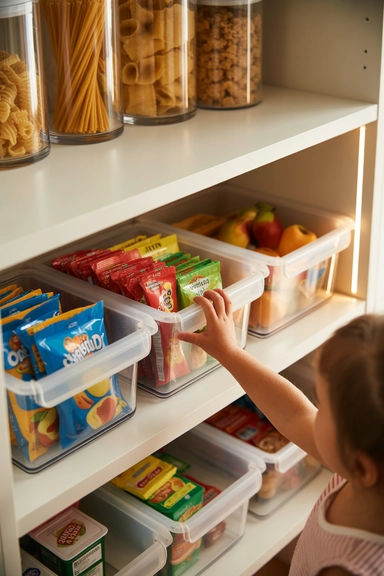
Snack items tend to scatter because they are used frequently and come in varied packaging sizes. Placing them into portable bins keeps similar items together and prevents torn boxes from spreading mess. Children can pull out a snack bin without disturbing other pantry zones.
These bins also simplify grocery restocking. Instead of arranging dozens of small items, you refill one container. Over time, snack bins maintain consistent order, reduce package clutter, and make daily pantry use smoother for the entire household.
9- Label Containers and Shelves
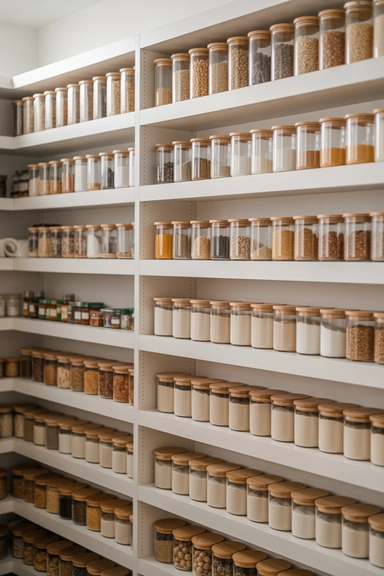
Even the best container system breaks down if people forget where things belong. Labels turn organization from a personal system into a household habit. When containers and shelves are clearly identified, groceries return to correct zones without decision-making.
Labeling also helps track inventory. When a container marked “rice” or “flour” runs low, it becomes immediately obvious. Over time, labels preserve the structure of your pantry and prevent slow drift into random stacking.
10- Use Stackable Can Organizers
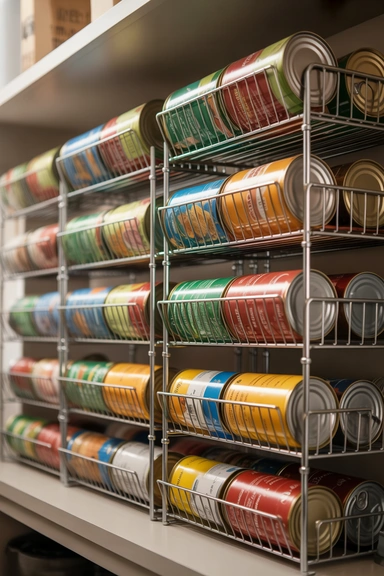
Canned goods quickly become unstable when piled loosely. Stackable can organizers keep cans in defined tracks so they don’t roll or collapse. This creates clean rows that maximize shelf height while keeping labels facing forward.
Organizers also support rotation. When new cans are loaded at the top or back, older ones move forward automatically. Over time, this prevents expired food, keeps shelves tidy, and makes inventory control effortless.
11- Use Uniform Shelf Bins for Category Control
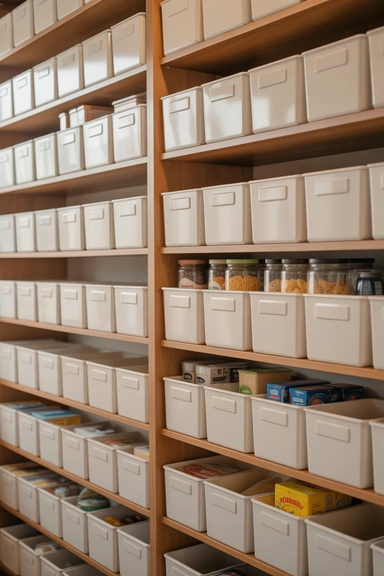
Pantry shelves become visually chaotic when every food type sits in different shapes of boxes and bags. Uniform shelf bins solve this by creating consistent boundaries for categories like breakfast items, baking supplies, or meal kits. Instead of loose packaging spreading across shelves, each category stays contained within a defined footprint that is easy to pull forward and return.
These bins also simplify restocking. Groceries go directly into the correct bin without rearranging entire shelves. When one category grows, you adjust bin placement instead of reorganizing everything. Over time, uniform bins protect shelf structure, reduce visual noise, and keep pantry maintenance quick and predictable.
12- Store Backstock in a Dedicated Zone
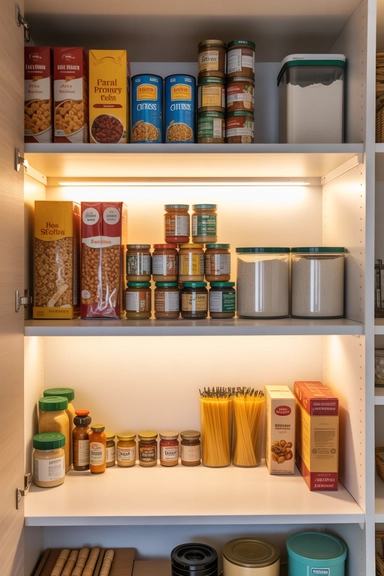
Bulk purchases and backup food often end up stuffed wherever space appears, slowly overcrowding daily-use shelves. Creating a dedicated backstock zone prevents this overflow from invading your main pantry layout. Extra items stay grouped together on a top or bottom shelf where they are accessible but not in the way.
This zone also helps inventory awareness. When daily containers run low, you know exactly where replacements are stored. Instead of buying duplicates, you rotate stock forward intentionally. Over time, a backstock zone keeps your pantry from silently overfilling while still allowing cost-saving bulk shopping.
13- Keep Frequently Used Items at Eye Level
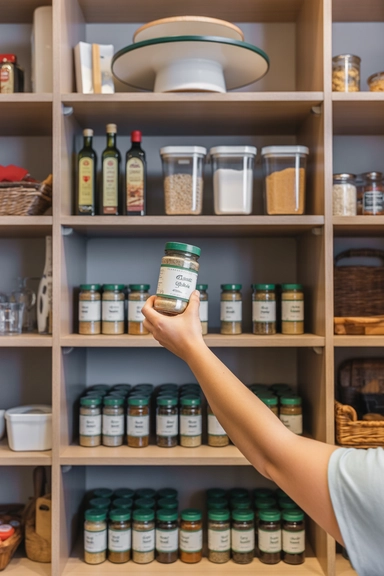
Pantry efficiency depends heavily on placement height. When everyday staples are buried too high or too low, searching begins and shelves get disturbed. Reserving eye-level shelves for daily-use items keeps access fast and prevents unnecessary shifting of other categories.
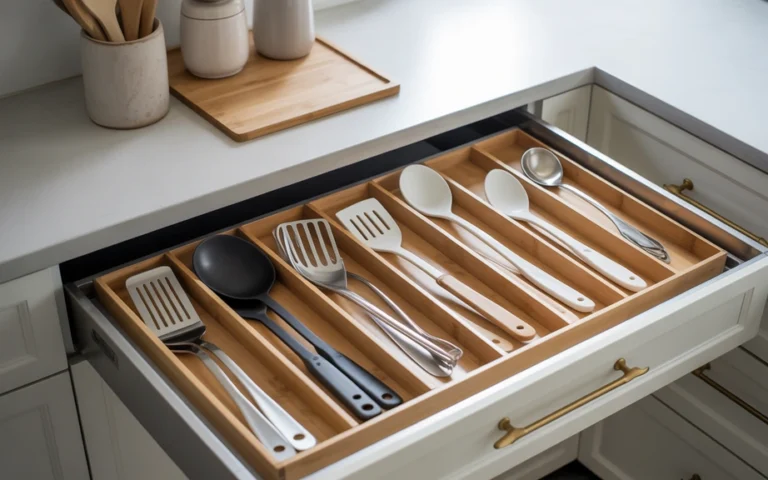
This approach pairs well with broader kitchen flow systems. If you already organize cooking tools and prep zones, ideas from Kitchen drawer organizing ideas integrate naturally with eye-level pantry placement, creating a seamless cooking workflow. Over time, this height-based planning reduces mess caused by searching and keeps pantry order stable.
14- Use Narrow Pull-Out Racks for Slim Gaps
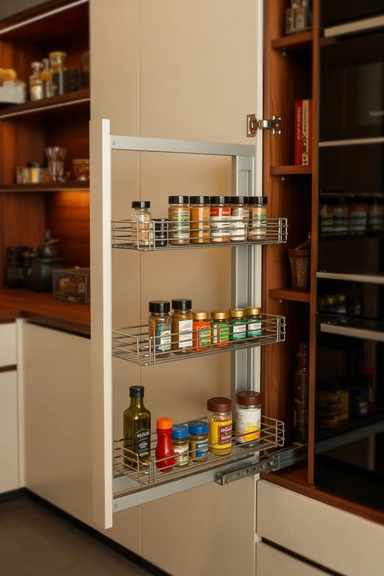
Many pantries have narrow vertical gaps beside shelves or cabinets that go unused. Slim pull-out racks transform these tight spaces into high-capacity storage for spices, bottles, or small jars. Instead of crowding main shelves, narrow racks hold tall, thin items upright and visible.
Pull-out motion also prevents toppling. Bottles no longer lean against each other or fall when reaching for one. Over time, slim racks reclaim lost inches, increase total pantry capacity, and keep frequently used items accessible without shelf congestion.
15- Separate Food by Meal Function
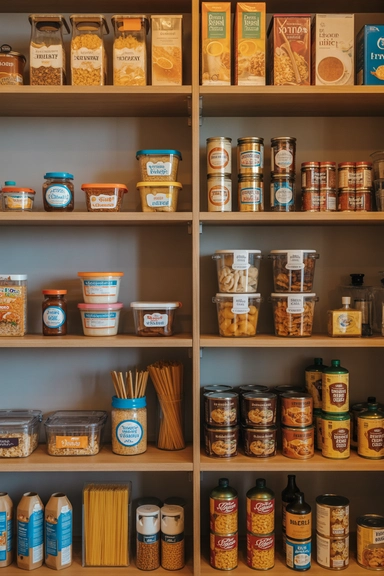
Pantries become harder to manage when food is stored only by type rather than by how it’s used. Creating meal-function zones — breakfast, lunch prep, dinner staples, and snack time — makes kitchen routines faster. You gather ingredients for a meal from one section instead of visiting multiple shelves.
This system also helps family members find what they need without disturbing other categories. Children know where snacks live, while cooking supplies stay untouched. Over time, function-based grouping reduces shelf disruption, keeps categories intact, and supports real-life kitchen behavior rather than forced organization.
16- Add Shelf Dividers to Stop Stack Collapse
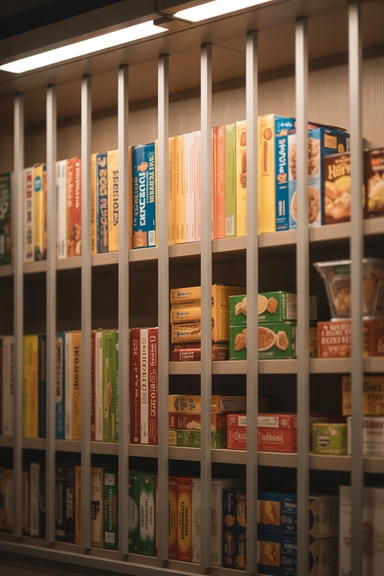
Tall stacks of boxes, packets, and folded bags often lean and fall, especially after one item is removed. Shelf dividers create firm vertical boundaries that hold food categories upright and separated. This prevents breakfast boxes from tipping into baking supplies or snack packs sliding into canned goods zones.
Dividers also allow you to use full shelf height without risking collapse. When each category has a defined lane, shelves stay neat even during busy grocery cycles. Over time, dividers reduce daily straightening and protect the pantry from slow structural breakdown.
17- Use Clear Turntables for Bottles and Jars
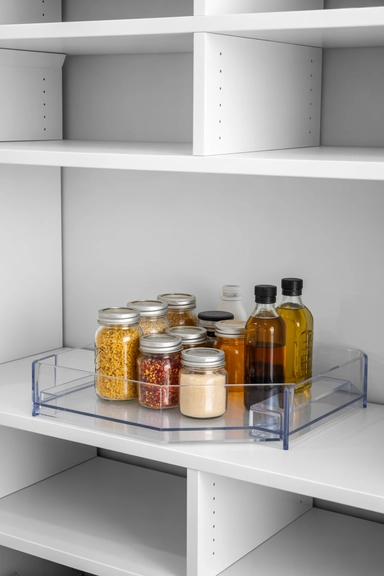
Bottles and jars create instant clutter when pushed to the back of shelves. Clear turntables bring every item forward with a simple rotation, preventing forgotten sauces and duplicate purchases. Oils, vinegar, spreads, and condiments remain visible without moving other products.
Turntables also contain drips and sticky residue in one cleanable surface instead of across shelves. This keeps the pantry hygienic and prevents buildup that attracts pests. Over time, rotating storage maintains visibility, cleanliness, and easy access without shelf disruption.
18- Create a Kid-Friendly Snack Zone
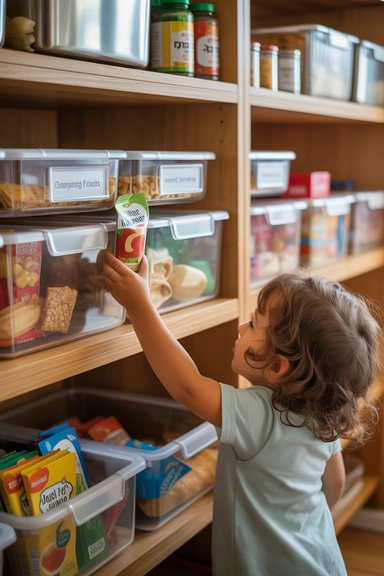
When children search freely through the pantry, organization quickly unravels. A dedicated kid-level snack zone solves this by keeping approved snacks in one reachable section. Bins or baskets hold snack packs, fruit cups, or crackers so kids can help themselves without touching other shelves.
This zone also reduces interruptions during meal prep. Children find snacks independently, and parents no longer need to reorganize scattered items afterward. Over time, a kid-friendly zone protects the rest of the pantry from frequent handling while supporting family routines.
19- Use Uniform Jars for Loose Ingredients
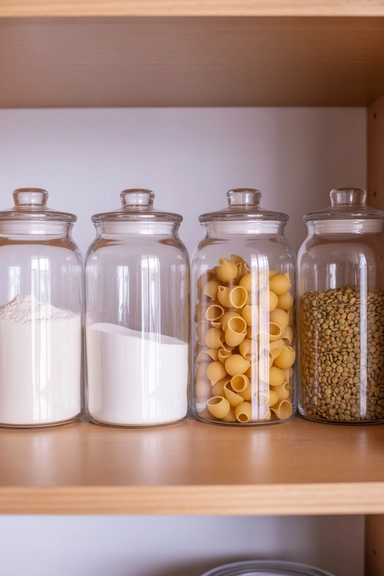
Loose ingredients like flour, sugar, pasta, and lentils become messy when stored in bags that spill and fold awkwardly. Uniform jars replace unstable packaging with solid, stackable storage that keeps ingredients dry and visible. Measuring and pouring become cleaner and more controlled.
Uniform jar sizing also creates consistent shelf geometry. Instead of irregular shapes wasting space, jars align tightly and maximize every inch. Over time, jar systems improve hygiene, prevent spills, and give your pantry a structured, professional layout.
20- Keep an Inventory Clip or Note Area
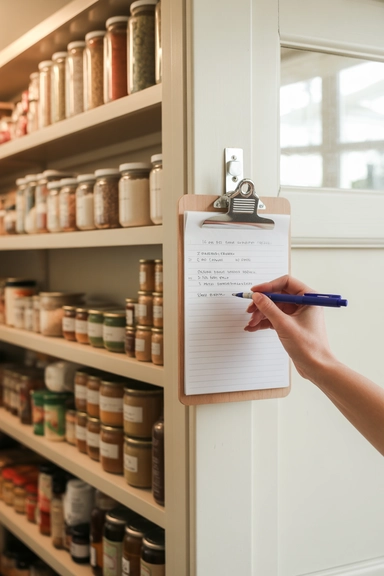
A pantry stays organized longer when you know what is running low. A small note board, clipboard, or writable surface near the pantry creates a simple inventory habit. When an item finishes, it is added immediately to the list instead of forgotten.
This prevents overbuying and underbuying. You restock only what is needed, keeping shelf volume balanced. Over time, an inventory note area supports consistent pantry control and protects your organization system from slow clutter buildup.
21- Reset the Pantry Monthly
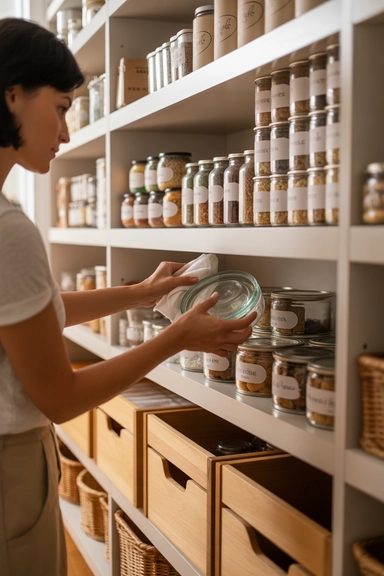
Even the most well-structured pantry will slowly drift out of alignment through daily use. A monthly reset keeps small disruptions from turning into full disorder. During this reset, expired items are removed, containers are wiped, categories are checked, and misplaced products are returned to their correct zones. This short routine restores the original structure before clutter gains momentum.
Monthly resets also help adjust storage as household needs change. Snack quantities, cooking habits, or bulk-buying patterns evolve over time, and shelves must adapt accordingly. Instead of waiting for the pantry to feel overwhelming, small scheduled resets maintain stability, extend the life of your organization system, and ensure every inch of space continues to work efficiently.
Conclusion
A space-saving pantry is not built through one-time organizing, but through systems that match real kitchen behavior. When containers are uniform, zones are intentional, access is visible, and maintenance is routine, clutter no longer has room to return. These pantry organization ideas focus on lasting structure rather than temporary neatness, ensuring your shelves stay functional through busy grocery cycles and daily cooking routines. With thoughtful layout choices and simple habits, even a small pantry can feel spacious, calm, and permanently under control.