
Floor space is often consumed not by furniture, but by objects with no defined destination. When belongings settle on chairs, counters, and corners, rooms feel visually compressed even when square footage is generous. Vertical storage ideas solve this imbalance by lifting daily-use items into purposeful height-based systems that preserve open movement zones. The shift is subtle yet transformative, allowing walls and door backs to carry functional weight instead of horizontal surfaces. Homes become easier to maintain because objects return to assigned positions rather than drifting into visible piles. For complementary wall-based strategies that extend this approach, explore 21 Wall Organizer Ideas That Keep Surfaces Clutter-Free.
1. Tall Entry Peg Walls That Keep Daily Essentials Off the Floor
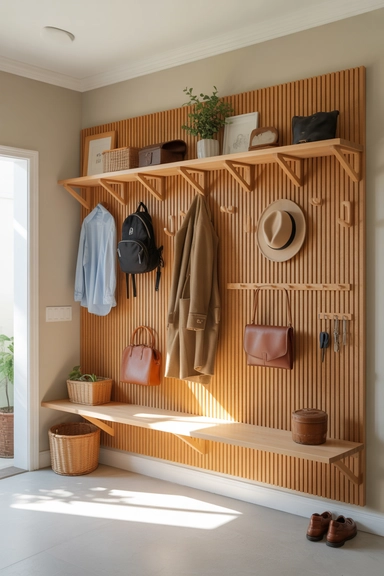
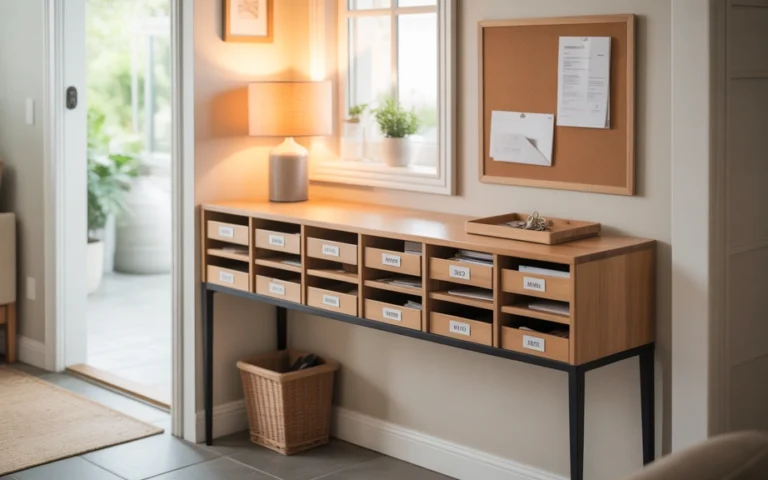
An entryway sets the organizational tone of the home, yet it often absorbs bags, coats, and accessories with no vertical plan. A full-height peg wall transforms this congestion into a structured system. Hooks placed at staggered heights allow jackets, backpacks, and tote bags to hang without overlapping. Slim wall-mounted trays catch keys and mail while keeping surfaces below clear. The vertical layout ensures that nothing touches the floor except footwear, restoring a calm arrival zone instead of a drop zone.
Material choice defines longevity. Hardwood peg boards offer warmth and durability, while powder-coated metal versions suit modern interiors and resist scuffing. Spacing hooks generously prevents visual density, which is crucial when applying vertical storage ideas in high-traffic zones. The result is a functional wall that quietly absorbs daily clutter while preserving open pathways and a composed first impression.
2. Floor-to-Ceiling Shoe Towers That Eliminate Scattered Pairs
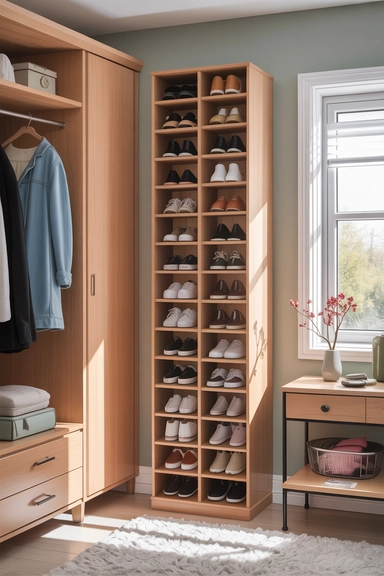
Shoes occupy more floor area than expected when stored traditionally. A vertical shoe tower compresses an entire collection into a narrow footprint by extending storage upward. Adjustable slots accommodate varying footwear heights while keeping each pair visible. Positioned beside wardrobes or behind doors, these towers reclaim valuable walking space without sacrificing accessibility. When footwear rises off the ground, cleaning becomes easier and the room immediately feels less congested.
Visual integration keeps tall shoe towers from appearing bulky. Neutral finishes allow the structure to blend into surrounding cabinetry, while open-backed designs maintain airflow and prevent trapped odors. Consistent spacing between shelves avoids cramped stacking that recreates clutter in another form. This type of vertical storage idea quietly restores order while keeping daily routines smooth and uninterrupted.
3. Wall-Mounted Kitchen Rail Systems That Clear Countertops
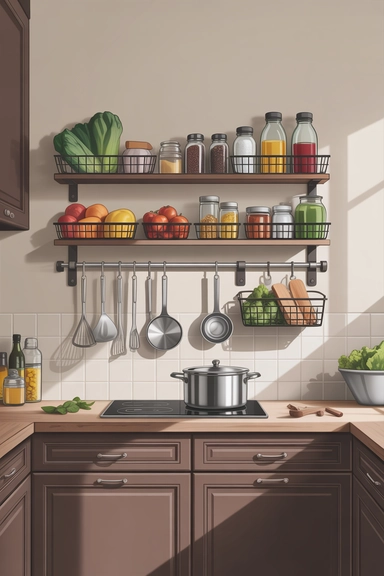
Kitchen counters become cluttered when tools and ingredients lack defined placement. Wall-mounted rail systems relocate cooking essentials into vertical reach zones. Hanging baskets hold produce, slim racks support spice jars, and suspended hooks carry utensils without occupying drawer space. Everything stays accessible while preparation surfaces remain open and functional. The shift from horizontal stacking to vertical suspension instantly improves workflow and reduces constant rearranging during meal preparation.
Consistency keeps the arrangement visually calm. Matching containers and evenly spaced rails prevent the wall from looking busy. Stainless or matte black finishes resist grease buildup and clean easily. When vertical storage ideas replace countertop crowding, the kitchen gains breathing room and movement becomes more fluid, especially in compact cooking spaces.
4. Bedroom Ladder Shelving That Replaces Bulky Dressers
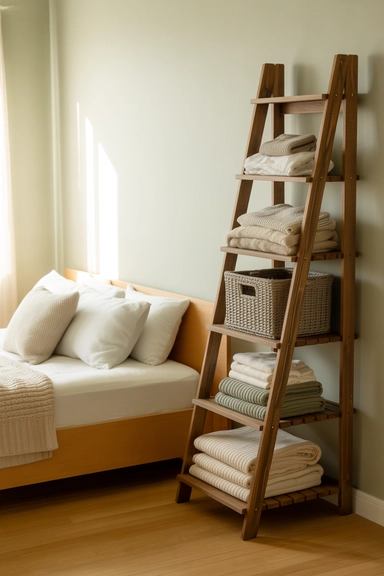
Bedrooms often rely on wide dressers that consume valuable floor width. Ladder shelving introduces vertical storage without visual heaviness. Leaning frames anchor against walls while offering ascending shelves for folded clothing, baskets, and decorative items. This approach keeps storage capacity high while the footprint remains slim. The open structure also allows light to pass through, preventing the room from feeling boxed in.
Balanced styling ensures the shelving looks intentional rather than overloaded. Soft fabric bins conceal smaller garments, while open shelves hold neatly stacked linens. When paired with wall-mounted bedside ledges, floor furniture reduces dramatically. These vertical storage ideas create restful visual order while maintaining functional clothing access.
5. Over-Door Utility Racks That Activate Forgotten Space
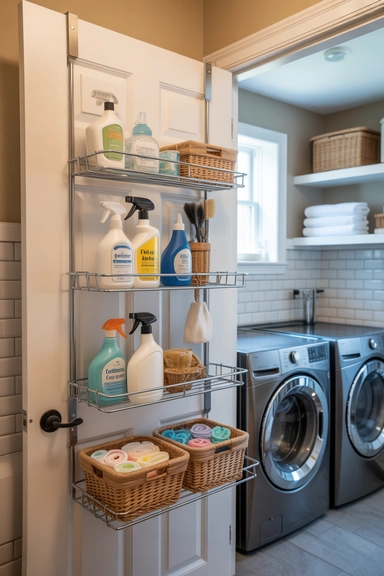
The back of doors is rarely used effectively, yet it offers uninterrupted vertical territory. Over-door utility racks add instant storage for cleaning tools, accessories, or pantry goods without drilling or permanent fixtures. Slim metal frames hang securely, keeping items elevated and off the floor. This solution works particularly well in laundry rooms, closets, and small apartments where every inch matters.
Load distribution is key for stability. Weight should be spread evenly to avoid door strain and noise during movement. Choosing racks with adjustable tiers accommodates changing needs over time. By activating overlooked surfaces, these vertical storage ideas unlock hidden capacity while preserving the openness of the room.
6. Floating Wall Cabinets That Keep Living Rooms Open
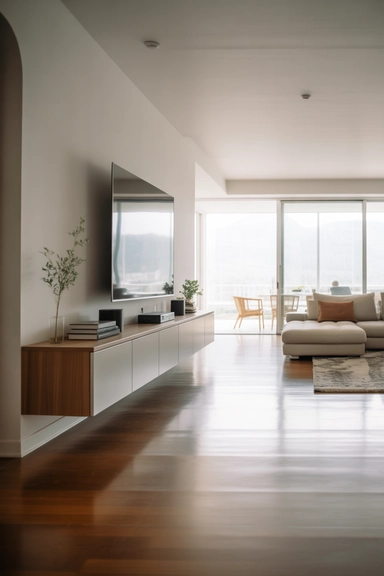
Living rooms lose spaciousness when storage furniture expands outward instead of upward. Floating wall cabinets solve this by lifting media equipment, books, and everyday items off the floor plane. Mounted at eye level or slightly above, they preserve circulation paths while maintaining easy access. The absence of legs or bases creates continuous floor sightlines, which makes even compact shared spaces feel broader and calmer.
Finish selection shapes visual impact. Matte lacquered cabinets soften reflections, while natural wood tones warm minimalist interiors. Push-latch doors prevent handle clutter, reinforcing clean lines. When vertical storage ideas like floating cabinetry replace bulky consoles, seating areas remain the focal point rather than competing with storage mass.
7. Slim Pantry Towers That Expand Kitchen Capacity
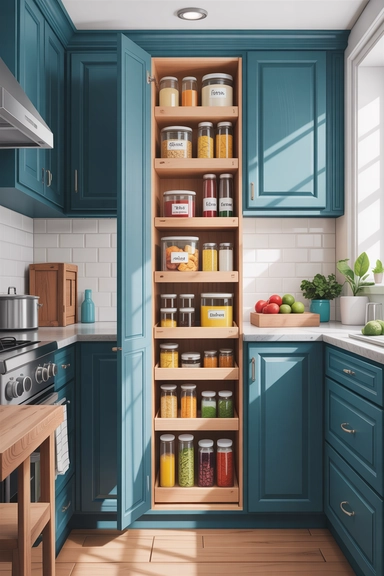
Traditional base cabinets often waste vertical volume above stored items. A slim pantry tower reclaims that height, converting narrow wall strips into full-length food storage. Pull-out wire frames or solid shelves allow visibility from top to bottom, reducing forgotten goods at the back of cupboards. This arrangement keeps dry items organized without spreading them across multiple cabinets.
Stability and load balance matter in tall units. Anchoring securely to wall studs prevents sway, while adjustable shelf spacing adapts to changing container sizes. By extending storage upward instead of outward, vertical storage ideas like pantry towers free valuable counter and floor zones while keeping kitchen routines efficient.
8. Bathroom Recessed Wall Niches That Remove Counter Clutter
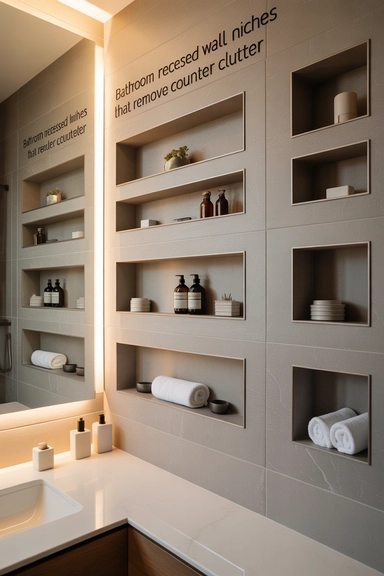
Bathroom counters quickly become congested with bottles and daily essentials. Recessed wall niches provide vertical containment without projecting into the room. Built between wall studs, they create flush shelving for toiletries, towels, or decorative accents. This keeps frequently used items accessible while preserving clear sink edges and shower ledges.
Finishing the niche interior in tile, stone, or sealed wood protects against moisture while adding subtle texture. Dividing shelves into height-based zones maintains order and prevents visual stacking. When vertical storage ideas integrate directly into architecture, bathrooms gain storage without sacrificing spatial clarity.
9. Vertical Craft Supply Panels That Keep Tools Visible
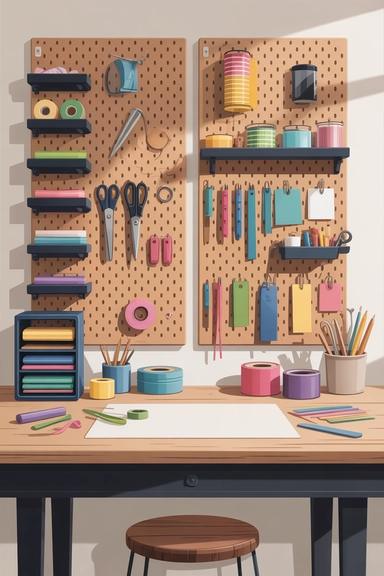
Creative spaces become inefficient when tools hide in drawers and supplies spread across worktables. A vertical craft panel, built from pegboard or slotted rail systems, places scissors, tapes, cutters, and ribbons in immediate sightlines. Visibility reduces repurchasing duplicates and shortens setup time for projects. Work surfaces stay clear, ready for active tasks instead of acting as storage.
Grouping tools by activity maintains logic in the layout. Heavier items hang lower for stability, while lighter accessories occupy upper zones. This structured approach mirrors professional studios and pairs seamlessly with ideas found in 21 Washi Tape Organizing Ideas for a Tidy Craft Space. Vertical storage ideas like these keep creativity flowing without visual interruption.
10. Corner Ladder Units That Capture Unused Vertical Gaps
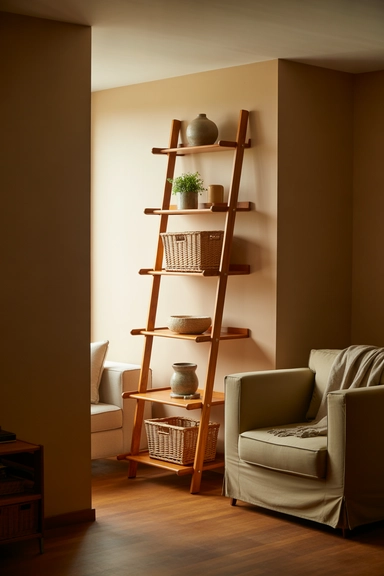
Corners often remain empty because conventional furniture struggles to fit them efficiently. Vertical ladder units convert these gaps into functional storage without dominating the room. Open-tier shelves rise upward, providing space for baskets, folded textiles, or curated décor while maintaining airiness. Their angled frames draw the eye upward, subtly increasing perceived ceiling height.
Spacing shelves generously avoids crowding and allows decorative breathing room. Securing the top anchor point ensures safety in tall installations. When vertical storage ideas activate corners instead of leaving them vacant, rooms gain storage capacity while retaining a light, composed aesthetic.
11. Over-Toilet Storage Towers That Use Vertical Void Space
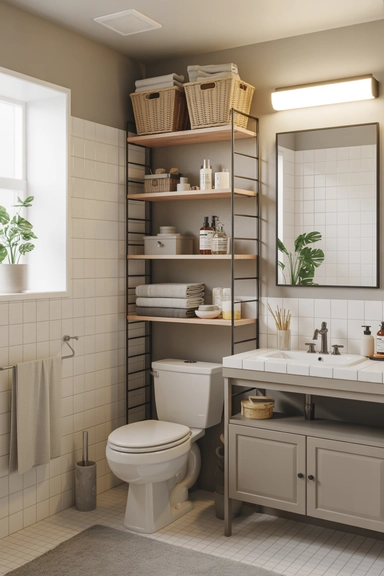
Bathrooms often contain a large vertical gap above the toilet that remains empty. A narrow over-toilet tower converts this void into structured storage for towels, backup toiletries, and cleaning supplies. Open shelves keep items visible, while lower closed compartments hide less attractive essentials. Because the unit rises upward rather than outward, floor circulation remains untouched, which is especially valuable in compact bathrooms.
Material durability matters in humid environments. Treated wood, coated metal, or moisture-resistant laminate prevents warping and staining over time. Balanced shelf spacing avoids visual compression and allows folded textiles to retain shape. Vertical storage ideas like over-toilet towers turn dead air into purposeful capacity without crowding the room.
12. Behind-Door Hanging Systems That Expand Closet Capacity
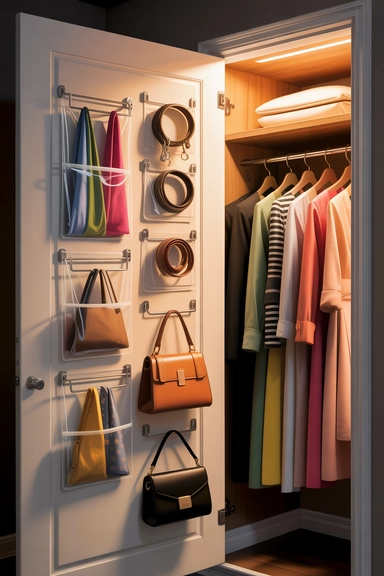
Closet doors often occupy space without contributing to storage. Hanging systems mounted on the inner door surface introduce vertical storage for belts, scarves, handbags, and lightweight footwear. Clear pocket organizers or slim hook rails keep accessories sorted and visible, reducing time spent searching through drawers.
Weight distribution keeps doors functioning smoothly. Lighter items should occupy upper zones, heavier pieces lower, preventing strain on hinges. Choosing neutral or transparent materials avoids visual noise inside the closet. By activating door height, vertical storage ideas add capacity without altering closet footprints or requiring renovation.
13. Vertical Laundry Sorters That Replace Floor Hampers
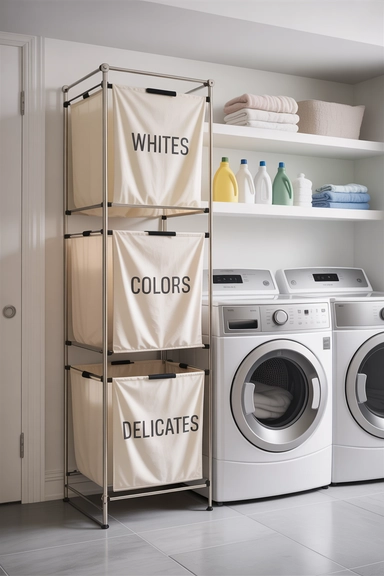
Traditional laundry baskets scatter across bedrooms and bathrooms, occupying valuable floor area. Vertical laundry sorters stack compartments upward, separating lights, dark, and delicate items in one contained column. This eliminates multiple hampers while keeping laundry discreetly organized. Elevated compartments also improve airflow, reducing odor buildup before wash cycles.
Sturdy frames and breathable fabric liners extend lifespan. Positioning the sorter near laundry routes simplifies daily routines without interrupting walking paths. When laundry rises vertically instead of spreading outward, visual clutter decreases and home maintenance feels less disruptive.
14. Ceiling-Height Bookcases That Frame Living Spaces
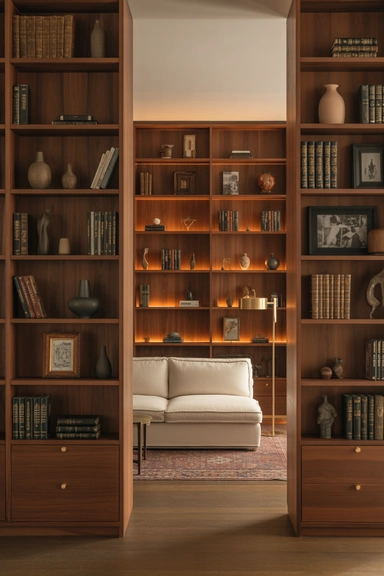
Short bookcases waste upper wall volume and create horizontal blockades in shared rooms. Ceiling-height bookcases extend storage upward while acting as architectural features that frame walls. Lower shelves accommodate heavy books and closed baskets, while upper shelves display lighter décor pieces. This upward composition draws attention away from floor density and toward room height.
Anchoring units securely prevents tipping, especially in homes with children. Aligning shelf heights with window or door frames keeps visual order consistent. Vertical storage ideas such as full-height bookcases provide generous capacity while enhancing, rather than interrupting, room structure.
15. Kitchen Cabinet Stackers That Multiply Shelf Height
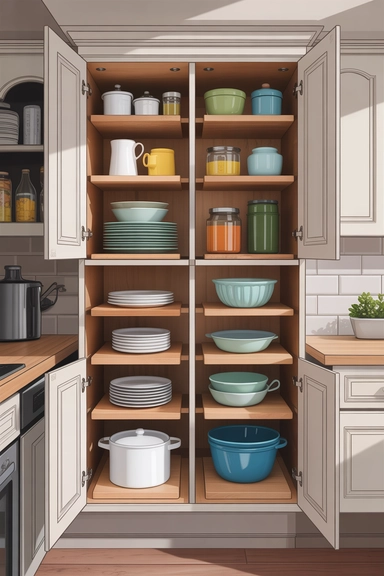
Standard kitchen cabinets often contain unused vertical air above dishes and containers. Cabinet stackers introduce secondary shelf layers inside existing units, effectively doubling storage without renovation. Plates, bowls, or food containers separate into clear levels, reducing stacking instability and making retrieval effortless.
Clear or wire designs preserve visibility and prevent dust accumulation. Selecting adjustable stackers accommodates evolving kitchen needs over time. These subtle vertical storage ideas quietly increase cabinet efficiency while maintaining clean, accessible cupboard interiors.
16. Wall-Mounted Fold-Down Desks That Free Floor Space
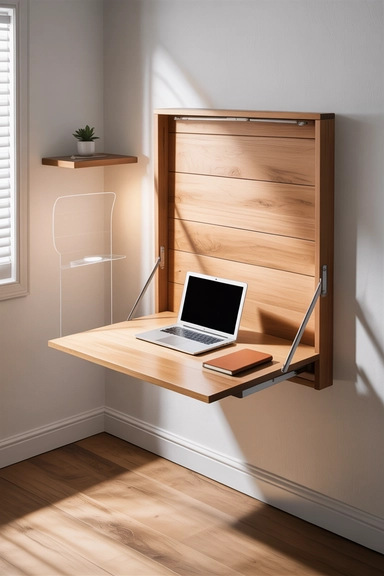
Home offices or study corners often require a desk that occupies permanent floor area, even when not in use. A wall-mounted fold-down desk reclaims that footprint by rising vertically against the wall when closed. Inside, shallow shelves store notebooks, stationery, and small devices, keeping work tools contained. When opened, the surface provides a stable workstation without introducing bulky furniture into the room.
Durable hinges and secure wall anchoring ensure smooth operation over time. Choosing finishes that match surrounding walls helps the desk blend when folded, reducing visual interruption. Vertical storage ideas like fold-down desks create flexible work zones that appear only when needed, maintaining spatial calm elsewhere.
17. Refrigerator Side Panels That Store Kitchen Essentials
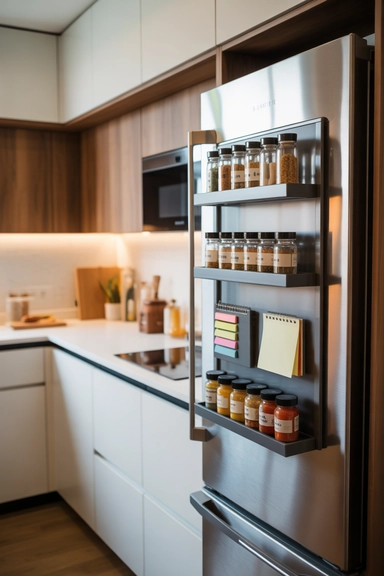
The narrow space beside refrigerators is frequently overlooked. Vertical magnetic panels or slim shelving units fitted to refrigerator sides provide storage for spice jars, wraps, or recipe notes. This approach keeps frequently used items within arm’s reach without sacrificing counter or cabinet space. The vertical alignment also prevents small kitchen tools from scattering across prep zones.
Strong magnetic backings or adhesive mounts ensure stability without damaging appliance surfaces. Grouping items by use frequency maintains order and avoids visual clutter. These vertical storage ideas activate a thin yet valuable strip of space that kitchens often waste entirely.
18. Staircase Wall Shelving That Uses Rising Vertical Lines
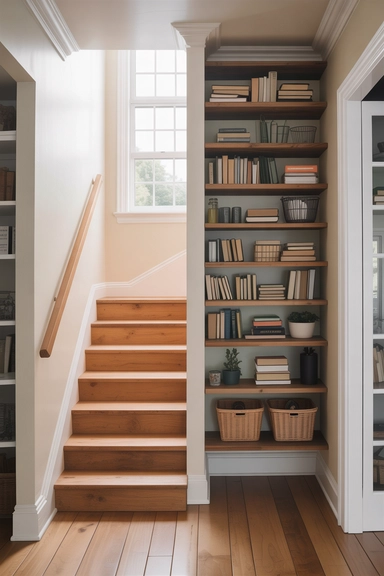
Staircase walls offer continuous vertical surfaces that can carry functional storage without impeding movement. Slim stepped shelving following the stair line accommodates books, framed photos, or decorative baskets. This upward rhythm draws the eye naturally along the architecture, making storage appear intentional rather than added.
Securing shelves into studs ensures weight safety, while consistent depth prevents protrusion into walking paths. Keeping heavier objects lower maintains balance and stability. Vertical storage ideas along staircases turn transitional areas into purposeful zones without occupying floor real estate.
19. Garage Vertical Tool Walls That Keep Equipment Accessible
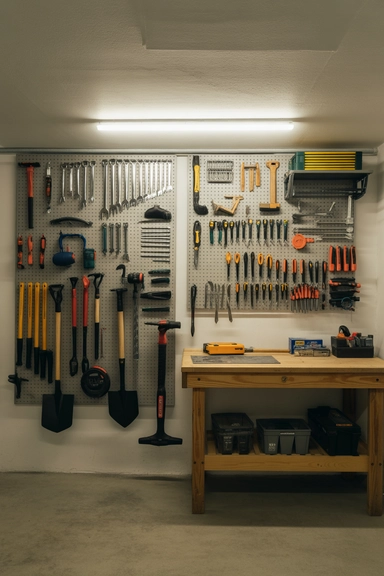
Garages often lose usable floor area to leaning tools and stacked boxes. A vertical tool wall with heavy-duty peg panels or rail tracks organizes shovels, drills, and gardening equipment upright. Each item has a visible position, reducing time spent searching and preventing tools from toppling onto the floor.
Steel or reinforced composite panels withstand weight and impact. Spacing hooks to prevent overlapping keeps the layout readable. These vertical storage ideas transform garages from chaotic storage rooms into functional workspaces with safe, open floors.
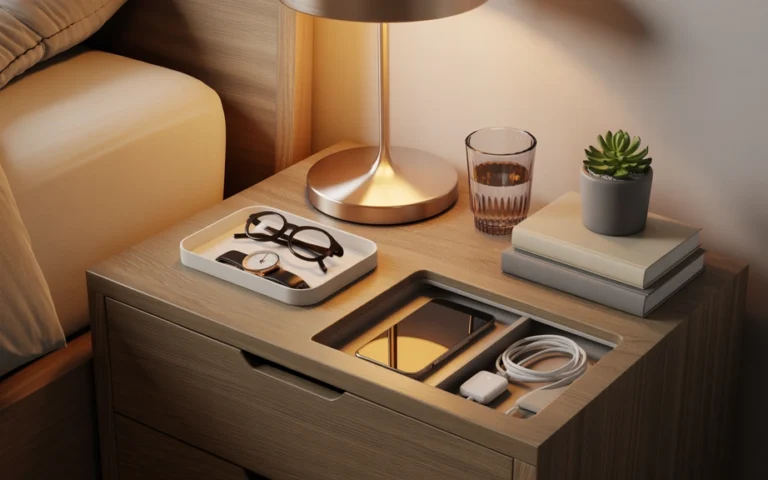
20. Behind-Headboard Wall Shelves That Replace Nightstands
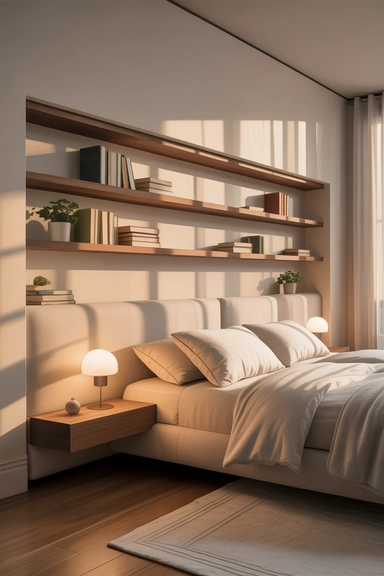
Nightstands consume floor space beside beds and visually compress sleeping areas. Behind-headboard wall shelves introduce vertical bedside storage without widening the furniture footprint. Narrow ledges hold books, glasses, and small décor while keeping floor areas clear around the bed.
Rounded shelf edges improve safety in tight layouts, while concealed mounting brackets maintain clean lines. Using warm wood or soft matte finishes preserves a restful atmosphere. Vertical storage ideas placed at headboard height balance convenience and openness, creating a calmer bedroom layout.
21. Tall Indoor Plant Shelving That Lifts Greenery Off the Floor
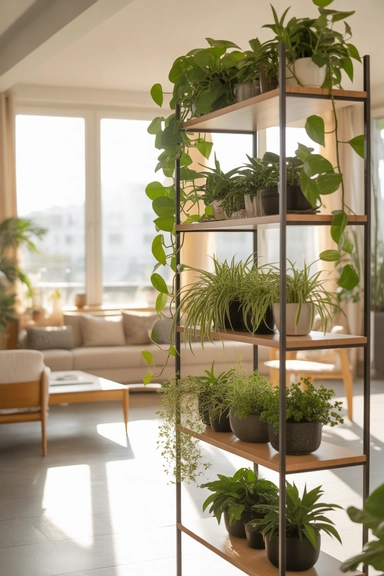
Houseplants often cluster on floors or low tables, taking up walking space and creating scattered visual weight. Tall plant shelving units elevate greenery into vertical layers, allowing light to reach each level while freeing ground space below. This upward composition turns plants into a living wall feature rather than floor obstacles. Grouping species by light needs ensures healthier growth and reduces constant rearranging.
Moisture-resistant shelf surfaces protect against water spills and soil marks. Slim frames in wood or metal keep the structure visually light, preventing the room from feeling crowded. Vertical storage ideas like plant towers integrate nature without sacrificing open floor zones, achieving balance between décor and spatial clarity.
22. Full-Height Utility Closets That Contain Household Overflow
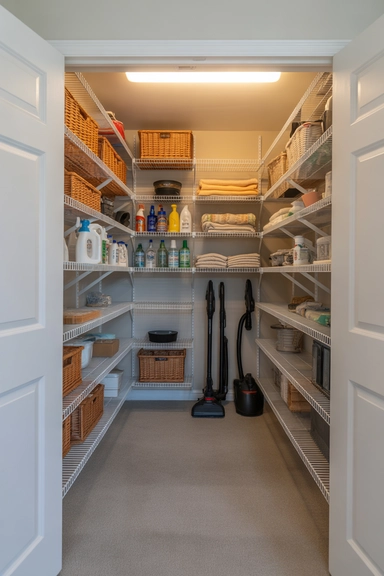
Every home accumulates equipment that rarely fits neatly into standard cabinets. Full-height utility closets capture brooms, mops, vacuum attachments, and bulk household supplies in one upright system. Interior wall hooks and tiered shelves separate categories, keeping tools from collapsing into one another. By extending storage upward, these closets prevent utility items from spilling into visible living areas.
Ventilated doors and durable interior finishes prevent odor buildup and wear. Allocating upper shelves for infrequently used supplies maintains daily access at reachable heights. Vertical storage ideas of this scale quietly absorb household overflow, protecting shared rooms from visual disruption.
Conclusion
Rebalancing a home begins with shifting storage away from the floor and into vertical zones already built into the architecture. Vertical storage ideas reclaim walking space, reduce visual congestion, and establish predictable placement for daily essentials. When height-based systems replace horizontal sprawl, rooms feel easier to navigate and simpler to maintain. The true benefit lies not only in added capacity, but in restored spatial clarity that allows each room to function without the constant presence of clutter.