
Introduction
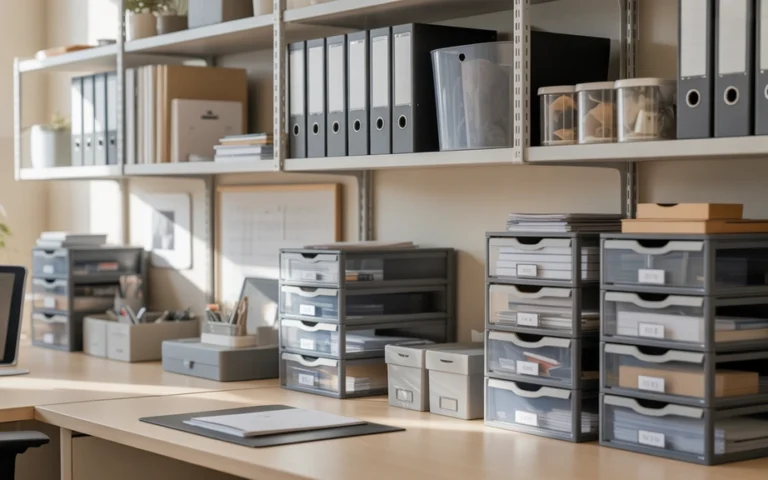
Visual clutter in bedrooms rarely comes from a lack of storage; it comes from storage that exposes too much at once. Bedrooms are spaces meant for rest, yet when surfaces, shelves, and open storage compete for attention, the room feels unsettled even if it is technically organized. Effective bedroom organization ideas focus on reducing visual noise by controlling what stays visible, where items live, and how storage blends into the room. When organization prioritizes calm sightlines and predictable placement, bedrooms feel more restful without becoming sparse or impractical. This approach works especially well when supported by closet organization ideas that prevent piles and overflow.
1. Low-Profile Storage That Keeps Sightlines Clear
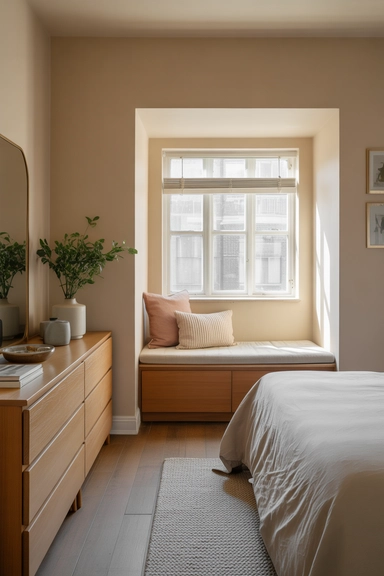
One of the most effective bedroom organization ideas for reducing visual clutter is keeping storage visually low. Tall, bulky storage interrupts sightlines and makes rooms feel crowded, especially in smaller bedrooms. Low-profile dressers, benches, or under-window storage keep the eye moving horizontally, which makes the space feel calmer and more open.
Low storage also discourages stacking items upward, a common source of visual mess. When surfaces sit lower, items placed on top are more noticeable and easier to control. In compact bedrooms, this preserves a sense of openness. In larger bedrooms, it anchors the room without dominating it visually.
2. Closed Storage That Absorbs Visual Noise
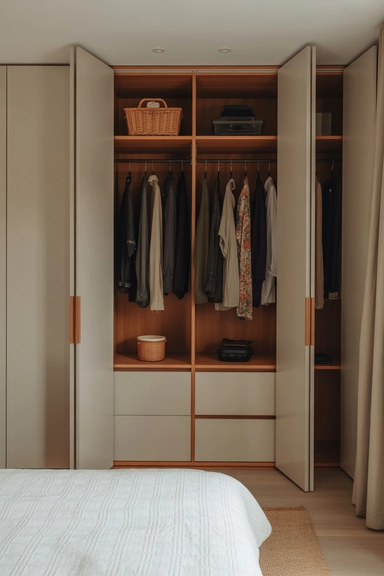
Open shelving often looks appealing in theory but becomes visually overwhelming in bedrooms. Closed storage is one of the most reliable bedroom organization ideas for absorbing visual clutter created by clothing, accessories, and personal items. Drawers, cabinets, and closed wardrobes hide irregular shapes and textures that disrupt visual calm.
The effectiveness of closed storage depends on internal organization. Without structure inside, clutter simply moves out of sight temporarily. In small bedrooms, closed storage prevents visual overload. In larger bedrooms, it balances decorative elements by quietly containing bulk, allowing the room to feel intentional rather than busy.
3. Surface Reduction That Limits Visual Distractions
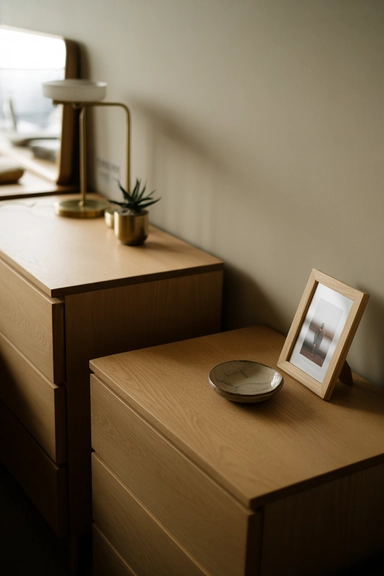
Bedrooms accumulate clutter when flat surfaces become default storage zones. Nightstands, dressers, and desks quickly collect items that interrupt visual flow. One of the most impactful bedroom organization ideas is deliberately limiting usable surface space so only essential items remain visible.
This approach encourages intentional placement rather than accumulation. When surfaces are restrained, excess items must return to storage instead of lingering. In small bedrooms, this immediately reduces visual density. In larger bedrooms, it preserves a clean, composed look. Fewer exposed surfaces mean fewer visual interruptions.
4. Unified Storage Finishes That Create Visual Continuity
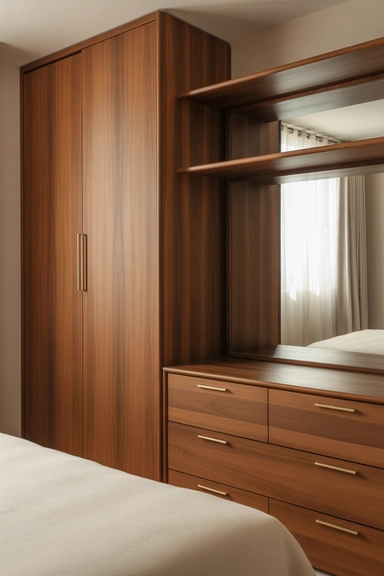
Visual clutter often stems from mismatched storage rather than excess items. Using unified finishes across storage elements is a subtle but powerful bedroom organization idea. When dressers, wardrobes, and shelving share similar tones or materials, the room reads as calmer even if storage volume remains the same.
Consistency reduces visual fragmentation. In smaller bedrooms, unified finishes prevent the space from feeling chopped up. In larger bedrooms, they create cohesion across zones. This approach does not require identical furniture, only harmony in color, texture, or scale to maintain visual balance.
5. Designated Drop Zones That Prevent Item Spread
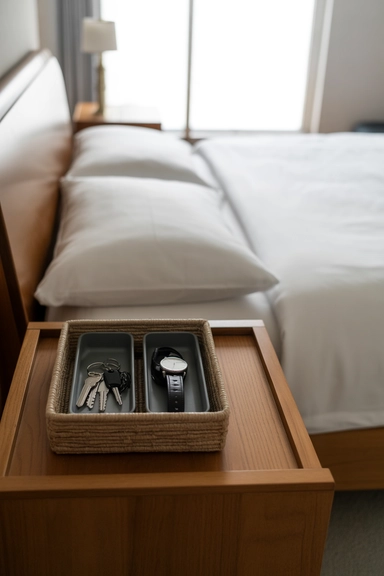
Bedrooms become visually cluttered when everyday items lack defined landing spots. Clothing, bags, and accessories drift onto chairs or floors when no clear drop zone exists. Creating intentional drop zones is one of the most practical bedroom organization ideas for preventing visual spread.
Drop zones should be limited and purposeful, such as a tray, drawer, or small basket. Without boundaries, they quickly become clutter magnets. In small bedrooms, controlled drop zones prevent pile-ups. In larger bedrooms, they contain daily items without letting them dominate the room visually.
6. Bedside Storage That Replaces Overcrowded Nightstands
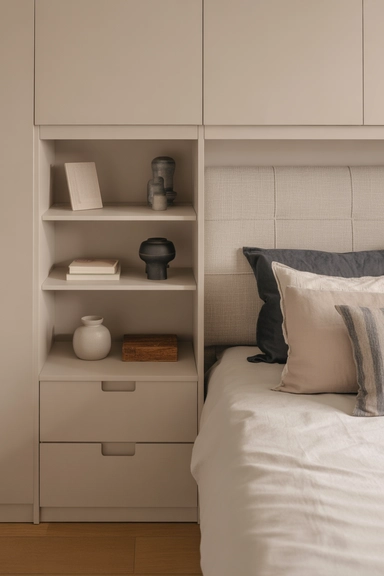
Nightstands often become visual clutter hotspots because they combine storage, surfaces, and daily habits in a very small footprint. Effective bedroom organization ideas reduce visual noise by shifting bedside storage downward or inward rather than outward. Drawers, shelves, or enclosed bedside units keep essentials accessible without exposing everything at once.
When bedside storage absorbs items like chargers, books, or personal accessories, surfaces remain visually calm. In small bedrooms, this prevents nightstands from dominating the space. In larger bedrooms, it maintains symmetry and restraint. The goal is not fewer items, but fewer items competing for attention.
7. Vertical Wardrobe Storage That Reduces Floor-Level Clutter
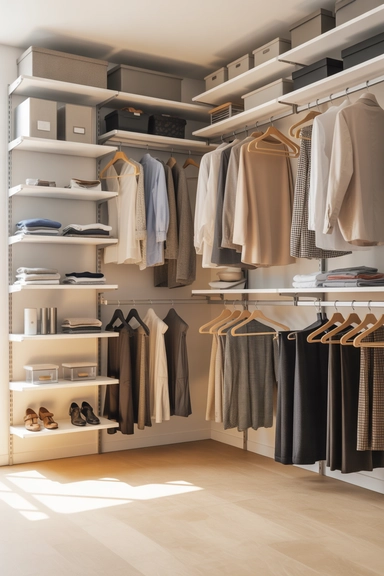
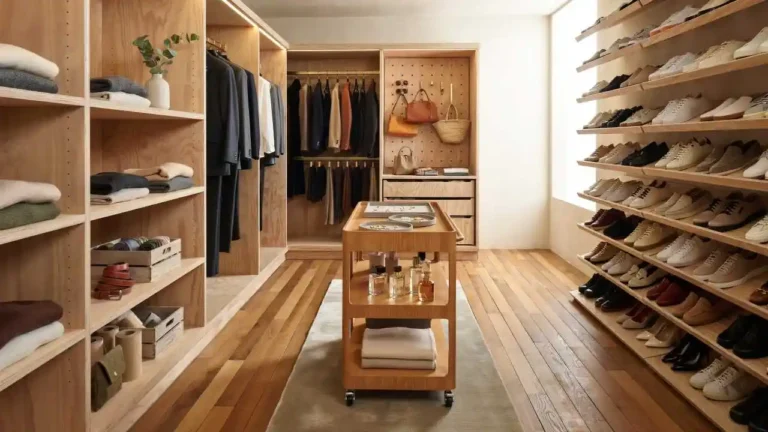
Floor-level clutter disrupts visual calm more than almost anything else in a bedroom. One of the most effective bedroom organization ideas is moving storage vertically inside wardrobes rather than allowing items to spill outward. Shelves, hanging organizers, and upper compartments reclaim space without expanding the wardrobe footprint.
Vertical organization must remain structured to avoid becoming visually chaotic. Grouping similar items and limiting overhang keeps storage readable. In small bedrooms, vertical wardrobe storage frees floor space immediately. In larger bedrooms, it prevents the room from feeling bottom-heavy and crowded.
8. Soft Storage Solutions That Blend Into the Room

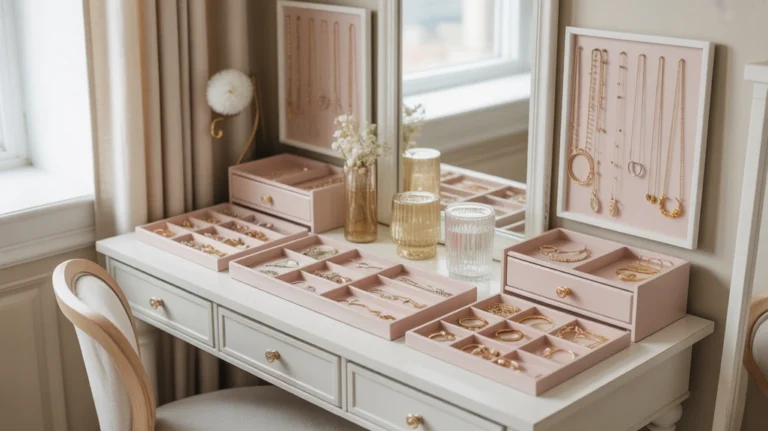
Hard-edged storage can feel visually heavy in bedrooms, especially when space is limited. Soft storage, such as fabric bins, upholstered benches, or lined baskets, is a subtle bedroom organization idea that reduces visual harshness while still providing containment. These pieces absorb clutter without introducing sharp visual breaks.
Soft storage works best when it blends with the room’s palette and textures. In small bedrooms, it prevents storage from standing out. In larger bedrooms, it adds warmth while keeping items controlled. This approach pairs well with creative bedroom organization ideas to maximize your space that emphasize calm, cohesive layouts.
9. Clothing Visibility Control That Reduces Visual Overload
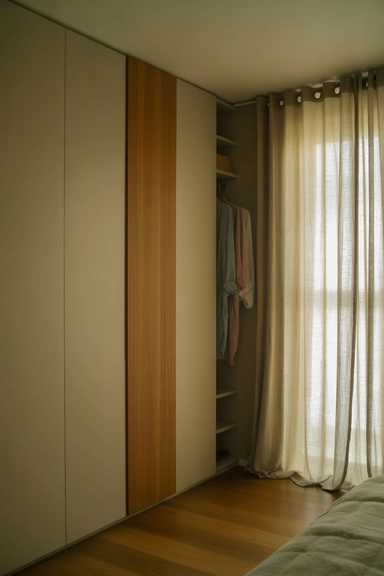
Exposed clothing creates visual clutter quickly, even when neatly arranged. Effective bedroom organization ideas limit how much clothing remains visible at one time. This may mean closed wardrobes, curtain-covered rails, or storing off-season clothing out of sight.
Reducing clothing visibility lowers mental noise and makes the room feel more restful. In small bedrooms, this prevents walls from feeling crowded. In larger bedrooms, it preserves a clean visual rhythm. The aim is not hiding everything, but controlling exposure so the eye can rest.
10. Furniture Spacing That Restores Visual Breathing Room
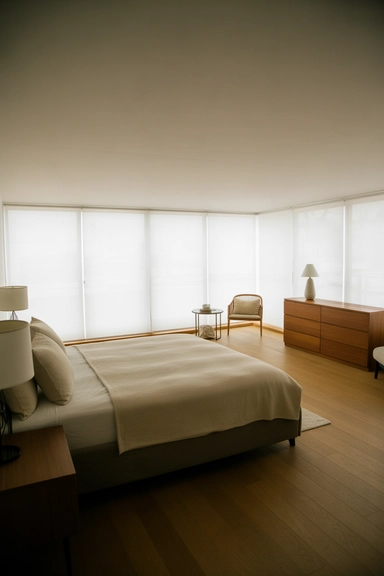
Allowing space around beds, dressers, and wardrobes creates clearer sightlines and reduces perceived clutter. In small bedrooms, even minor spacing adjustments improve flow. In larger bedrooms, it prevents unused areas from becoming informal storage zones. Space itself is a form of organization.
Visual clutter is not only about objects; it is also about spacing. Furniture placed too tightly together makes bedrooms feel cramped even when storage is adequate. One overlooked bedroom organization idea is increasing spacing between major pieces to restore visual breathing room.
11. Under-Bed Storage That Stays Visually Invisible
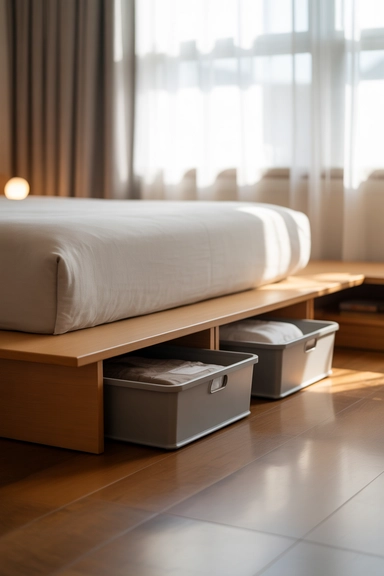
Under-bed storage can either reduce or amplify clutter depending on how it is used. Smart bedroom organization ideas keep under-bed storage visually invisible by using low-profile containers that stay fully concealed. When bins protrude or mismatch, they undermine visual calm.
Under-bed storage works best for items not used daily, such as seasonal clothing or extra linens. In small bedrooms, it replaces bulky furniture. In larger bedrooms, it keeps excess items out of sight. Properly contained, under-bed storage supports organization without adding visual weight.
12. Storage That Separates Daily Clothing From Occasional Items
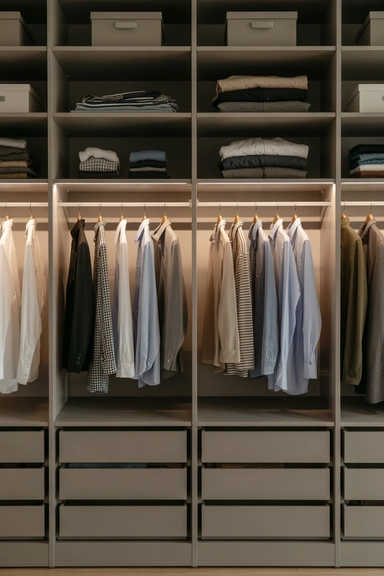
Bedrooms feel visually cluttered when daily clothing competes with items that are rarely worn. One of the most effective bedroom organization ideas is separating high-rotation clothing from occasional or seasonal pieces. When everything lives in the same visual field, wardrobes appear fuller and more chaotic than they actually are.
Daily items should sit at eye or hand level for easy access, while occasional items move to higher shelves or concealed storage. In small bedrooms, this separation prevents overhandling and mess. In larger bedrooms, it keeps primary storage visually lighter and easier to maintain.
13. Drawer Organization That Prevents Visual Spillover
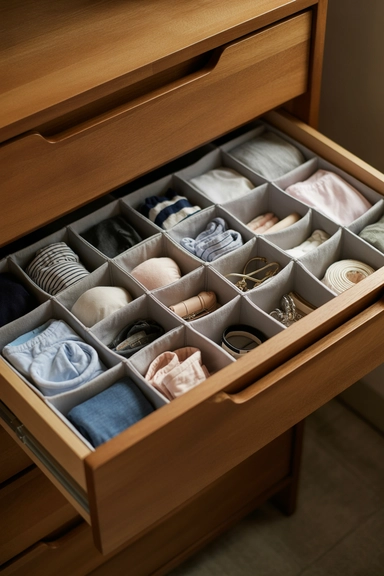
Drawers often contribute to visual clutter indirectly when they overflow and force items onto visible surfaces. Effective bedroom organization ideas include internal drawer systems that prevent contents from spreading and becoming unmanageable. Dividers and shallow sections keep items contained and predictable.
Well-organized drawers reduce the need to open multiple storage areas at once. In small bedrooms, this prevents surfaces from becoming temporary storage. In larger bedrooms, it maintains consistency across larger furniture pieces. Controlled drawers support visual calm beyond their interiors.
14. Wall-Mounted Storage That Frees Floor Space
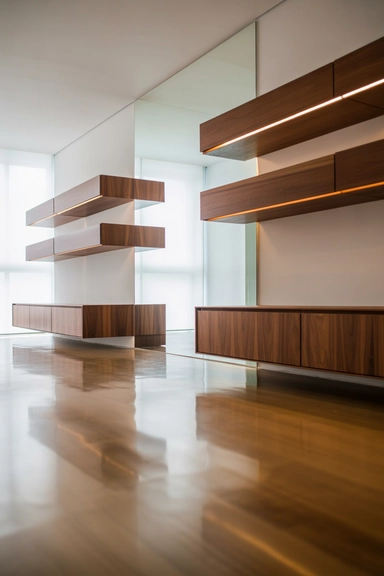
Floor congestion increases visual clutter more than most people realize. Wall-mounted storage is a practical bedroom organization idea that lifts storage off the floor and restores visual lightness. Shelves, sconces with storage, or wall-mounted cabinets free space without shrinking the room.
Wall-mounted solutions must remain shallow to avoid visual heaviness. In small bedrooms, this approach improves circulation and openness. In larger bedrooms, it prevents storage furniture from dominating the layout. Elevating storage reduces visual density at eye level.
15. Storage That Keeps Personal Items Out of Constant View
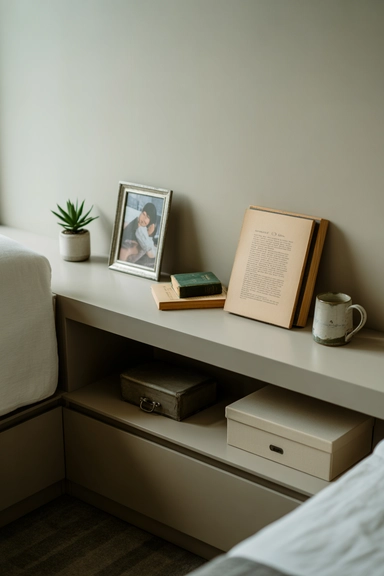
Personal items add character to a bedroom, but too many visible pieces create distraction. One of the more nuanced bedroom organization ideas is limiting how many personal items remain on display. Rotating decor or storing sentimental items out of sight preserves calm.
This does not require removing personality, only curating visibility. In small bedrooms, reduced display prevents visual crowding. In larger bedrooms, it maintains balance across the room. Thoughtful concealment keeps personal items meaningful instead of overwhelming.
16. Symmetrical Storage That Creates Visual Balance
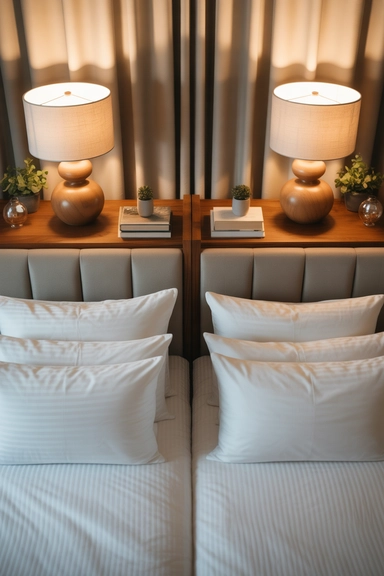
Visual clutter often stems from imbalance rather than excess. Symmetry is a subtle bedroom organization idea that creates calm by distributing storage evenly. Matching nightstands, paired shelving, or balanced wardrobes help the eye settle instead of scanning irregularly.
Symmetry does not require identical pieces, only proportional balance. In small bedrooms, symmetry prevents lopsided layouts. In larger bedrooms, it anchors the space visually. Balanced storage arrangements reduce perceived clutter even when storage volume remains unchanged.
17. Storage That Encourages a Consistent Reset Routine

Bedrooms stay organized when storage supports easy, repeatable routines. Bedroom organization ideas that require precision or frequent adjustments tend to fail. Storage should make it simple to reset the room daily without thinking.
Clear placement, easy access, and limited steps encourage consistency. In small bedrooms, fast resets prevent visible clutter buildup. In larger bedrooms, they maintain calm across broader spaces. Storage that aligns with routine reinforces order naturally.
18. Storage That Keeps Floors Visually Open
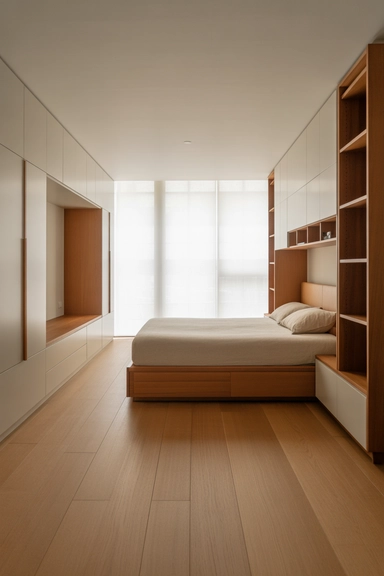
Floors play a major role in how visually calm a bedroom feels. When storage creeps onto the floor through bins, baskets, or overflow furniture, the room immediately feels smaller and more cluttered. One of the most effective bedroom organization ideas is keeping floor space as open as possible by relocating storage upward or inward.
Open floors allow the eye to travel uninterrupted, which reduces visual noise. In small bedrooms, this creates the impression of added space. In larger bedrooms, it prevents unused corners from becoming informal storage zones. Floor clarity supports both visual calm and easier daily movement.
19. Minimal Display Zones That Prevent Decorative Clutter
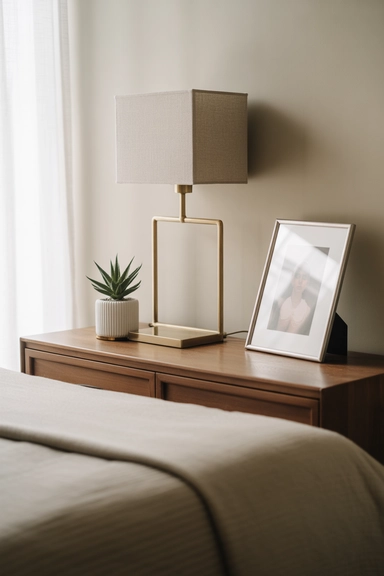
Decor becomes clutter when it spreads without boundaries. Smart bedroom organization ideas define minimal display zones where decor is intentionally limited. Instead of spreading items across multiple surfaces, a single shelf, ledge, or dresser top becomes the designated display area.
This containment preserves personality without overwhelming the room. In small bedrooms, it prevents visual crowding. In larger bedrooms, it keeps decor from competing with furniture and storage. Limiting display zones ensures decoration enhances the room rather than distracting from rest.
20. Storage That Reduces Decision Fatigue
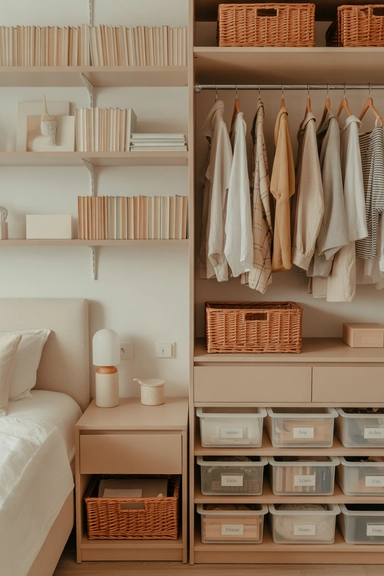
Visual clutter often reflects mental clutter. When storage systems require constant decisions about where items belong, disorder follows. Effective bedroom organization ideas reduce decision fatigue by making placement obvious and consistent. Each item should have one clear home.
Reducing choices speeds up daily routines and lowers resistance to tidying. In small bedrooms, this prevents pile-ups. In larger bedrooms, it keeps systems consistent across zones. When storage decisions are simplified, maintaining order becomes easier and more automatic.
21. Organization That Makes the Bedroom Feel Finished
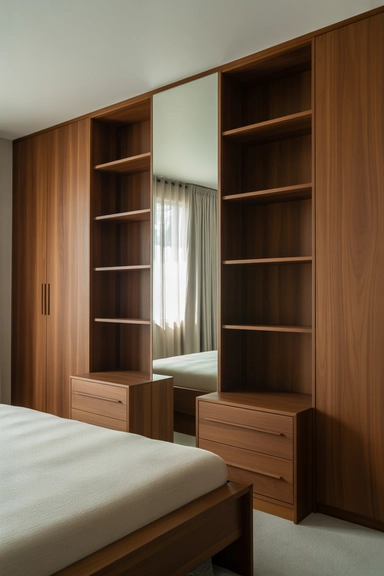
Bedrooms feel visually cluttered when organization appears temporary or incomplete. The most effective bedroom organization ideas treat storage as part of the room’s design rather than an afterthought. Cohesive materials, aligned furniture, and intentional spacing create a sense of completion.
When the room feels finished, clutter stands out immediately and is addressed faster. In small bedrooms, this reduces stress. In larger bedrooms, it prevents slow drift into disorder. Finished organization reinforces calm by signaling that everything already has a place.
Conclusion
Reducing visual clutter in the bedroom is less about owning fewer things and more about controlling what remains visible. Bedroom organization ideas work best when they protect sightlines, limit surface exposure, and align storage with daily habits. By prioritizing visual calm, predictable placement, and easy reset routines, bedrooms become more restful and easier to maintain. The most successful systems quietly support order without constant effort, allowing the space to feel balanced, intentional, and genuinely relaxing over time.