
Introduction
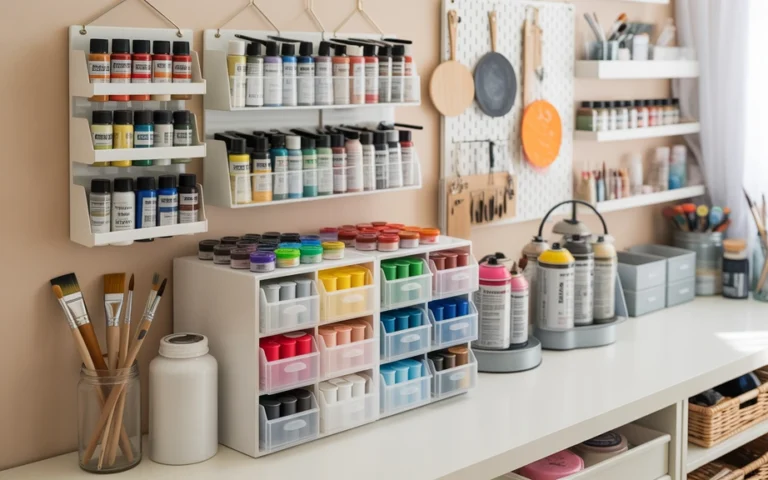
Washi tape creates clutter faster than most craft supplies because it is lightweight, visually appealing, and easy to collect in large quantities. When rolls are stored without intention, they end up scattered across drawers, shelves, and work surfaces, making the craft space feel disorderly even when other supplies are well organized. Effective washi tape organizing ideas focus on visibility, access, and containment rather than decorative display alone. When storage reflects how tape is selected, swapped, and returned during projects, the space stays functional instead of chaotic. This approach works best when supported by creative craft storage ideas to organize your supplies.
1. Open Storage That Keeps Washi Tape Fully Visible
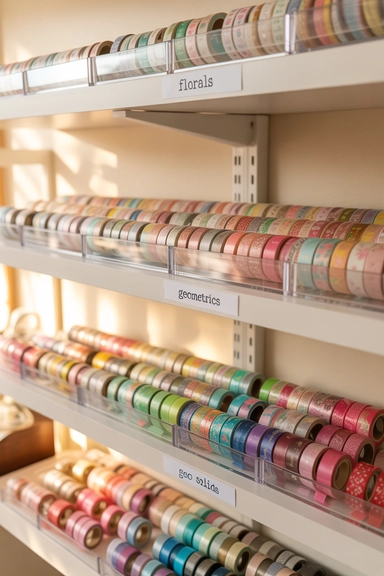
Visibility sits at the core of successful washi tape organizing ideas because hidden rolls are rarely returned to storage properly. When tape is stacked, buried, or stored in deep containers, it becomes harder to see what is available, leading to duplicates and unnecessary mess. Open storage allows patterns and colors to remain immediately visible, which supports faster selection and more deliberate use during crafting sessions.
Open shelving, shallow trays, or wall-mounted holders work best when rolls are placed side by side instead of layered. This prevents shifting and collapse while keeping the display readable. In smaller craft spaces, open storage must remain tightly grouped to avoid visual overload. In larger rooms, organizing visible tape by color or theme keeps the collection accessible without feeling chaotic.
2. Vertical Organizing Ideas That Save Surface Space
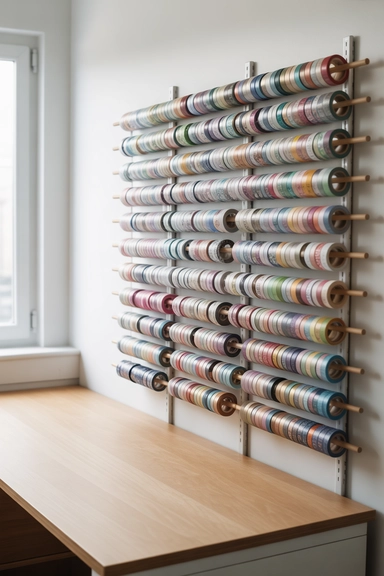
Vertical storage is especially effective in washi tape organizing ideas where desk and drawer space is limited. Storing rolls upright or mounting them vertically reduces the footprint of the collection while keeping each roll easy to reach. This approach supports quick visual scanning and prevents tape from spreading across work surfaces during active projects.
Vertical systems require stability to work well. Dowels, rods, or narrow racks should hold rolls securely to prevent sliding when tape is removed. In smaller craft rooms, vertical organization frees valuable surface area for active work. In larger spaces, it keeps tape consolidated in a single zone instead of drifting into multiple storage areas.
3. Drawer-Based Systems That Prevent Rolling and Tangling
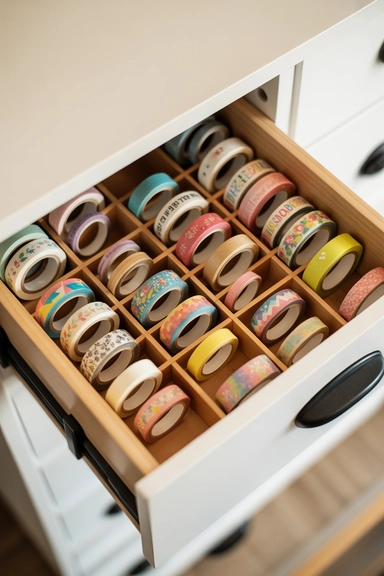
Some washi tape organizing ideas work best when the collection is kept out of sight, provided the drawer system is designed correctly. Shallow drawers with fitted dividers allow rolls to sit flat or upright without movement, keeping patterns visible while maintaining a visually calm craft room. This option suits spaces where open displays feel distracting.
Divider spacing is critical. Gaps that are too wide allow rolls to roll and stack, undoing the system quickly. Overly deep drawers tend to bury tape and discourage proper return after use. In small craft spaces, precise drawer organization maximizes efficiency. In larger rooms, drawer systems centralize storage without overwhelming walls or shelves.
4. Categorized Storage That Reduces Visual Overload
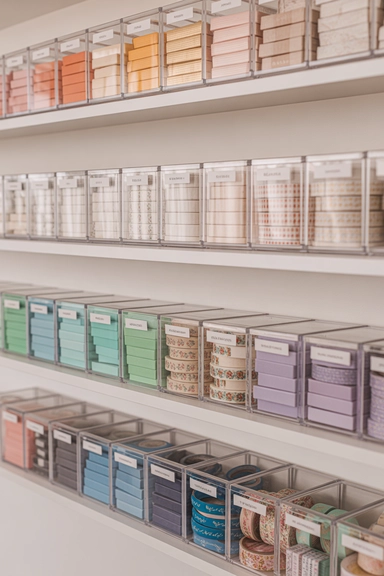
As washi tape collections grow, categorization becomes essential to keeping them usable. Without grouping, even neatly stored tape can feel overwhelming and difficult to navigate. Categorizing rolls by color family, theme, or usage frequency simplifies decision-making and reduces the time spent searching during projects.
Storage systems should support clear grouping without forcing rigid rules that are hard to maintain. Flexible categories allow the collection to evolve naturally over time. In small craft spaces, categorization limits visual noise. In larger rooms, it prevents tape from spreading into unrelated storage zones, keeping the collection intentional and controlled.
5. Portable Organizing Ideas for Active Crafting
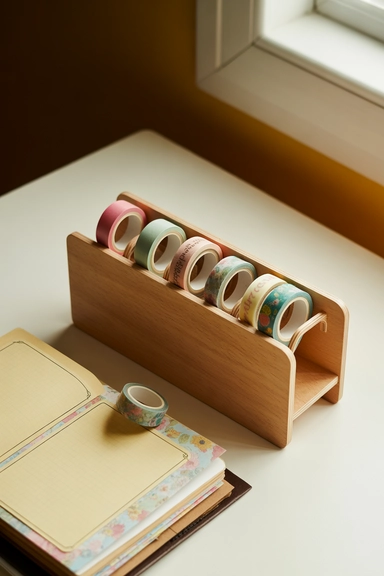
Portability plays a major role in practical washi tape organizing ideas, especially for crafters who work across multiple surfaces. Portable organizers allow selected rolls to move with the project instead of pulling large portions of the collection out of storage. This reduces clutter and shortens setup and cleanup time.
Portable systems work best when capacity is limited to encourage intentional selection. Compact trays or caddies prevent overload and make it easier to return unused tape after a session. In small spaces, portability replaces multiple storage zones. In larger rooms, it supports flexible workflows without leaving supplies scattered.
6. Wall-Mounted Systems That Keep Tape Off Work Surfaces
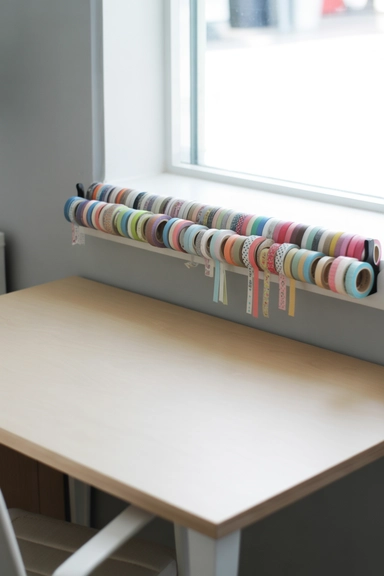
Wall-mounted storage is one of the most effective washi tape organizing ideas for keeping work surfaces clear. When tape lives on desks or tables, it quickly spreads into active work zones and interferes with projects. Mounting tape storage on the wall preserves valuable surface space while keeping rolls visible and easy to access during use.
Successful wall-mounted systems rely on shallow depth and controlled spacing. Rolls should sit close to the wall without projecting outward too far, which helps maintain clean sightlines. In small craft rooms, this approach prevents overcrowding. In larger spaces, it establishes a dedicated tape zone that keeps supplies contained and predictable.
7. Clear Containers That Balance Visibility and Containment
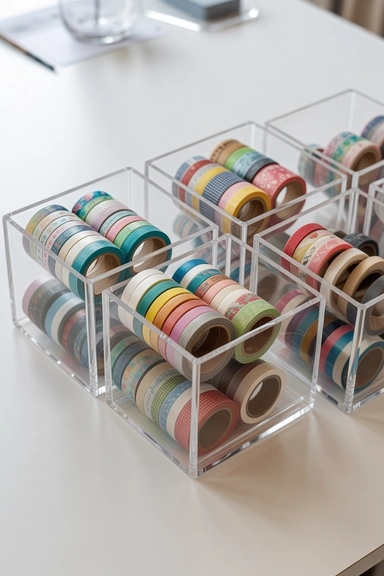
Clear containers offer a middle ground in washi tape organizing ideas, combining visibility with physical containment. Unlike open storage, containers limit sprawl while still allowing patterns and colors to be seen at a glance. This approach works well for collections that are frequently used but need boundaries to stay tidy.
Container size matters. Oversized bins encourage piling, while shallow containers maintain order and prevent shifting. Lids should open easily to avoid friction during use. In small craft spaces, clear containers reduce visual clutter while keeping tape accessible. In larger rooms, they prevent collections from spreading across multiple shelves.
8. Organizing Ideas That Prevent Overbuying and Duplication
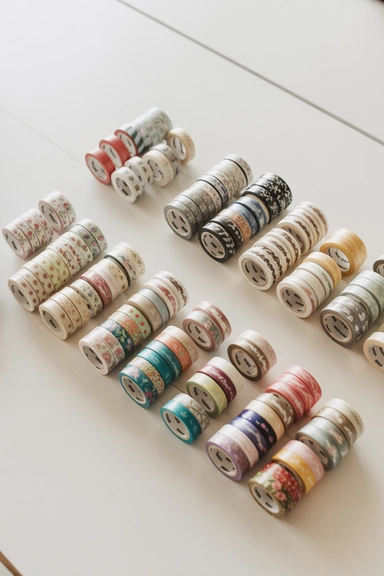
One overlooked benefit of effective washi tape organizing ideas is reduced overbuying. When tape is poorly organized, it is easy to forget what is already owned, leading to duplicates and unnecessary accumulation. Visible, well-structured storage makes the full collection immediately apparent.
Grouping similar designs together highlights redundancies and gaps. This awareness encourages more intentional purchasing and better use of existing supplies. In small craft rooms, this control prevents storage overflow. In larger rooms, it keeps collections curated rather than excessive. Organization becomes a tool for decision-making, not just storage.
9. Low-Profile Storage for Drawers and Shallow Shelves
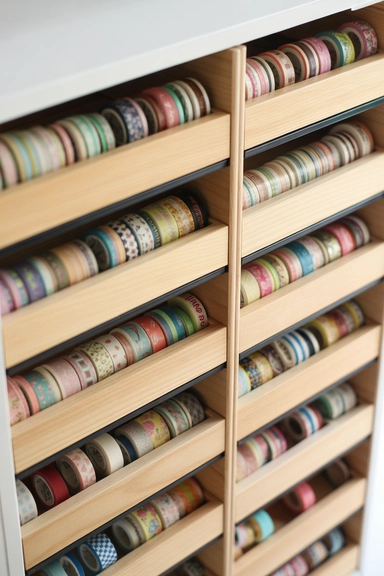
Low-profile storage plays an important role in washi tape organizing ideas where depth is limited. Shallow shelves or drawers prevent rolls from stacking vertically, which often leads to rolling and tangling. Keeping tape in a single layer improves visibility and maintains order with minimal effort.
This approach works especially well in shared or multi-purpose craft spaces where visual calm is important. Low-profile systems also make it easier to return tape quickly after use. In smaller rooms, they maximize tight storage areas. In larger spaces, they maintain uniformity across broader storage systems.
10. Organizing Ideas That Support Frequent Rotation of Tape
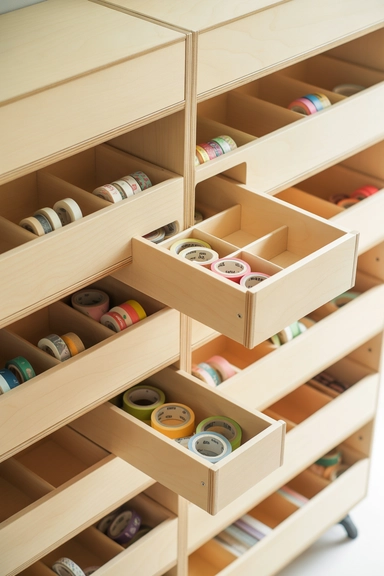
Washi tape collections are rarely static, making rotation-friendly organizing ideas especially valuable. Storage systems should allow new rolls to be added and older ones to be removed without disrupting the entire setup. Rigid systems often fail because they cannot adapt to changes in the collection.
Flexible spacing, adjustable dividers, or expandable racks support rotation without reorganization. In small craft rooms, this prevents repeated overhauls. In larger rooms, it maintains consistency as collections grow. A rotation-friendly system keeps organization sustainable rather than fragile.
11. Dedicated Tape Zones That Prevent Supply Drift
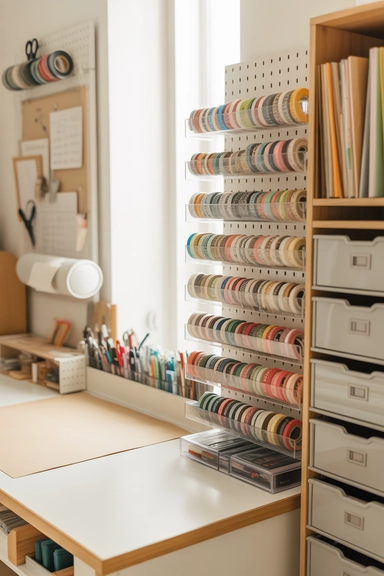
Designating a specific zone for washi tape is a foundational principle in effective washi tape organizing ideas. When tape storage is scattered across multiple drawers or shelves, rolls tend to migrate and never fully return. A single, clearly defined zone keeps the collection contained and easy to maintain.
This zone should sit near primary crafting areas without interrupting workflow. In small spaces, proximity reduces mess. In larger rooms, it prevents tape from drifting into unrelated storage. A dedicated zone reinforces consistency and keeps the craft space feeling intentional rather than improvised.
12. Drawer Inserts That Keep Rolls Aligned and Stable
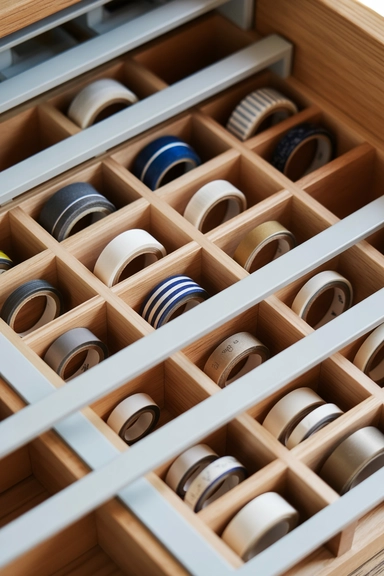
Drawer inserts are a practical solution within washi tape organizing ideas when precision and order matter. Inserts prevent rolls from shifting during use, which keeps patterns visible and stops tape from piling into uneven stacks. This stability makes drawers easier to maintain over time, especially in frequently used craft spaces.
Well-fitted inserts should match the diameter of tape rolls closely. Excess space encourages movement, while tight spacing supports quick return after use. In small craft rooms, inserts maximize limited drawer space. In larger rooms, they maintain uniformity across multiple storage areas, reducing the need for constant reorganization.
13. Stackable Storage That Grows With Your Collection
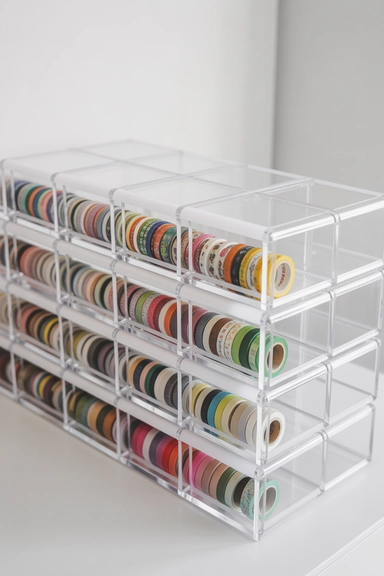
Stackable systems allow washi tape organizing ideas to scale as collections expand. Rather than redesigning storage every time new rolls are added, stackable units adapt gradually. This approach maintains structure without forcing difficult decisions about what to keep or discard.
The key to effective stacking is restraint. Units should stack securely without compressing lower layers or hiding patterns. Clear or open-front designs prevent visual loss. In small craft spaces, stacking uses vertical room efficiently. In larger spaces, it keeps expansion controlled rather than scattered across shelves.
14. Organizing Ideas That Match Tape Widths and Sizes
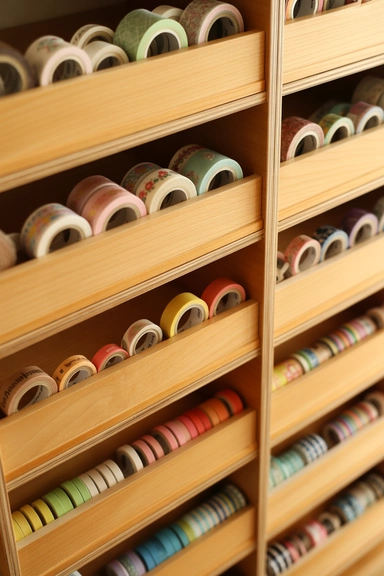
Not all washi tape is the same size, which makes size-aware organizing ideas especially important. Mixing widths in a single storage system often leads to uneven stacks and wasted space. Organizing rolls by size improves both stability and visibility.
Storage that accommodates multiple widths should allow adjustable spacing. This flexibility prevents smaller rolls from disappearing behind wider ones. In small rooms, size-matched storage maximizes efficiency. In larger rooms, it keeps collections visually balanced and easier to navigate during active projects.
15. Storage Solutions That Protect Tape From Damage
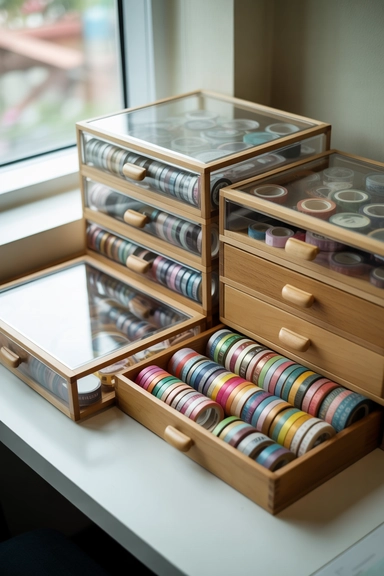
Protection is often overlooked in washi tape organizing ideas, yet exposure to dust, light, and pressure can affect tape quality. Storage systems that shield rolls without hiding them entirely help preserve usability over time. This balance is especially important for specialty or seasonal tapes.
Partial enclosures, shallow drawers, or covered containers limit exposure while maintaining access. In small spaces, protection prevents waste caused by environmental wear. In larger craft rooms, it keeps long-term collections usable. Protective storage ensures tape remains functional rather than decorative clutter.
16. Organizing Ideas That Encourage Easy Cleanup
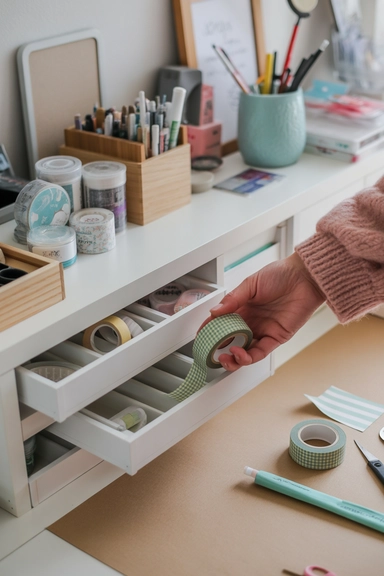
Organization systems succeed when they support easy cleanup rather than relying on discipline. Washi tape organizing ideas that place storage directly beside work areas reduce friction during reset. When returning tape requires minimal effort, clutter becomes less likely to accumulate.
Storage openings should be obvious and accessible without rearranging other supplies. In small craft spaces, this prevents lingering mess. In larger rooms, it keeps order consistent across zones. Cleanup-friendly systems maintain long-term tidiness with minimal conscious effort.
17. Display-Oriented Storage That Stays Controlled
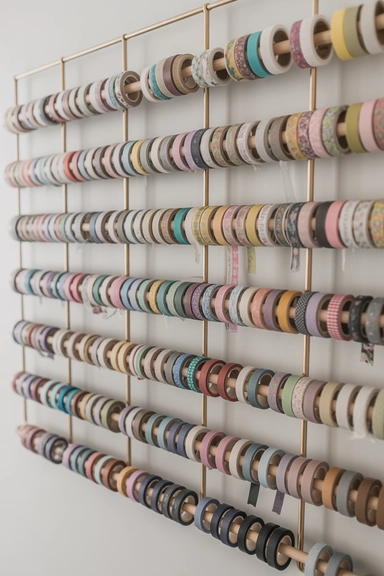
Some crafters enjoy seeing their washi tape as part of the craft room’s visual identity. Display-oriented washi tape organizing ideas can work when they are controlled and intentional. Unstructured displays often drift into clutter, undermining both aesthetics and function.
Controlled displays rely on limited capacity and consistent alignment. Frames, rails, or grid systems keep rolls orderly while allowing visual enjoyment. In small rooms, displays must remain compact. In larger rooms, they benefit from symmetry and spacing. Display works best when structure leads the design.
18. Storage Systems That Control Visual Noise, Not Just Clutter
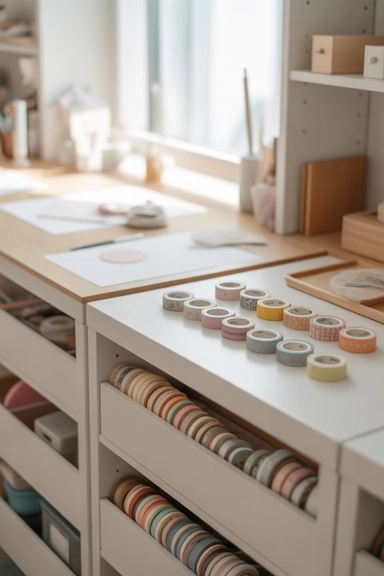
Washi tape becomes visually noisy faster than most supplies because of its color density and repetition. Even when neatly stored, too many exposed rolls can overwhelm the eye and make a craft space feel busy. Effective washi tape organizing ideas account for this by limiting how much of the collection is visible at once. Storage that compresses visual information, such as shallow trays with partial concealment, keeps the space readable without hiding supplies completely.
Visual control is especially important in small craft spaces where tape storage sits close to work areas. When every pattern competes for attention, focus drops and projects feel harder to start. In larger rooms, unmanaged visual noise spreads across walls and shelves, fragmenting the layout. Controlling visibility allows the tape collection to stay inspiring rather than distracting.
19. Organizing Ideas That Match How Washi Tape Is Actually Used
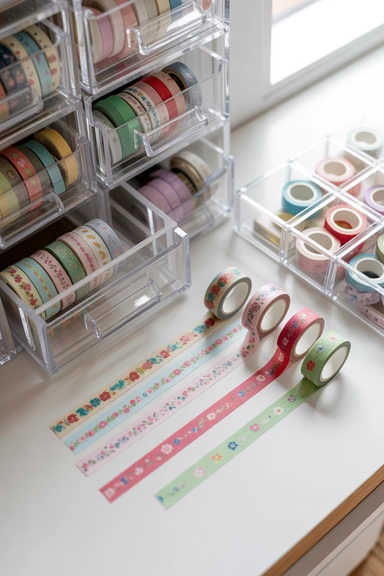
Washi tape is rarely used one roll at a time. Most projects involve comparing colors, widths, or patterns before committing, which means storage must support quick selection and return. Organizing ideas that ignore this behavior often fail, forcing tape to pile up on work surfaces mid-project. Storage that allows rolls to be lifted, tested, and replaced easily keeps the workflow intact.
This requires systems that resist collapse during partial removal. Horizontal trays, stable racks, or fitted compartments prevent neighboring rolls from shifting when one is taken. In small spaces, this stability prevents repeated cleanup. In larger craft rooms, it supports sustained sessions without disorder spreading across the room.
20. Long-Term Organizing Systems That Prevent Collection Drift
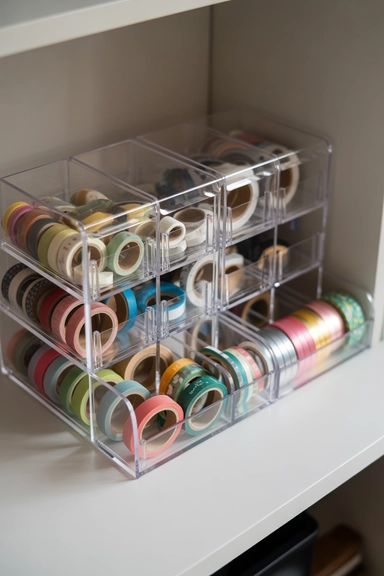
Many washi tape organizing ideas work initially but break down as collections grow. This happens when storage lacks limits or expansion logic. Without clear boundaries, new rolls get added wherever space appears, leading to drift across drawers, shelves, and carts. Long-term systems define where tape belongs and where it does not, preventing gradual sprawl.
Effective long-term storage includes intentional capacity limits or modular expansion paths. When space fills up, it signals a decision rather than absorbing clutter silently. In small craft rooms, this prevents overcrowding. In larger rooms, it protects layout integrity. Sustainable organization depends on systems that resist passive accumulation.
21. Organizing Ideas That Reinforce Habit, Not Discipline
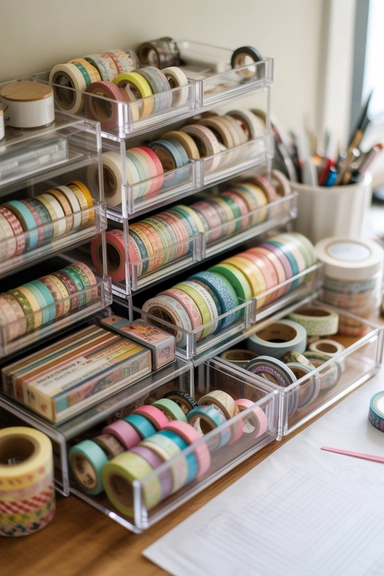
The most reliable washi tape organizing ideas work because they align with habit, not because they demand effort. If returning tape requires opening multiple containers or navigating awkward storage, rolls will be left out. Systems that place storage directly beside active work zones make cleanup automatic rather than optional.
Habit-based organization relies on proximity and clarity. Storage openings should be visible and reachable without moving other supplies. In small craft spaces, this prevents lingering clutter. In larger rooms, it keeps tape from migrating between zones. When organization feels frictionless, order sustains itself without constant correction.
Conclusion
Washi tape organization succeeds when storage reflects real crafting behavior rather than idealized setups. Systems that balance visibility, stability, and habit-friendly access keep collections usable instead of overwhelming. By controlling visual noise, supporting selection patterns, and limiting long-term drift, washi tape organizing ideas help craft spaces stay functional over time. The most effective solutions do not rely on discipline or constant maintenance; they quietly guide supplies back into place, allowing creativity to remain the focus rather than cleanup.