
Introduction
Jean storage ideas matter more than most people realize because denim is heavy, bulky, and unforgiving when stored poorly. When jeans are stacked without structure, piles collapse, creases set in, and shelves quickly turn into clutter zones. The issue is rarely the number of jeans, but the lack of systems that support weight, access, and rotation. Effective jean storage focuses on stability and visibility rather than compression. When denim is stored in a way that respects its fabric and usage patterns, closets stay calmer and outfits become easier to manage, much like the systems explored in 23 Creative Shirt Organizing Ideas for a Clutter-Free Closet.
1. Flat Folding with Consistent Stack Height
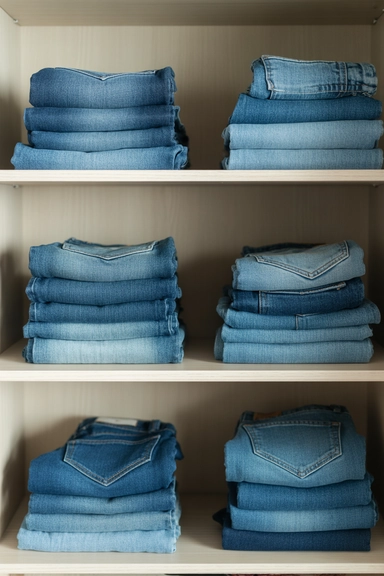
Flat folding works best when stack height is controlled. Jeans folded neatly but stacked too high create pressure that leads to deep creases and unstable piles. Keeping stacks low allows each pair to hold its shape while remaining easy to lift without disturbing the rest. This method works well on shelves where depth is limited and visibility matters.
Consistency is key for long-term success. When each pair is folded to the same width, stacks remain aligned and visually calm. This predictability reduces the habit of tossing jeans onto shelves haphazardly. Over time, controlled flat folding prevents pile collapse and makes daily selection smoother and less disruptive.
2. Vertical Folding for Drawer Storage
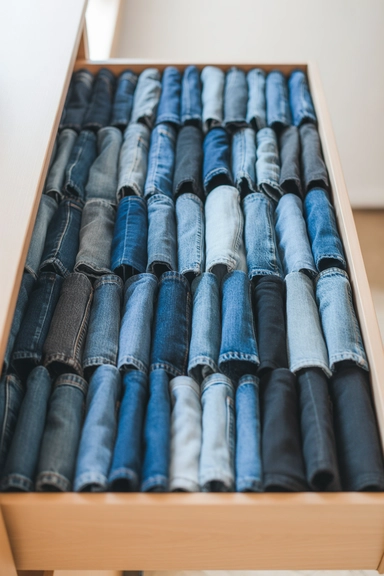
Vertical folding transforms drawers into functional denim storage rather than compressed bins. Instead of stacking jeans on top of each other, this method allows each pair to stand upright, making every option visible at once. This reduces rummaging, which is a major cause of wrinkles and disorder in drawers.
This approach works best in deep drawers where weight can be supported evenly. When jeans are folded with intention and placed vertically, drawers become easy to maintain. The ability to remove one pair without disturbing others prevents piles from reforming and keeps creases from setting in unnecessarily.
3. Shelf Divisions to Prevent Denim Slippage
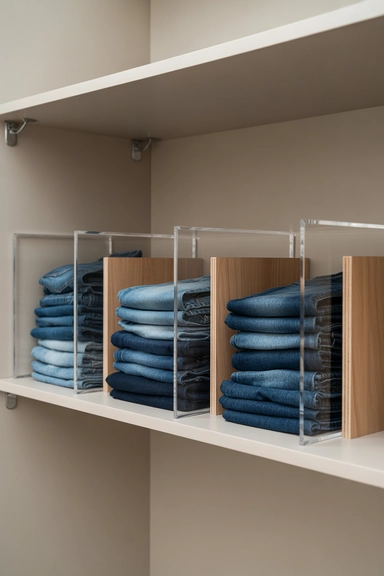
Shelves often fail for jeans because denim slides and collapses under its own weight. Shelf divisions create subtle boundaries that keep stacks from drifting into each other. This separation prevents piles from merging and losing structure over time, especially on wider shelves.
Divisions should be spaced to allow comfortable movement without squeezing stacks too tightly. When shelves are segmented realistically, jeans stay upright and accessible. This method reduces the need for constant straightening and helps shelves remain orderly even with frequent use.
For more ideas please visit 21 Closet Decluttering Hacks for a More Organized Space
4. Open Cubes for Individual Jean Stacks
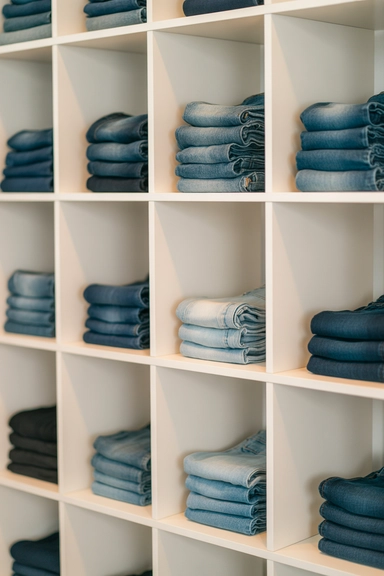
Open cube shelving provides dedicated space for smaller, controlled stacks of jeans. By limiting how many pairs can fit in one cube, this system naturally prevents overcrowding. Each cube acts as a visual boundary, making it easier to see when storage limits have been reached.
Cubes also simplify rotation. When stacks are small, it becomes easier to wear different pairs rather than repeatedly pulling from the top. This reduces wear patterns and creasing. Over time, cube-based storage supports better organization habits without requiring constant effort.
5. Drawer Inserts Designed for Heavy Fabrics
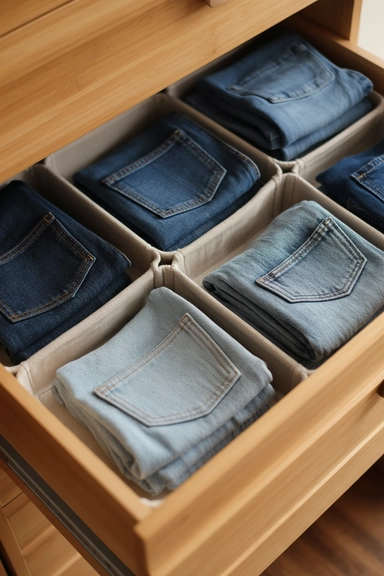
Drawer inserts designed for heavier fabrics help jeans maintain their shape while preventing shifting. Unlike open drawers where stacks slide forward, inserts hold denim in place, reducing friction and movement. This stability keeps folds crisp and prevents jeans from bunching together.
The most effective inserts allow some flexibility rather than rigid compression. Jeans should fit comfortably within sections without being forced. When inserts support the natural weight of denim, drawers stay neat and piles stop reforming after each use.
6. Hanging Jeans by the Waist to Reduce Folding
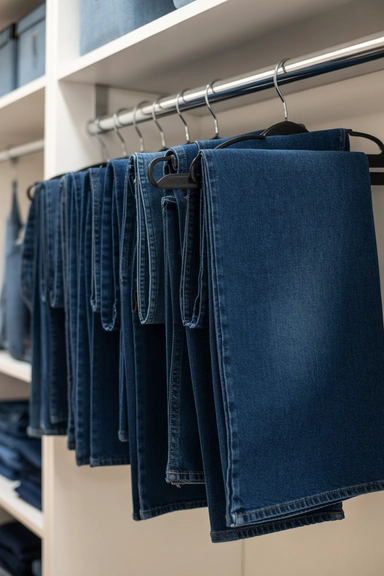
Hanging jeans by the waistband can be an effective alternative when shelf or drawer space is limited. This method removes stacking pressure entirely, which is one of the main causes of creases forming along folds. When jeans hang freely, gravity works in favor of the fabric, allowing denim to relax rather than compress. This approach works best for everyday pairs that are worn frequently and rotated often.
To prevent distortion, wide or padded hangers are essential. Narrow clips can leave marks or stretch the waistband over time. Spacing also matters. When jeans are hung too close together, they overlap and defeat the purpose. With proper spacing and support, hanging by the waist keeps denim smooth, visible, and easy to access.
7. Hanging Jeans Folded Over a Bar
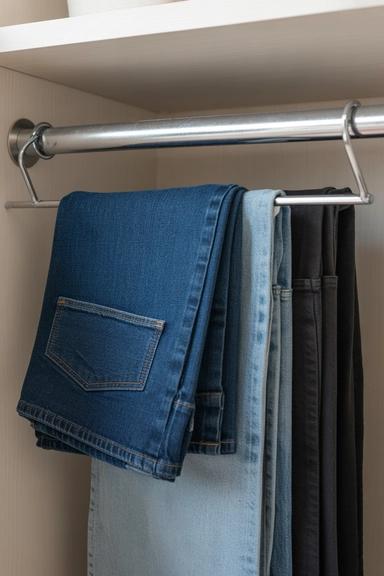
Folding jeans once and hanging them over a sturdy bar balances structure with space efficiency. This method reduces the number of creases compared to multi-fold stacking while keeping jeans compact. It works especially well for heavier denim that holds a clean fold without slipping. Hanging folded jeans also makes it easier to see washes and styles at a glance.
Consistency is critical for this system to work long term. All jeans should be folded to the same width and placed evenly across the bar. When spacing is respected, jeans do not bunch or slide. This method integrates well into closets that already use hanging storage for shirts and jackets.
8. Separating Jeans by Wear Frequency
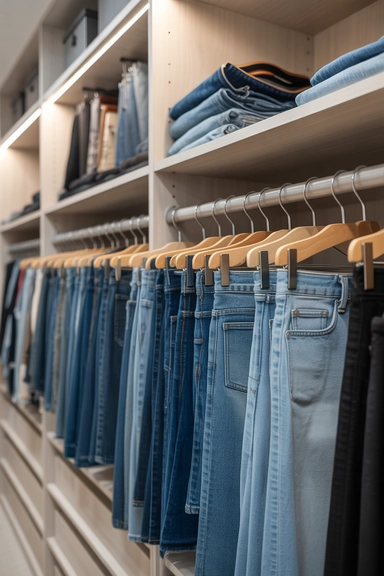
One of the most practical ways to prevent piles is to separate jeans by how often they are worn. Frequently used pairs should be stored in the most accessible spots, while occasional or seasonal jeans can be placed higher or deeper. This reduces constant reshuffling, which is a major contributor to collapsing stacks and deep creases.
This principle mirrors the logic used in 22 Genius Closet Organization Hacks You Need to Try, where zoning by usage creates calmer, more maintainable storage. When jeans are stored according to real habits rather than idealized systems, organization holds up under daily use instead of breaking down after a week.
9. Limiting Stack Width to Control Weight
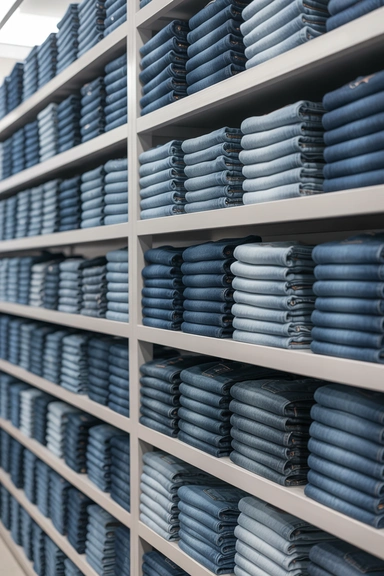
Stack width is just as important as stack height when storing jeans. Wide stacks place uneven pressure on the bottom pairs, leading to compressed folds and slippage. Narrower stacks distribute weight more evenly and are easier to lift without disturbing the rest. This approach is especially effective on deep shelves where piles tend to spread forward.
By intentionally limiting how many jeans are placed side by side, shelves remain visually controlled. This restraint also makes it easier to notice when storage capacity has been exceeded. When weight is managed horizontally as well as vertically, piles stay stable and creases are minimized.
10. Using Shelf Depth to Prevent Back Piling
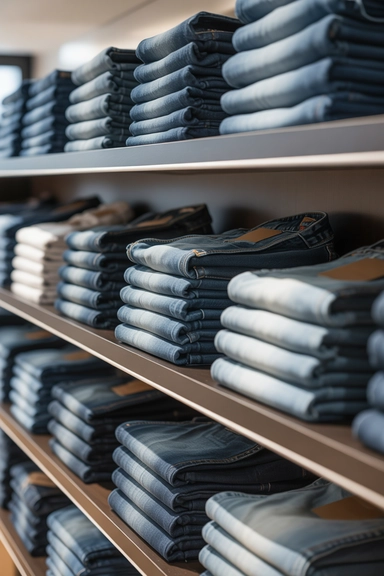
Deep shelves often encourage back piling, where jeans are pushed behind front stacks and forgotten. This creates uneven pressure and leads to messy layers that are difficult to access. Managing shelf depth by keeping all jeans within a single visible row prevents this issue entirely.
This can be achieved by adding subtle depth boundaries or simply choosing not to use the full depth of the shelf. When every pair remains visible and reachable, rotation improves and clutter decreases. Depth control is a quiet but powerful way to keep denim storage orderly over time.
11. Drawer Zoning to Separate Denim Types
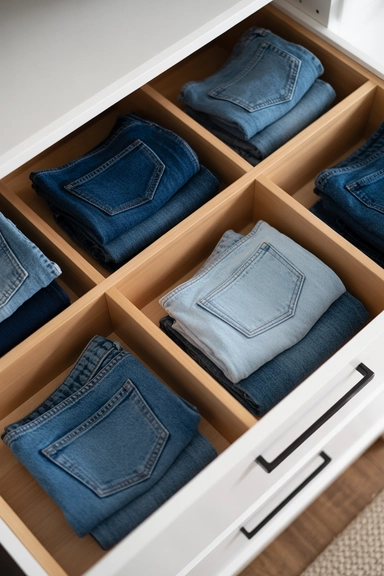
Drawer zoning helps prevent denim piles by giving each category a defined area. Separating skinny jeans, straight cuts, and heavier styles reduces the need to dig through stacks, which is a common cause of creasing. When jeans are grouped by type, drawers remain stable because similar weights and folds sit together rather than competing for space.
Zones should be sized realistically, not evenly. Heavier denim needs more room to avoid compression, while lighter pairs can share tighter spacing. When drawer zones reflect actual fabric weight and usage, jeans return to their place more naturally, keeping drawers orderly without constant adjustment.
12. Shelf Height Adjustments for Folded Jeans
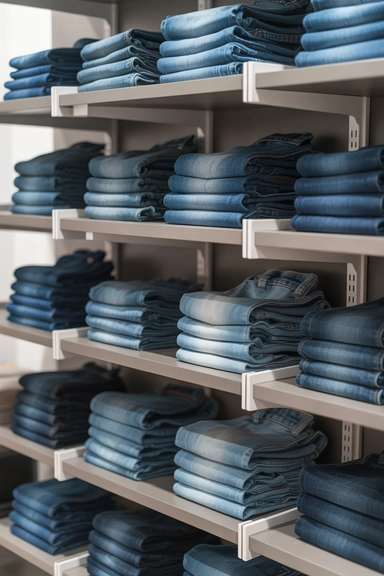
Shelf height plays a major role in whether folded jeans stay neat or collapse into piles. Shelves that are too tall encourage overstacking, while shelves that are too short force compression. Adjusting shelf height to fit a controlled number of folded pairs creates natural limits that prevent pile growth.
This approach also improves visibility. When stacks are clearly defined and not buried under extra space, it becomes easier to rotate jeans evenly. Over time, shelf height adjustments support better habits by removing the temptation to add “just one more pair” to an already unstable stack.
13. Rotational Storage to Avoid Repeat Wear Piles
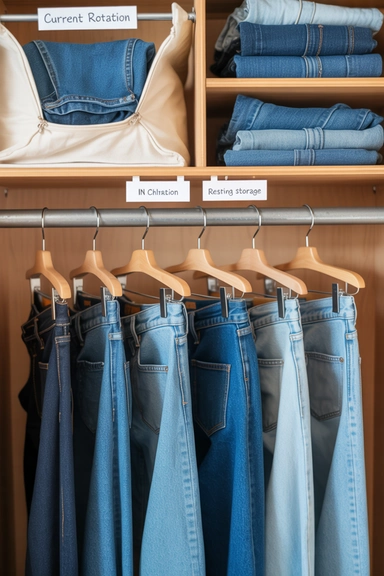
Rotational storage prevents the same few pairs from sitting on top while others remain untouched below. By periodically shifting which jeans are placed in the most accessible spots, weight and wear are distributed more evenly. This reduces deep creases caused by prolonged pressure and keeps stacks from becoming permanently distorted.
Rotation does not need to be frequent or complex. Even small changes, such as moving worn pairs to the back after laundry, can reset the system. When rotation is built into the storage routine, piles stop forming because stacks remain balanced and intentional.
14. Open Shelf Storage for Quick Visibility
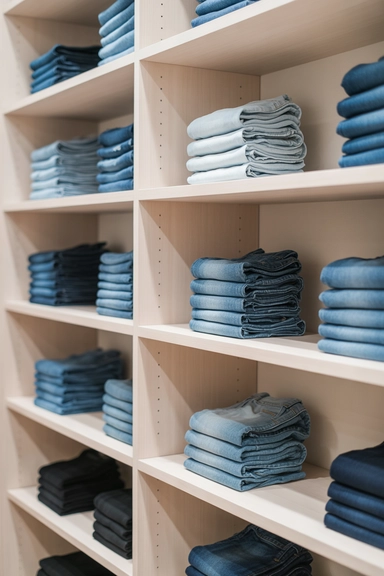
Open shelves can be effective for jeans when used with restraint. Keeping stacks small and visible discourages overcrowding and makes it easier to grab a pair without disturbing others. This approach works best for daily-use jeans that benefit from fast access and regular rotation.
The key is discipline. Open shelves expose clutter immediately, which can be an advantage when limits are respected. When shelves are allowed to overflow, disorder follows quickly. Used thoughtfully, open shelving keeps denim accessible while preventing hidden pile buildup.
15. Separating Jeans from Other Clothing
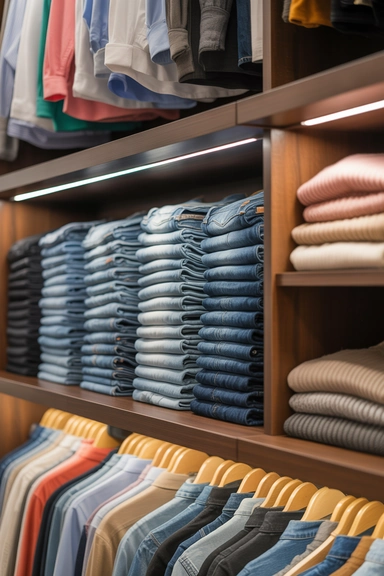
Storing jeans alongside lighter garments often leads to imbalance. Denim’s weight causes stacks to shift and compress softer fabrics, which contributes to messy piles. Separating jeans into their own storage area allows systems to be designed specifically for their weight and folding needs.
This separation also simplifies maintenance. When jeans are not competing with shirts or sweaters, stacks remain stable and easier to manage. Dedicated denim storage supports cleaner organization and reduces the likelihood of piles forming across mixed clothing categories.
16. Using Shelf Cubes for Controlled Stacking
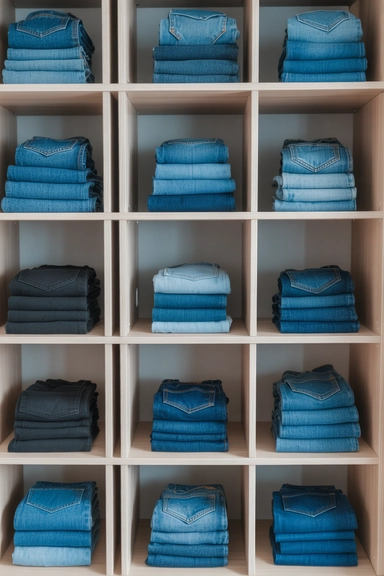
Shelf cubes work well for jeans because they impose natural limits on stacking. Each cube can hold a small, manageable number of folded pairs, preventing piles from growing too tall or wide. This containment reduces pressure on lower pairs, which helps avoid deep creases and shifting. Cubes also make it easy to visually assess how much space is available, discouraging overcrowding.
Another advantage of shelf cubes is predictability. When every cube holds a similar quantity, returning jeans after laundry becomes straightforward. This consistency supports long-term order by removing guesswork. With controlled stacking, shelves stay balanced and jeans remain accessible without constant straightening.
17. Floor-Level Storage for Bulky Denim
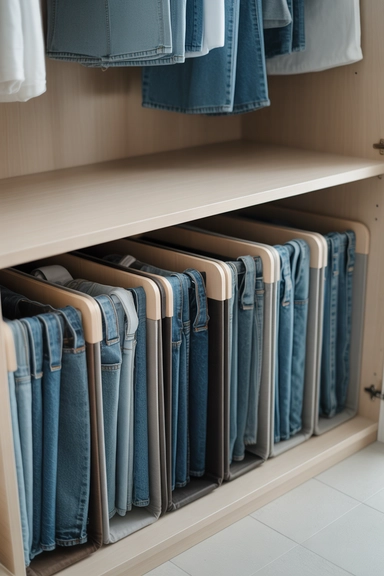
Heavier or bulkier jeans can disrupt shelf systems when mixed with lighter pairs. Floor-level storage offers a practical alternative that reduces strain on shelving. Placing large stacks or oversized denim at floor height prevents toppling and preserves upper storage for more manageable items.
To keep floor storage from becoming messy, structure is essential. Using low bins or dividers keeps stacks upright and contained. When bulky denim has a defined place, it stops invading shelves and drawers, reducing overall clutter and making the entire storage area easier to maintain.
18. Limiting Quantity to Protect Fabric and Order
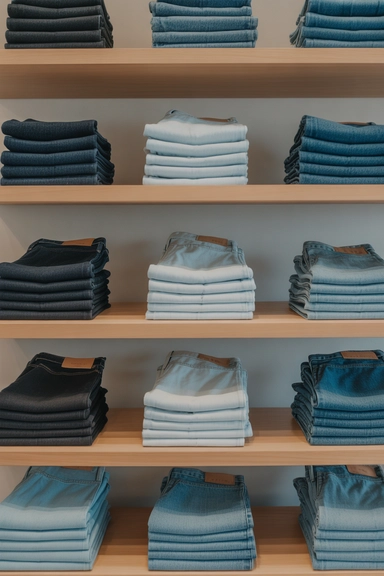
One of the most effective ways to prevent piles is to limit how many jeans are stored in one location. Overcrowding creates compression, which leads to wrinkles and unstable stacks. Leaving intentional space allows denim to breathe and makes it easier to remove and replace pairs without disruption.
This approach requires conscious restraint rather than additional storage solutions. When capacity is respected, organization becomes self-sustaining. Fewer, better-spaced stacks stay neater and protect fabric quality, reducing the need for frequent reorganization.
19. Dedicated Drawers for Denim Only
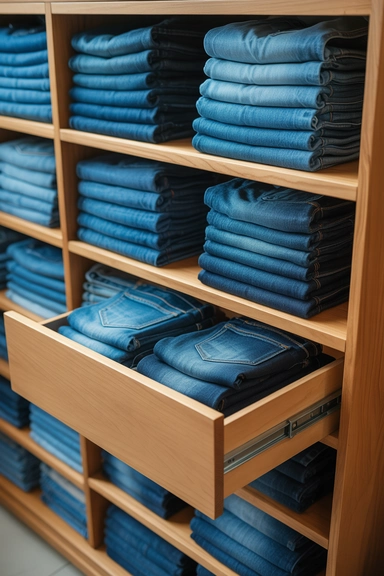
Assigning entire drawers to jeans prevents them from competing with lighter clothing. Denim’s weight and thickness require different folding and spacing than shirts or activewear. When jeans have their own drawers, folds remain consistent and stacks are less likely to collapse.
Dedicated drawers also simplify daily routines. Knowing exactly where jeans belong reduces rummaging and reshuffling. This clarity keeps creases from forming due to repeated handling and helps drawers stay orderly even with frequent use.
20. Using Divided Sections Within Deep Shelves
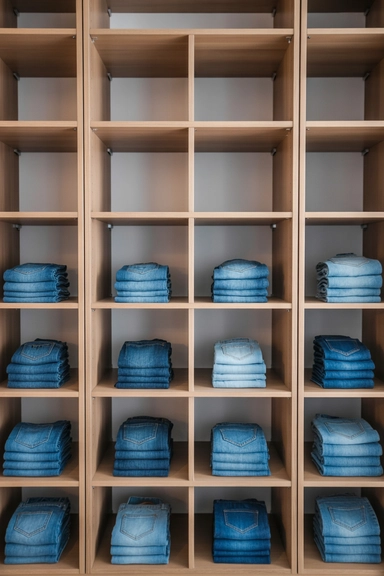
Deep shelves often cause jeans to migrate backward, creating uneven piles. Dividing deep shelves into front and back sections prevents this drift. Keeping all jeans within a single visible plane improves access and reduces pressure caused by hidden layers.
This method is especially useful in closets with limited shelf options. By managing depth intentionally, storage remains predictable. When every pair is visible and reachable, stacks stay balanced and clutter is less likely to build up over time.
21. Aligning Storage with Laundry Cycles
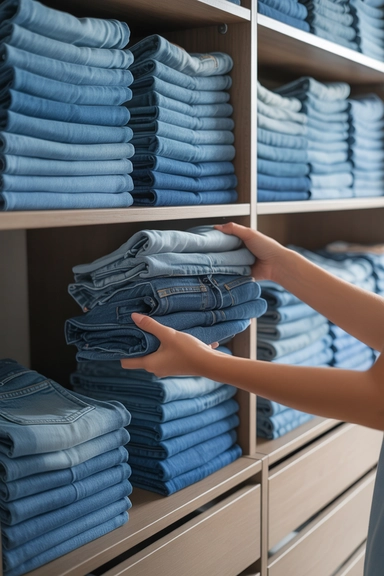
Storage systems should account for how often jeans are washed and returned. If clean jeans are placed wherever space is available, piles form quickly. Aligning storage with laundry habits—such as returning jeans to the back or bottom—keeps stacks evenly distributed.
This habit-based approach reduces wear on the same pairs and maintains structural balance. When storage works with routine rather than against it, organization holds up under daily use without requiring constant correction.
22. Storage Systems That Support Easy Resetting
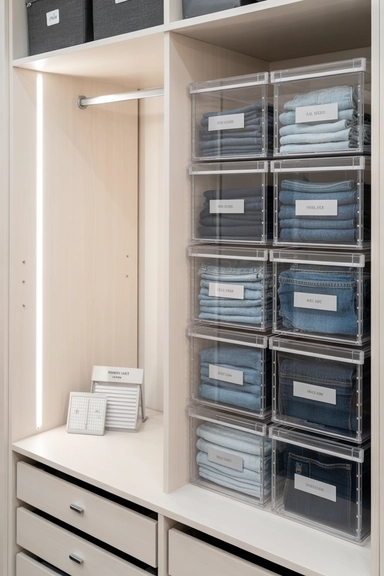
The most successful jean storage systems are easy to reset after disruption. Complex folding or rigid layouts often break down during busy weeks. Simple systems that allow jeans to be returned quickly and correctly prevent piles from forming during high-use periods.
Ease of resetting matters more than perfection. When restoring order takes minimal effort, it happens naturally. Storage that supports quick recovery keeps denim neat, crease-free, and consistently organized over time.
Conclusion
Jean storage works best when it accounts for weight, fabric behavior, and everyday habits. Piles and creases form when denim is compressed, overstacked, or stored without clear limits. By controlling stack size, managing depth, and aligning storage with real routines, jeans remain easier to access and maintain. Thoughtful systems protect fabric quality while keeping closets calm and functional. When storage supports how denim is actually used, organization becomes sustainable rather than something that constantly needs fixing.