
Introduction
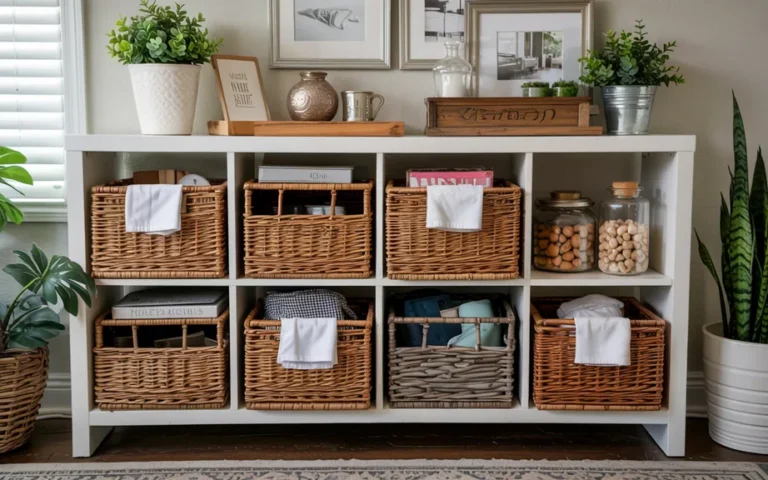
Kids’ closets rarely fail because of size; they fail because they are not designed for how children actually use them. When toys, clothes, and accessories share the same open space, mess builds quickly and stays visible. Kids closet organization ideas that focus on clear zones, reachable storage, and hidden containment reduce daily chaos without constant supervision. The goal is not perfection, but systems that children can maintain on their own. These strategies pair naturally with broader principles used in 21 Creative Toy Storage Ideas for a Clutter-Free Playroom, where visibility and boundaries work together to keep mess from spreading.
1. Lower Hanging Rods That Put Clothes Within Reach
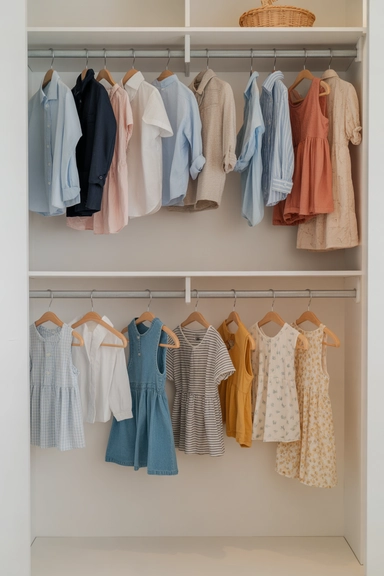
Closets designed for adults immediately fail children because most items sit above their reach. Lowering hanging rods allows kids to access shirts, jackets, and dresses without help, which reduces clothing piles on the floor. When children can return items themselves, organization becomes a habit rather than a task imposed by parents.
Using two-tier hanging systems works especially well. Everyday clothing stays on the lower rod, while seasonal or special-occasion pieces move higher. This separation keeps daily use simple and visually manageable. When access aligns with height, kids are far more likely to keep clothes where they belong.
2. Open Bins for Toys That Need Fast Cleanup
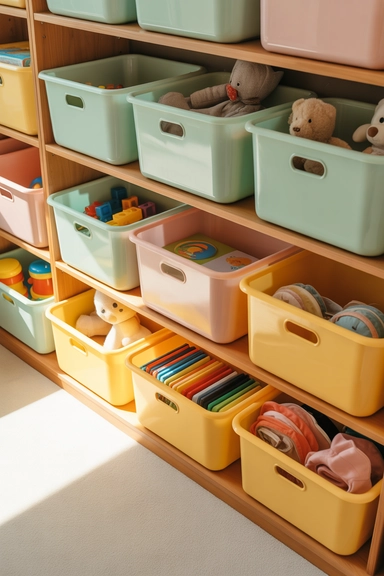
Toys stored behind lids or doors rarely get put away by kids. Open bins solve this by making cleanup fast and visually obvious. When toys can be dropped into a bin without sorting, clutter disappears quickly, especially at the end of the day. This makes open bins one of the most effective kids closet organization ideas for real households.
Placement matters. Bins should sit on lower shelves so children can reach them independently. Grouping toys by category rather than type prevents overwhelm. When bins stay consistent, kids learn where things go without reminders, keeping the closet under control.
3. Shelving Divided by Function, Not Category
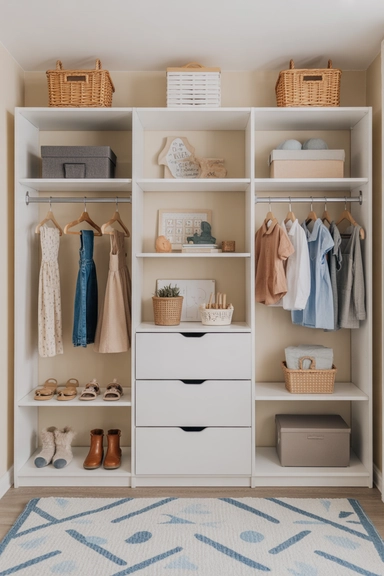
Many closets become cluttered because shelves are divided by item type instead of use. Kids benefit more from functional zones such as school items, play items, and dress-up clothing. When shelves serve a single purpose, clutter does not migrate across the closet.
This approach also simplifies decision-making. Children do not need to search across multiple shelves to find what they need. Each zone supports a routine. Over time, this structure trains kids to reset their own space, reducing the need for frequent reorganization.
4. Clear Containers That Let Kids See What They Own
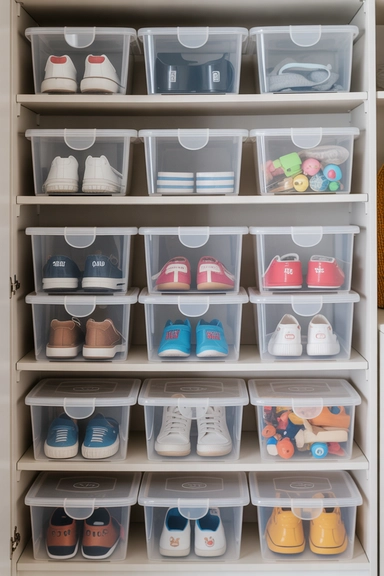
Out of sight often means forgotten for children. Clear containers solve this by keeping items visible while still contained. Shoes, accessories, craft supplies, and small toys benefit most from transparent storage because kids can identify contents instantly.
To avoid visual overload, limit the number of clear containers used at once. Stack them neatly or assign each a specific shelf. Labels with pictures work well for younger kids. When visibility is controlled rather than chaotic, clear storage supports order instead of creating distraction.
5. Drawer Systems for Small Clothing Items
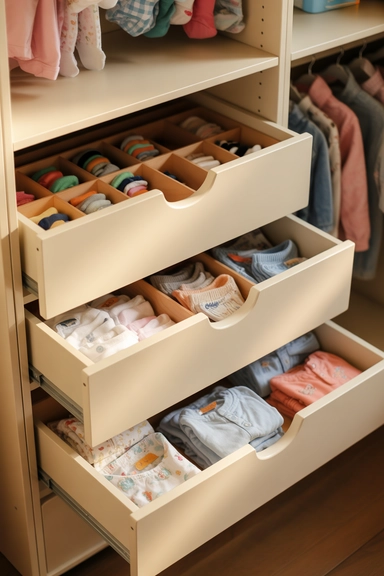
Socks, underwear, and pajamas often create the most clutter because they lack structure. Drawer systems provide contained storage that prevents these items from spilling into open areas. Kids closet organization ideas that rely on drawers reduce visual mess even when drawers are imperfectly organized.
Shallow drawers work best for children. They limit stacking and make items easier to grab. When each drawer has a single purpose, kids quickly learn where items go. This keeps clothing from migrating into toy bins or onto shelves.
6. Closet Floors Kept Completely Clear
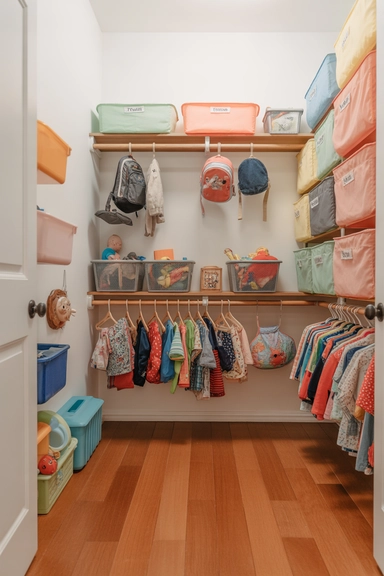
Closet floors often become dumping zones for backpacks, shoes, and toys. Keeping the floor completely clear instantly improves visual order and makes the closet feel larger. Items placed on the floor tend to stay there, multiplying clutter over time.
Hooks, low shelves, or bins mounted just above floor level provide alternatives without sacrificing accessibility. When the floor remains empty, cleanup becomes faster and the closet is easier to maintain. This single change dramatically improves long-term organization.
7. Labeling Systems That Kids Can Understand Instantly
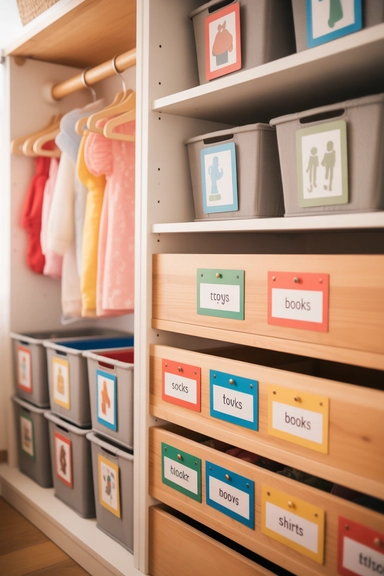
Labels are only effective when children can understand them without help. Words alone often fail younger kids, which leads to misplaced items and visual mess. Kids closet organization ideas that use picture-based or color-coded labels create instant clarity. When children can identify where things belong at a glance, cleanup becomes faster and less frustrating.
Labels should be consistent and placed at eye level. Using the same colors or icons across bins, drawers, and shelves reinforces habits. Over time, kids rely less on reminders and more on visual cues, which keeps the closet organized without constant adult intervention.
8. Seasonal Rotation That Prevents Overcrowding
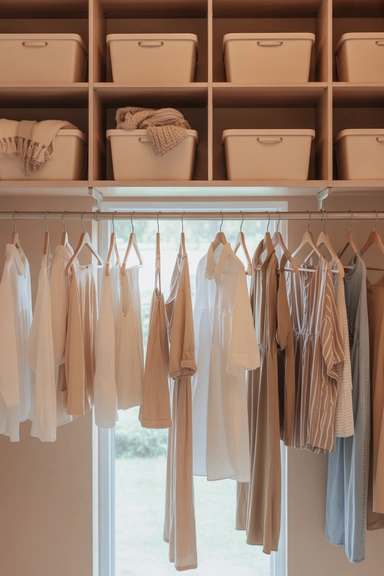
Closets feel chaotic when too many items compete for space. Seasonal rotation removes excess by keeping only current-use clothing accessible. Off-season items move to higher shelves or separate storage, instantly reducing visual density. This is one of the most effective kids closet organization ideas for maintaining long-term order.
Rotation also simplifies choices. When children see fewer options, getting dressed becomes quicker and less messy. Returning items to the closet feels manageable rather than overwhelming. A lighter visual load helps the closet stay organized between cleanouts.
9. Vertical Storage That Uses Full Closet Height
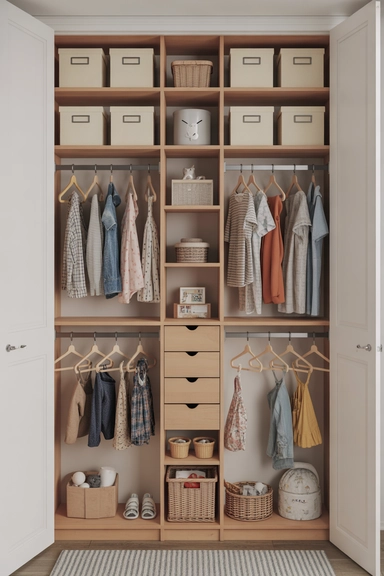
Most kids’ closets waste vertical space by focusing only on reachable zones. Adding vertical storage above daily-use areas creates room for overflow without crowding the lower sections. Upper shelves can store keepsakes, seasonal items, or less frequently used toys while keeping everyday zones clear.
This approach works best when vertical storage is clearly separated from child-access zones. Visual distinction prevents kids from pulling down items that do not belong in daily rotation. When height is used intentionally, clutter stays contained instead of spreading.
10. Color-Coded Zones for Easy Sorting
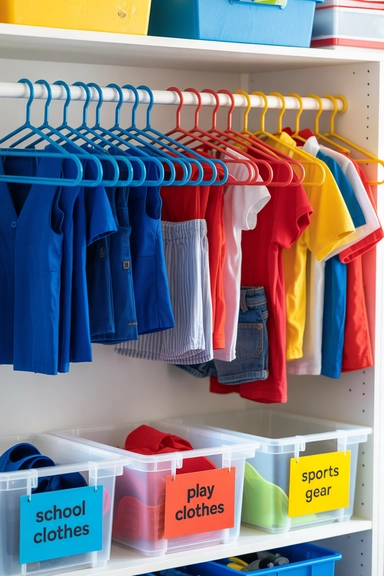
Color coding introduces order without requiring reading skills. Assigning colors to categories such as school clothes, play clothes, or accessories helps kids understand organization intuitively. Kids closet organization ideas that rely on color reduce decision fatigue and speed up cleanup.
Consistency matters more than variety. Using the same color cues across bins, hangers, or labels reinforces habits. When children associate colors with categories, items return to the correct place more naturally, keeping the closet visually controlled.
11. Shared Closets With Clearly Defined Personal Zones
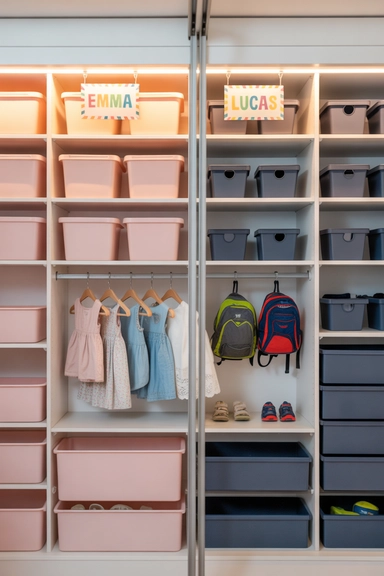
Shared closets often become cluttered because boundaries are unclear. Dividing the closet into distinct personal zones prevents items from mixing. Each child has assigned shelves, rods, and bins, reducing disputes and visual chaos.
Clear separation also encourages responsibility. When children know which section belongs to them, they are more likely to maintain it. This system works especially well when paired with principles from 21 Closet Decluttering Hacks for a More Organized Space, where defined ownership supports lasting order.
12. Storage That Adjusts as Children Grow
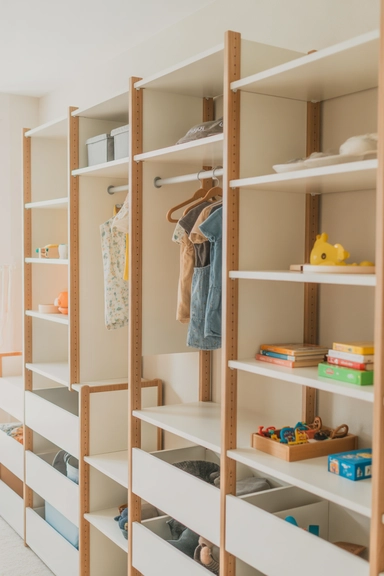
Closet systems that remain static quickly become ineffective as children grow. Adjustable rods, shelves, and bins allow storage to evolve without a complete overhaul. Kids closet organization ideas that plan for growth prevent repeated clutter cycles.
Lower rods can be raised over time, and toy bins can transition into clothing storage. This adaptability keeps the closet functional through different stages, maintaining visual order without constant redesign.
13. Daily Reset Bins That Stop Mess From Returning
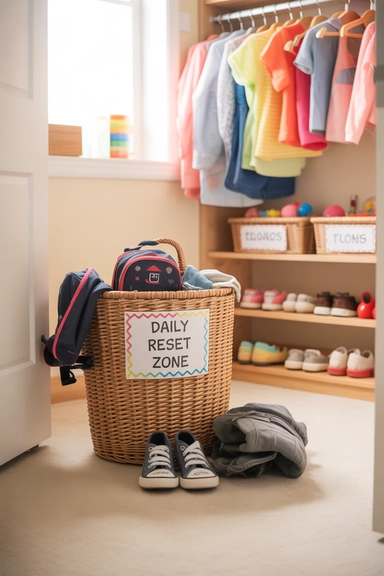
Kids’ closets often fall apart not because systems fail, but because there is no simple reset point. Daily reset bins give children a quick place to return stray items at the end of the day. These kids closet organization ideas work because they reduce friction—cleanup becomes one step instead of many.
The bin should be easy to access and visually contained within the closet. It is not meant for long-term storage, but for short-term control. During weekly resets, items are redistributed properly. This system prevents clutter from spilling into the room and keeps the closet consistently manageable.
14. Shoe Storage That Keeps Pairs Together
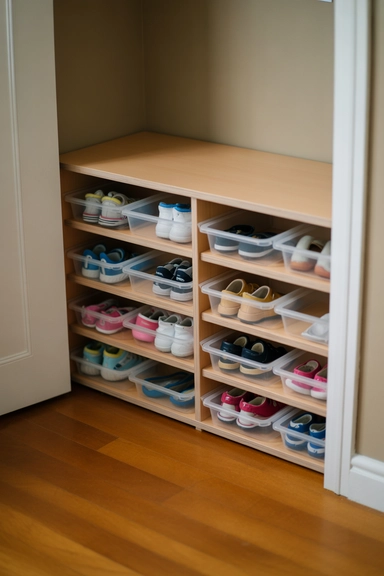
Shoes are one of the fastest sources of visual clutter in kids’ closets. Loose shoes scatter across the floor, creating mess even when everything else is organized. Dedicated shoe storage keeps pairs together and off the ground, immediately improving order.
Low racks, cubbies, or clear bins work best for children. Each pair should have a defined space to avoid stacking. When shoes are easy to grab and return, they stop migrating into other areas of the closet. This simple adjustment has a significant impact on daily tidiness.
15. Homework and School Item Zones Inside the Closet
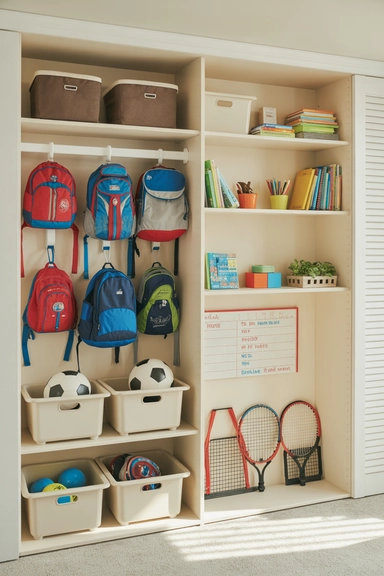
Backpacks, folders, and school supplies often end up on bedroom floors or furniture. Creating a school-specific zone inside the closet keeps these items contained and ready. Kids closet organization ideas that include homework zones reduce clutter beyond just clothing.
Hooks for backpacks, bins for sports gear, and shelves for school supplies keep everything in one place. When children know exactly where school items live, transitions in and out of the room become smoother. This reduces last-minute mess and daily stress.
16. Clear Limits on Toy Storage Inside the Closet
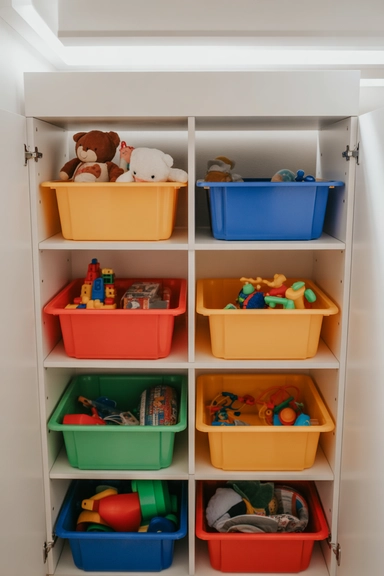
When toy storage has no limits, toys overflow quickly. Assigning a fixed amount of space for toys creates natural boundaries. Once the space is full, it signals the need to rotate or remove items. These kids closet organization ideas prevent clutter from expanding unchecked.
Bins or shelves should be sized intentionally, not oversized. This keeps toy collections manageable and visually contained. Clear limits help children understand responsibility while maintaining a closet that does not feel chaotic or overcrowded.
17. Storage That Encourages Independent Use
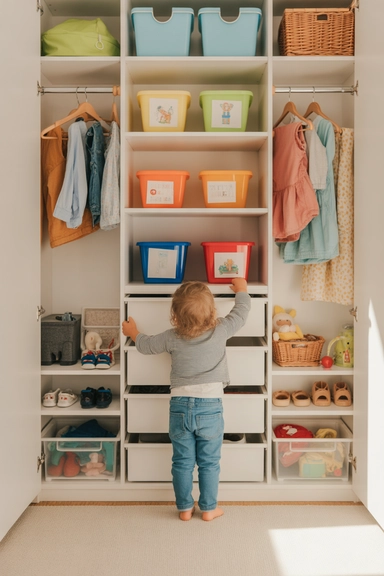
Organization systems only work when children can use them independently. Storage that requires adult help quickly leads to mess. Kids closet organization ideas should prioritize reach, simplicity, and visibility to support autonomy.
Hooks, bins, and drawers placed at child height encourage consistent use. When children can put things away without assistance, clutter decreases naturally. Independence turns organization into a habit rather than a rule, making the system sustainable over time.
18. Visual Simplicity Through Fewer Storage Types
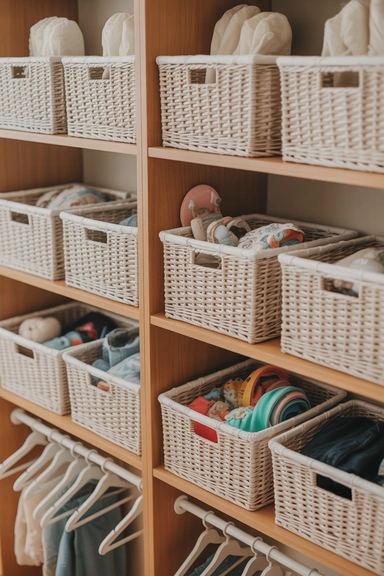
Too many different storage containers create visual noise even when organized. Limiting the variety of bins, hangers, and containers keeps the closet visually calm. Using consistent materials and colors helps storage fade into the background.
This approach reduces distraction and decision fatigue. When storage looks uniform, the closet feels more orderly even on imperfect days. Visual simplicity supports long-term organization by making the system easier to maintain and less overwhelming.
19. Hanging Organizers for Accessories and Small Items
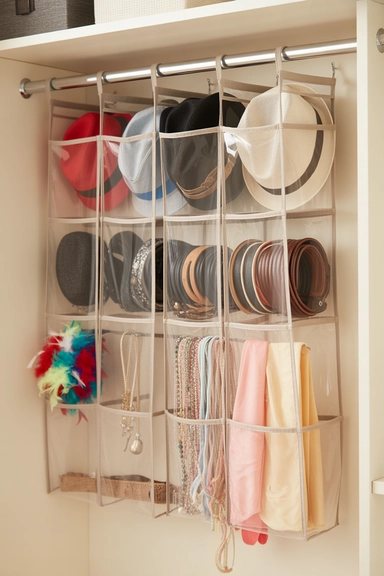
Small accessories like hats, belts, dress-up items, or swimwear often create clutter because they lack a defined home. Hanging organizers placed on closet rods or doors keep these items contained without taking shelf space. These kids closet organization ideas work especially well for items used frequently but too small for traditional shelving.
Clear pockets or fabric compartments allow kids to see what they own without spreading items across the closet. Assigning one pocket per category prevents mixing. When accessories have a visible but contained home, they stop migrating into toy bins or dresser drawers.
20. Closet Doors Used as Functional Storage Space
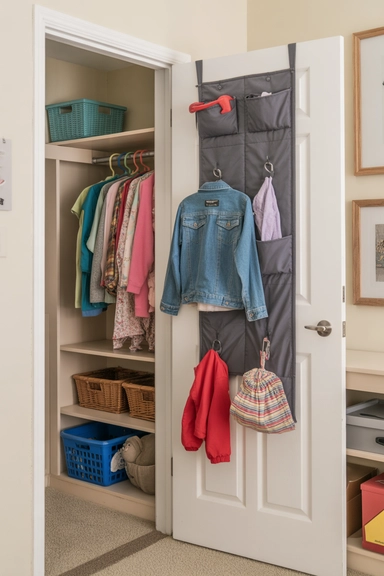
Closet doors are often overlooked, yet they offer valuable vertical storage. Over-the-door hooks, slim organizers, or pocket systems add capacity without crowding the interior. Kids closet organization ideas that use doors help keep frequently used items within reach while preserving shelf space.
Door storage works best for lightweight items such as jackets, pajamas, or craft supplies. Keeping these items off shelves reduces visual density inside the closet. When door storage is kept minimal and organized, it enhances function without adding chaos.
21. Simple Systems That Are Easy to Maintain
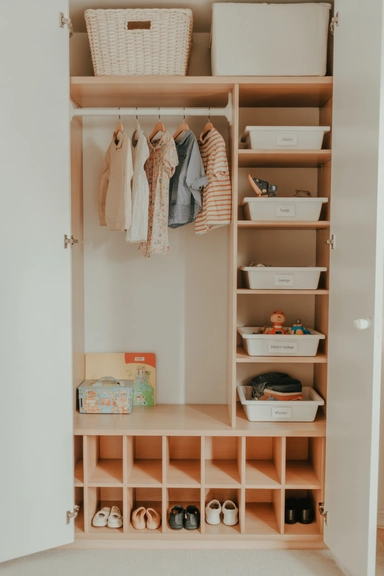
The most successful kids closet organization ideas are not complex—they are easy to maintain. Systems that require constant adjustment or strict rules tend to fail over time. Simple layouts with clear zones, limited storage types, and predictable routines create long-term success.
When organization feels achievable, children are more likely to participate. A closet that can be reset in minutes stays under control even during busy weeks. Simplicity ensures the system works with daily life rather than against it.
Conclusion
Kids’ closets stay organized when systems match how children actually use their space. By prioritizing reach, visibility, and clear boundaries, kids closet organization ideas reduce daily mess without constant supervision. Storage that supports independence and limits visual clutter makes cleanup faster and more natural. When organization feels intuitive rather than forced, the closet remains under control, and the bedroom becomes calmer for both children and parents.