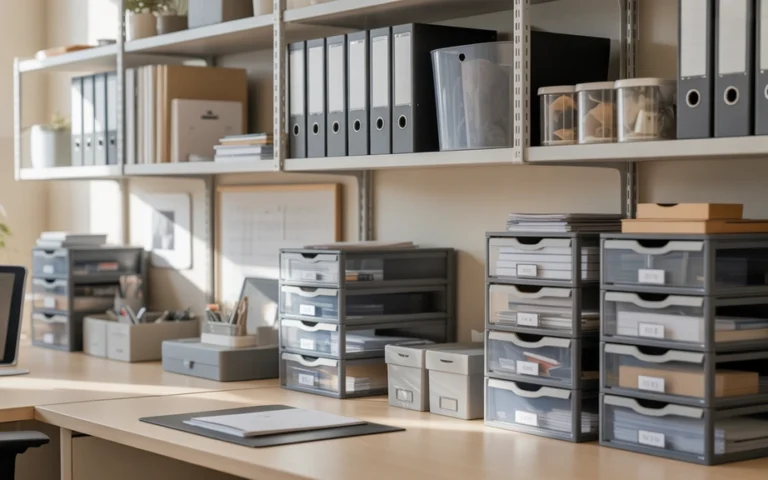
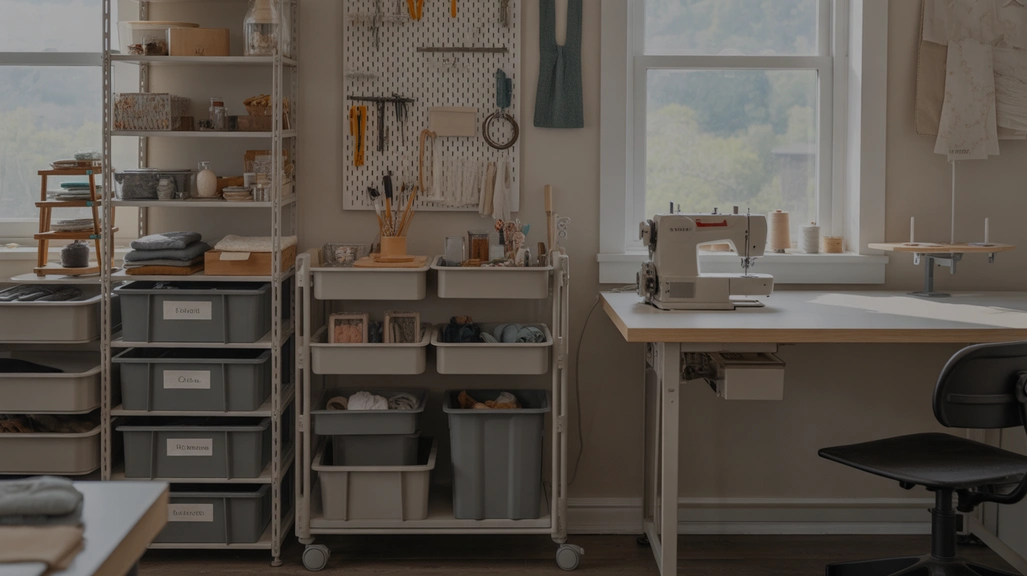
A sewing room does not feel cluttered because of too many supplies. It feels cluttered when everything has no clear place.
Fabric stacks, thread spools, and small tools quickly take over when storage cannot keep up with how you actually work. You spend more time searching, untangling, and reorganizing than creating.
The best sewing room organizing ideas focus on visibility, easy access, and simple systems that keep everything in order without slowing you down.
From vertical shelving and pegboards to rolling carts and drawer dividers, these ideas help you turn a messy workspace into a clean, efficient setup.
If your craft supplies are also starting to spread, this is how to organize them properly → creative craft storage ideas
Maximizing Vertical Space with Shelving
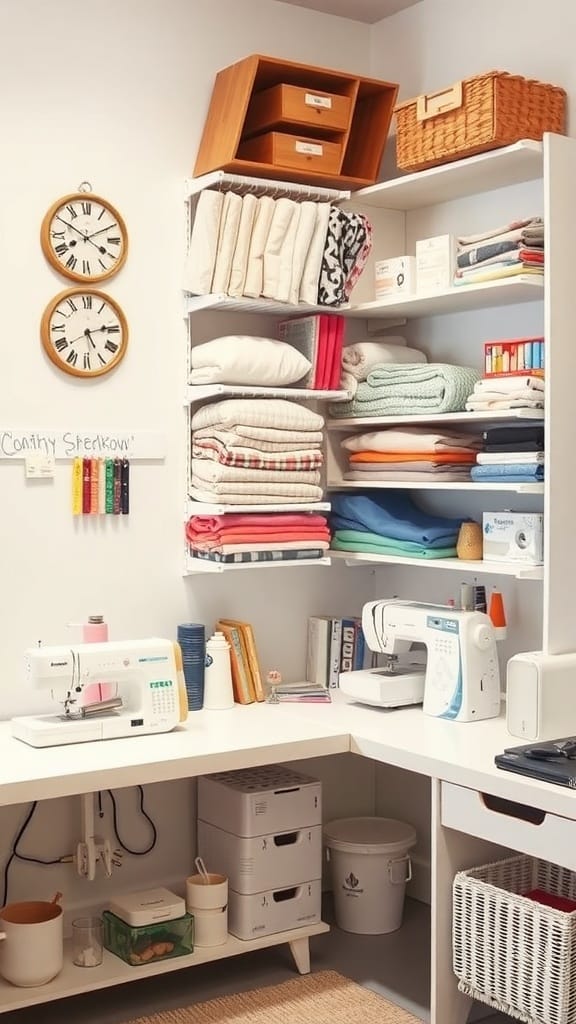
Using vertical space in your sewing room can make a huge difference in organization. The image shows a well-structured shelving unit that utilizes the walls effectively. This setup not only keeps everything within reach but also creates a clean and tidy look.
The shelves hold neatly folded fabrics and other supplies, making it easy to see what you have. The addition of boxes and baskets adds a touch of style while keeping smaller items organized. You can use similar containers to keep threads, scissors, and other tools sorted.
Having two clocks on the wall is a fun touch, reminding you to keep track of time while you sew. This setup encourages you to stay focused and productive. By maximizing vertical space, you can free up your work surface for sewing and crafting, making your sewing experience more enjoyable.
Thread Organizers to Prevent Tangling
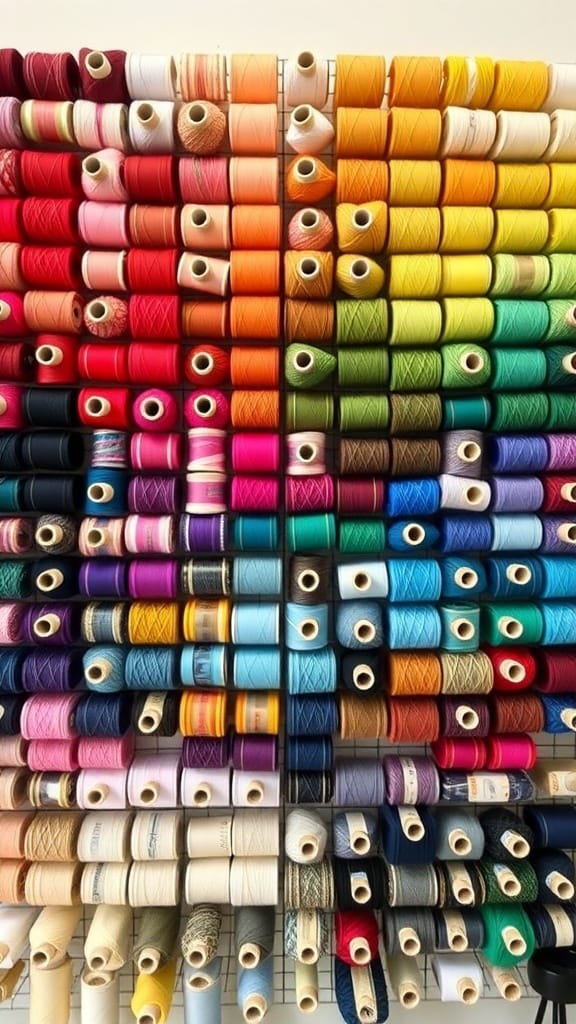
Keeping your sewing room organized is key to enjoying your hobby. One of the biggest challenges is managing thread. The image shows a vibrant display of thread spools, neatly arranged by color. This kind of organization not only looks great but also makes it easy to find the right thread for your project.
Using thread organizers can save you time and frustration. Consider wall-mounted racks or tiered shelves that allow you to see all your colors at a glance. This setup helps prevent tangling and makes it simple to grab what you need without rummaging through a box.
Another option is to use clear containers or bins. These can be labeled by color or type, keeping everything tidy. Plus, they protect your thread from dust and damage. A well-organized thread collection can inspire creativity and make your sewing experience more enjoyable.
When small items like thread are not controlled, they spread fast and create clutter.
This is how to keep everything sorted and easy to manage → drawer organization ideas
Fabric Swatch Boards for Inspiration
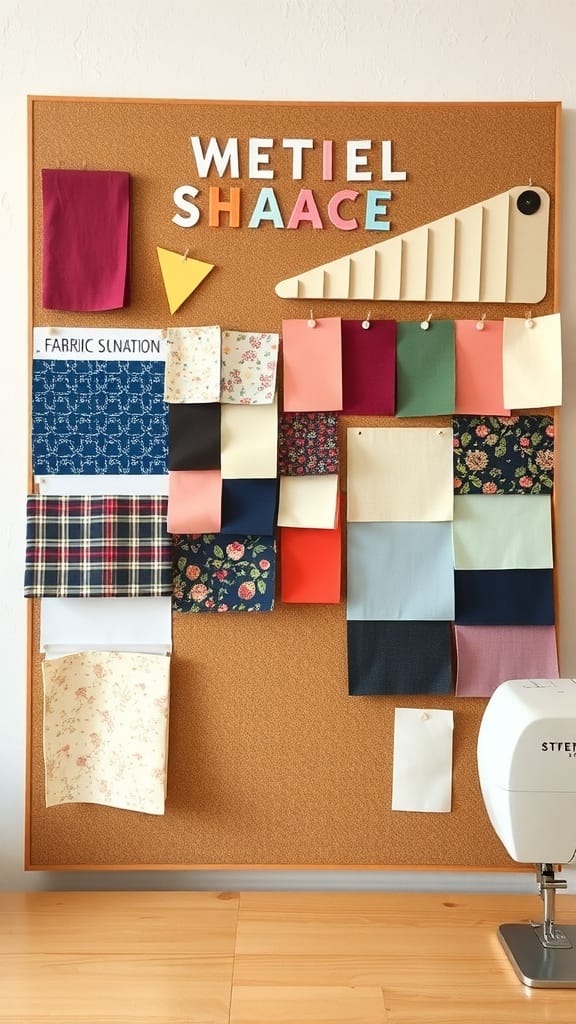
A fabric swatch board is a fantastic way to organize your sewing space and spark creativity. In the image, you can see a vibrant corkboard filled with various fabric swatches. Each piece showcases different colors, patterns, and textures, making it a visual delight.
This board not only serves as an inspiration tool but also helps you keep track of your fabric inventory. The organized layout allows you to easily see what you have on hand, making it simpler to plan your next project. The playful letters at the top add a fun touch, making the space feel inviting.
Creating your own swatch board can be a rewarding experience. Start by selecting fabrics that inspire you, whether they are remnants or new purchases. Pin them up in a way that pleases your eye. You can even categorize them by color or type. This way, you’ll always have a quick reference for your sewing ideas!
Dedicated Cutting Station Setup
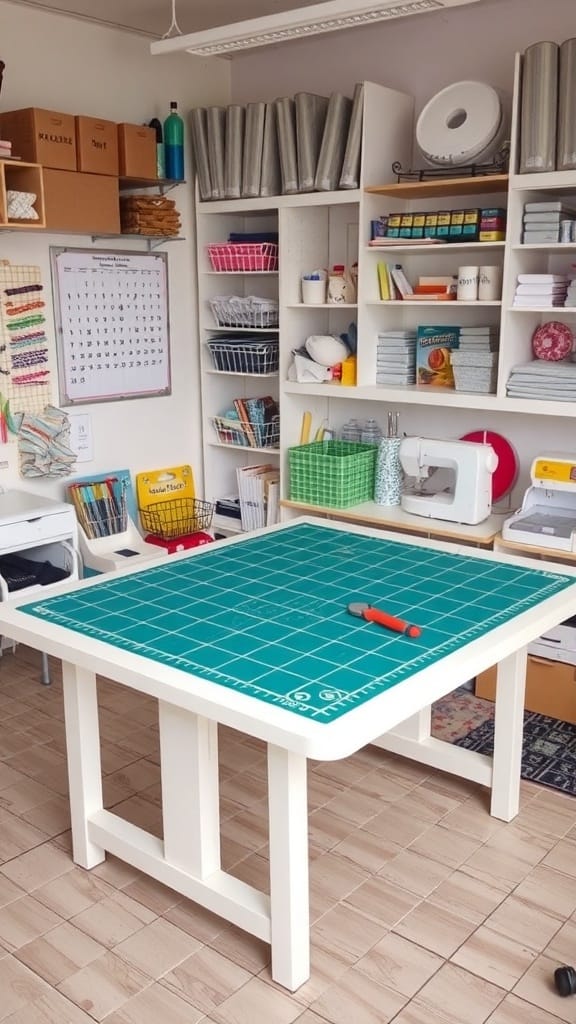
A dedicated cutting station is a must-have for any sewing room. It provides a specific area where you can cut fabric without distractions. This setup helps keep your workspace organized and efficient.
The image shows a spacious cutting table with a green cutting mat on top. The mat protects the table and makes cutting easier. A rotary cutter rests on the mat, ready for use. This setup allows for smooth and precise cuts, which are essential for sewing projects.
Behind the cutting table, you can see shelves filled with various supplies. There are boxes, baskets, and even a calendar on the wall. This organization makes it easy to find everything you need. Keeping your tools and materials within reach saves time and keeps the creative flow going.
Consider adding a comfortable chair nearby. This way, you can take breaks while working on larger projects. A well-organized cutting station not only enhances your sewing experience but also makes it more enjoyable.
Clear Storage Bins for Easy Visibility
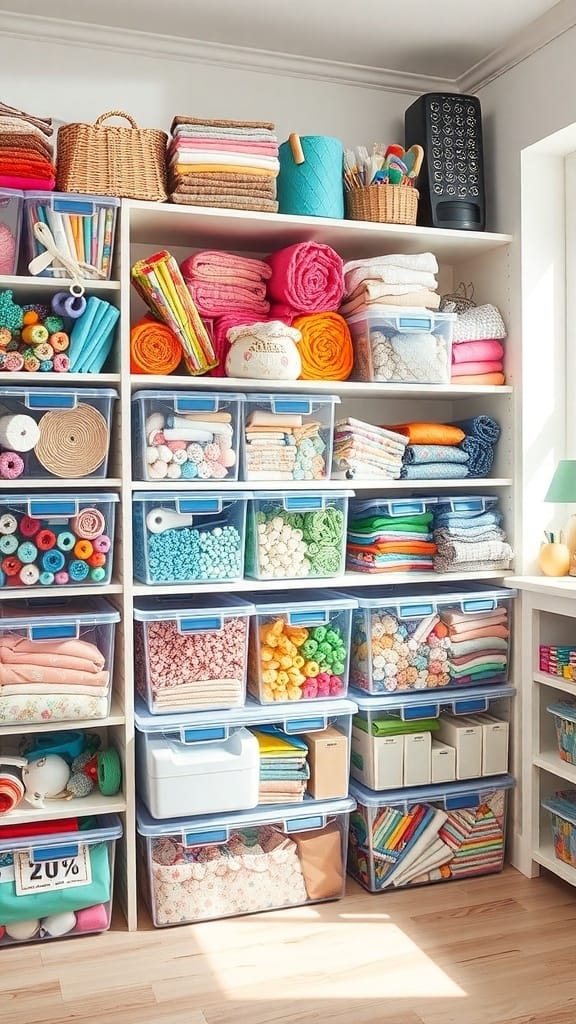
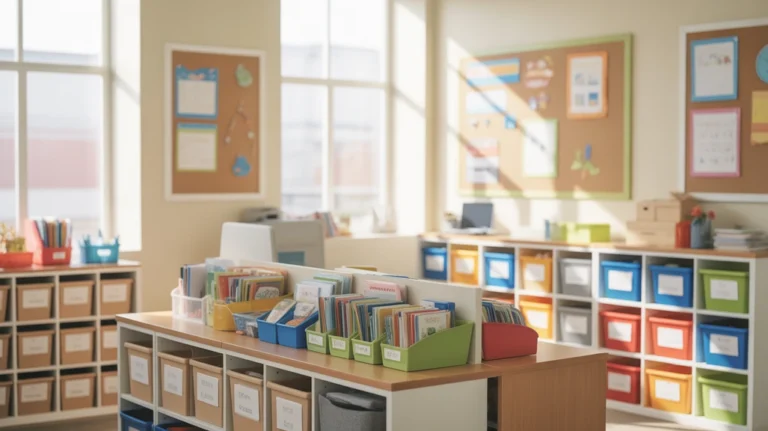
Clear storage bins are a fantastic way to keep your sewing room organized. They allow you to see everything at a glance, making it easy to find what you need. In the image, you can see a well-arranged shelving unit filled with colorful bins. Each bin holds different materials, from fabrics to threads, all neatly stored away.
Using clear bins means you won’t waste time digging through boxes. You can quickly spot that perfect shade of fabric or the right spool of thread. This setup not only saves time but also adds a cheerful vibe to your space. The bright colors of the materials peek through the bins, creating a visually appealing display.
Consider labeling each bin for even more efficiency. This way, you can quickly identify the contents without having to open each one. It’s a simple trick that can make a big difference in how smoothly your sewing projects go.
Overall, clear storage bins are a smart choice for any sewing room. They combine functionality with style, helping you stay organized while making your space look great.
When everything is visible, it becomes much easier to stay organized without things piling up again.
This is what keeps storage simple and effective → home file organization ideas
Pegboards for Tool Organization
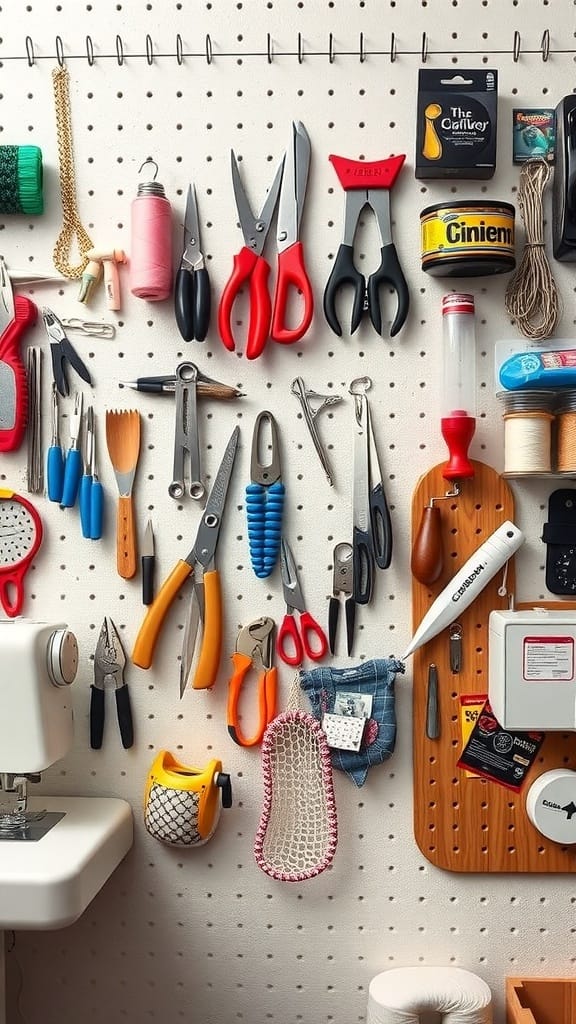
Pegboards are a fantastic way to keep your sewing room tidy and efficient. They provide a clear view of all your tools and supplies, making it easy to grab what you need without rummaging through drawers.
In the image, you can see a well-organized pegboard filled with various tools. Scissors, pliers, and other essential items hang neatly, ready for use. This setup not only saves space but also adds a splash of color to your workspace.
Using pegboards allows you to customize your organization. You can easily rearrange hooks and shelves to fit your changing needs. Plus, it’s a fun way to showcase your favorite tools and accessories!
Consider adding labels or color-coding your tools for even better organization. This small step can make a big difference in how quickly you find what you need. Overall, pegboards are a simple yet effective solution for keeping your sewing room organized.
Rolling Carts for Mobility and Storage
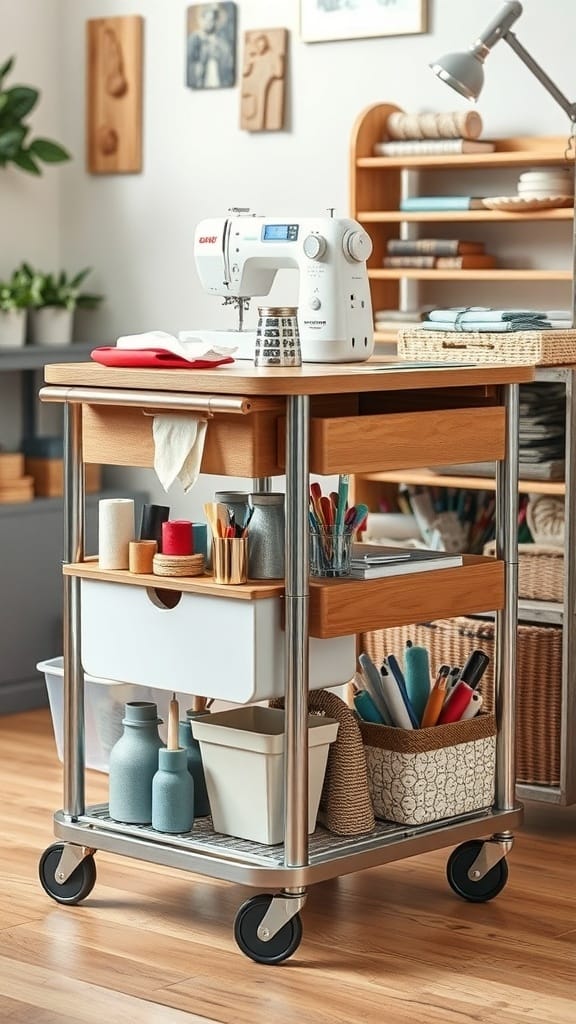
Rolling carts are a fantastic addition to any sewing room. They offer both mobility and storage, making it easy to keep your space organized. The image shows a well-equipped cart with a sewing machine on top and various supplies neatly arranged below.
This cart features multiple shelves and drawers, perfect for storing threads, scissors, and other essentials. The wheels allow you to move it around effortlessly, so you can work wherever you feel most inspired. Whether you need to shift it closer to your main workspace or tuck it away when not in use, mobility is a huge plus.
Using a rolling cart can help you maximize your sewing room’s potential. You can keep frequently used items at hand while storing less-used supplies out of sight. This way, your sewing area stays tidy and inviting, making your creative process more enjoyable.
Labeling Systems for Quick Identification
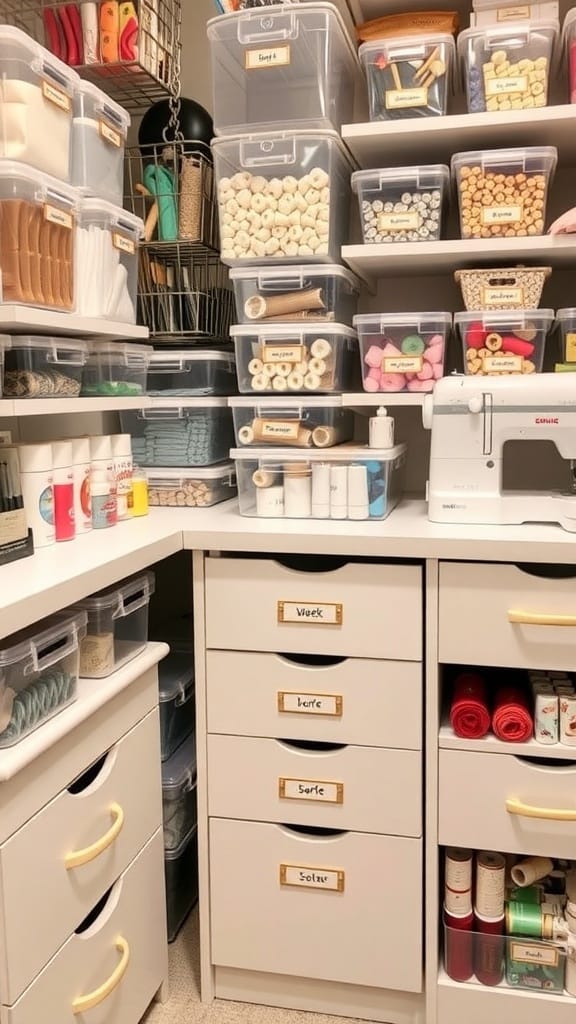
Keeping your sewing room organized can be a breeze with a solid labeling system. In the image, you can see a well-structured space where everything has its place. Clear labels on bins and drawers make it easy to find supplies without digging through piles.
Using labeled containers helps you quickly identify what you need. For example, the bins in the image hold various materials, from threads to embellishments, all clearly marked. This way, you can grab what you need and get back to your projects without wasting time.
Drawer labels are just as important. The labeled drawers in the image show how you can categorize items like fabrics, tools, and notions. This not only saves time but also keeps your workspace tidy. You’ll always know where to find your favorite supplies.
Consider using a consistent labeling style. Whether you prefer handwritten labels or printed ones, keeping it uniform can make your space look more cohesive. A little effort in labeling can lead to a more enjoyable sewing experience.
Utilizing Closet Space Efficiently
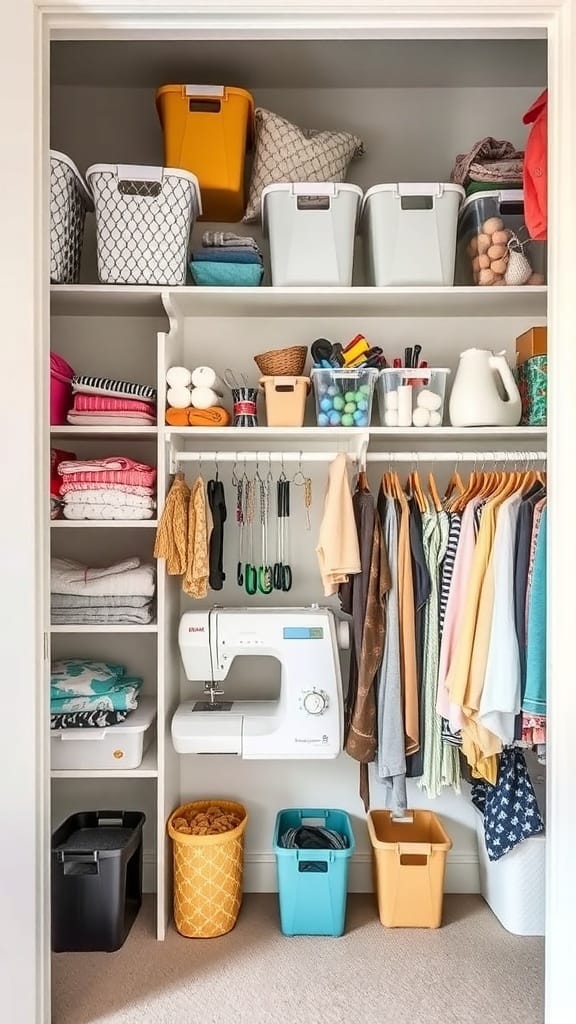
Maximizing closet space can transform your sewing room into a tidy and functional area. The image shows a well-organized closet that makes the most of vertical space. Shelves hold various bins and baskets, each labeled for easy access to supplies.
On the top shelf, colorful bins store fabric and other materials. This keeps them out of the way yet within reach. The middle shelves feature neatly folded towels and additional supplies, while the bottom section has a sewing machine ready for action.
Using hooks for scissors and other tools is a smart way to keep essentials visible and accessible. The hanging clothes add a personal touch and can even inspire your next project. With a little creativity, your closet can be a functional workspace.
If your storage still feels tight, the issue is usually how space is being used.
This is what actually makes small spaces work better → small space storage ideas
Creating a Cozy Sewing Nook
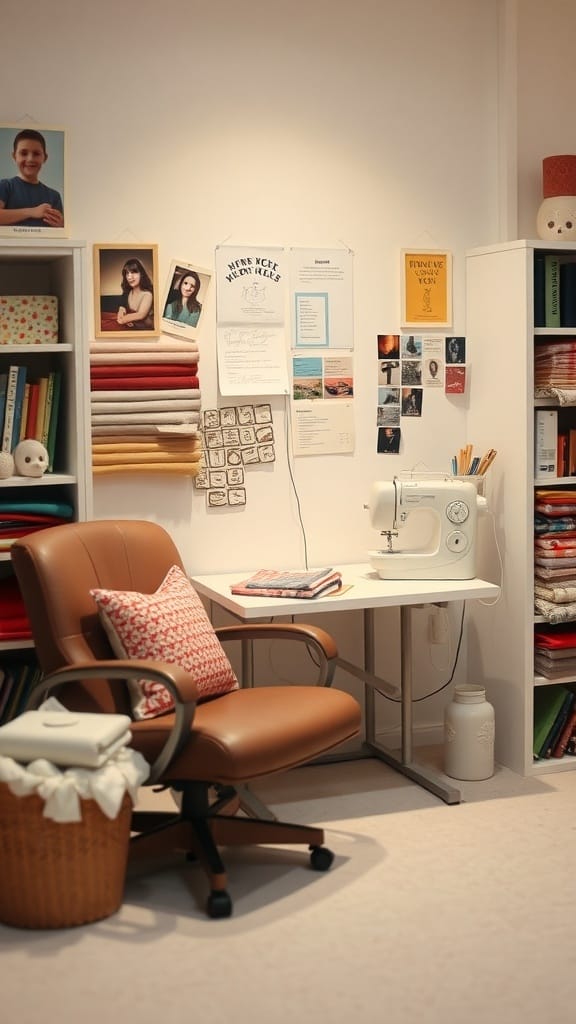
A cozy sewing nook can make all the difference in your crafting experience. The image shows a well-organized space that invites creativity. The warm tones of the chair and the neatly stacked fabrics create a welcoming atmosphere.
The sewing machine sits prominently on a clean table, ready for action. Having a dedicated workspace helps keep your projects flowing smoothly. Notice the personal touches on the walls, like framed photos and notes, which add character and inspiration.
Storage is key in this nook. The shelves are filled with colorful fabrics, making it easy to find what you need. A basket nearby holds extra supplies, keeping everything tidy. This setup not only looks great but also enhances your sewing efficiency.
Creating a cozy sewing nook is all about comfort and organization. With the right layout and personal touches, you can transform any corner into a space that sparks joy and creativity.
You may also like:
- 21 Craft Room Ideas That Keep Creative Spaces Organized
- 20 Creative Craft Storage Ideas to Organize Your Supplies
- 25 Home Organizing Ideas That Make Every Room Work Better
Incorporating Natural Light for Inspiration
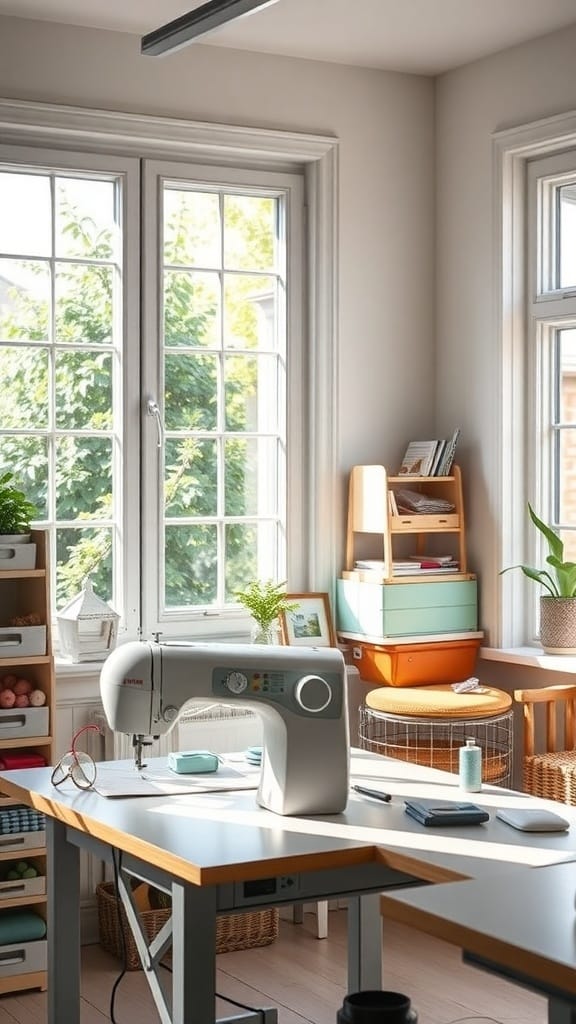
Natural light can transform your sewing room into a bright and inviting space. The image shows a well-lit room with large windows that let in plenty of sunlight. This kind of light not only makes the room feel more open but also helps you see colors and details more clearly while you work.
Having a sewing machine positioned near the windows allows you to take advantage of this natural light. It creates a cozy atmosphere that can spark creativity. The greenery visible outside adds a refreshing touch, making it easier to feel inspired as you sew.
Consider placing your sewing table near a window if possible. This setup can make your sewing sessions more enjoyable and productive. Plus, you can enjoy the view while you work, which adds to the overall experience.
Incorporating a Design Wall

A design wall is a fantastic addition to any sewing room. It provides a dedicated space to display your projects and ideas. In the image, you can see a colorful quilt displayed on the wall, showcasing various patterns and colors. This not only adds a visual element to the room but also helps in planning your designs.
Having a design wall allows you to step back and view your work from a distance. You can easily rearrange pieces until you find the perfect layout. This flexibility is key in the creative process. Plus, it keeps your workspace organized by giving you a place to pin up your fabric swatches and blocks.
Consider using a large piece of foam board or a fabric-covered wall for your design wall. This can be as simple or elaborate as you like. The goal is to create a space that inspires you and makes your sewing experience more enjoyable.
Fabric Folding Techniques for Neatness
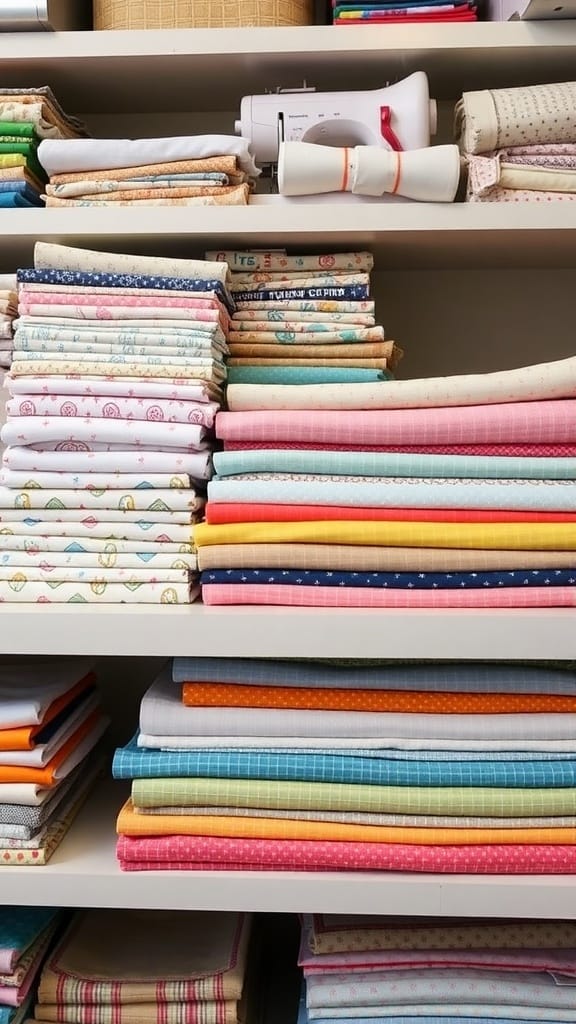
Keeping your fabric organized can make a huge difference in your sewing room. The image shows a well-arranged shelf filled with neatly folded fabric. Each stack is colorful and clearly visible, making it easy to find what you need.
One popular method for folding fabric is the ‘file fold.’ This technique involves folding the fabric into a rectangular shape and then stacking it vertically. This way, you can see all your options at a glance. It’s a great way to maximize space while keeping everything tidy.
Another method is the ‘traditional fold,’ where fabric is folded into smaller squares. This is perfect for larger pieces and allows for easy stacking. You can even use cardboard inserts to maintain the shape of the folds, ensuring that they stay neat over time.
Using bins or boxes for smaller scraps can also help keep your workspace organized. Labeling these containers can save you time when searching for specific colors or patterns.
Sewing Machine Maintenance Station
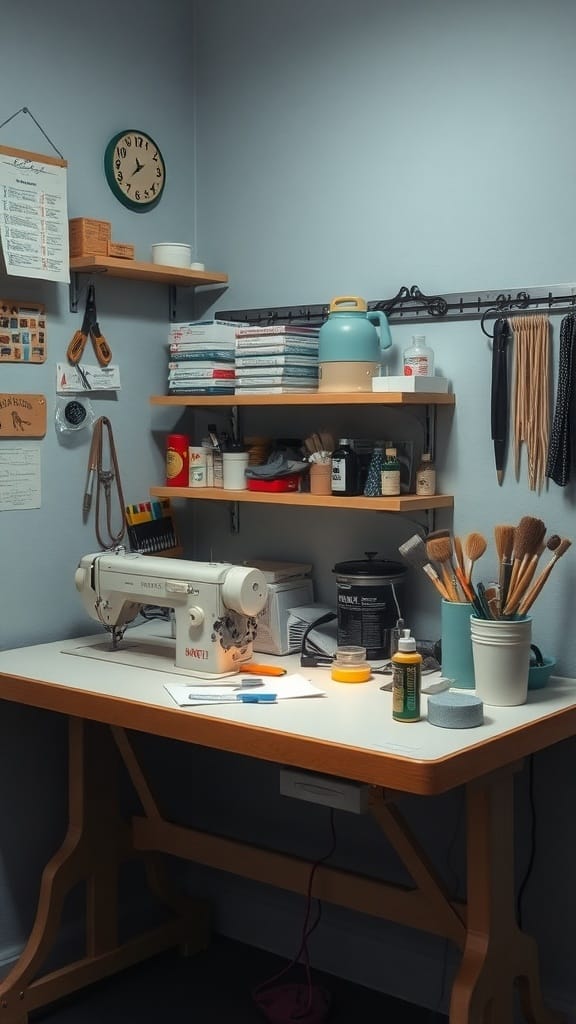
Creating a dedicated sewing machine maintenance station can make a big difference in your sewing experience. In the image, you can see a well-organized space that highlights the essentials for keeping your machine in top shape.
The sewing machine sits prominently on a sturdy table, making it easy to access. Nearby, you’ll find various tools and supplies neatly arranged. This setup encourages regular maintenance, which is key to prolonging the life of your machine.
On the shelves above, you can spot fabric rolls and a collection of sewing books. Having these resources close at hand can inspire new projects and provide guidance on machine care. The wall-mounted hooks hold tools like scissors and brushes, ensuring everything is within reach.
Don’t forget to include a small container for machine oil and cleaning supplies. Regular cleaning and lubrication can prevent issues down the line. A tidy space not only looks good but also boosts your creativity and productivity.
Rotating Seasonal Fabrics for Freshness
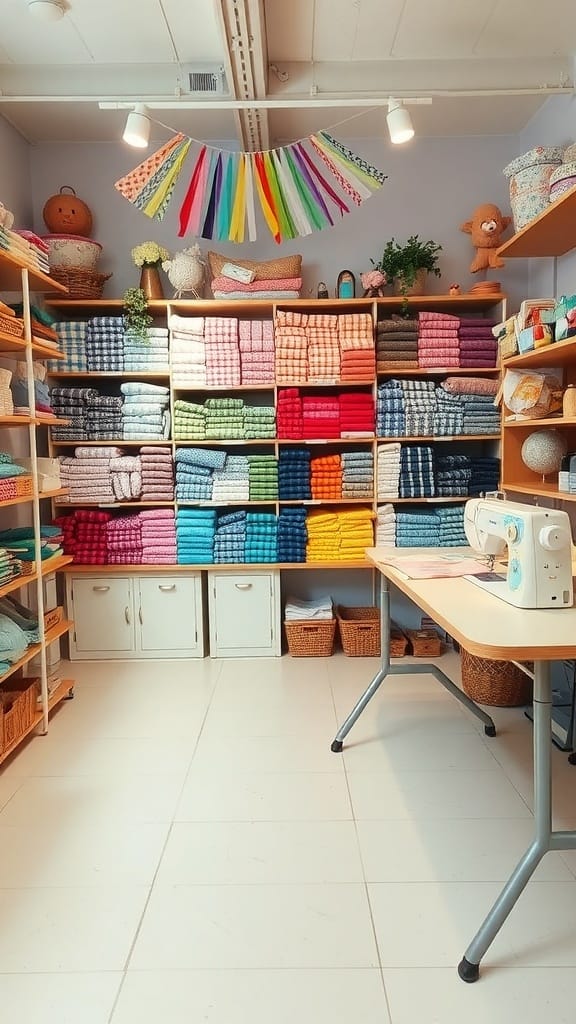
Keeping your sewing room organized can be a fun project, especially when it comes to rotating seasonal fabrics. The image shows a bright and cheerful sewing space filled with neatly stacked fabrics in various colors. This setup not only looks inviting but also makes it easy to find what you need.
By rotating your fabrics based on the season, you can keep your creative juices flowing. For example, during spring, you might want to bring out floral patterns and pastel colors. In winter, cozy flannels and rich hues can take center stage. This keeps your workspace fresh and inspiring.
Consider using baskets or bins to store off-season fabrics. This way, you can easily swap them out when the seasons change. The shelves in the image provide a great example of how to display fabrics attractively while keeping them accessible.
Don’t forget to add a touch of personality to your sewing room! The colorful ribbon banner in the image adds a playful element. Personal touches can make your space feel more like home and motivate you to create.
Using Drawer Dividers for Small Items
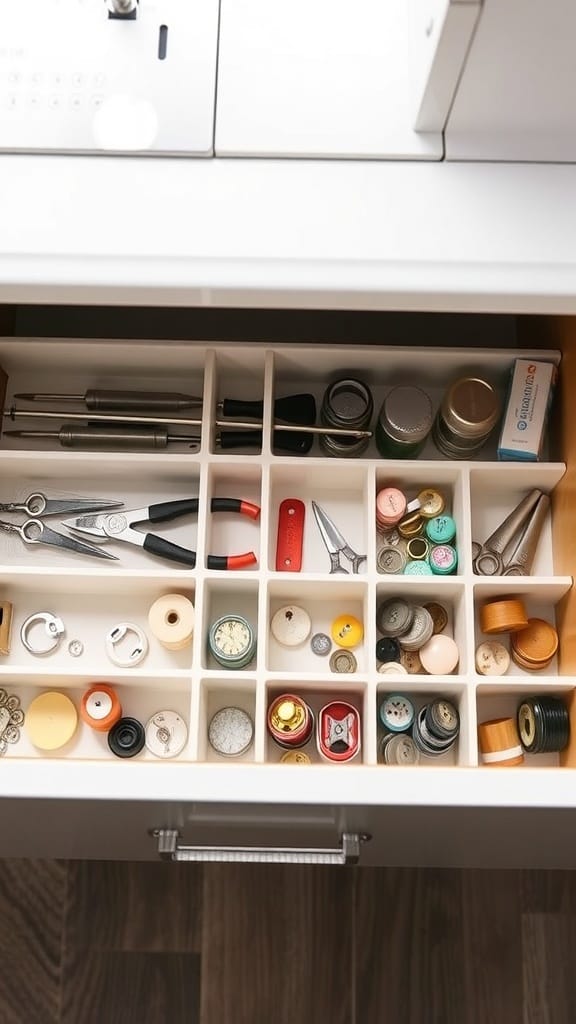
Drawer dividers are a fantastic way to keep your sewing room organized. They help separate small items, making it easy to find what you need without digging through a messy drawer.
In the image, you can see a well-organized drawer with various sewing supplies neatly arranged. Each item has its own space, from spools of thread to buttons and tools. This setup not only saves time but also keeps your materials in good condition.
Using dividers allows you to customize the layout based on your supplies. You can adjust the sections to fit larger items or create smaller compartments for tiny notions. This flexibility is key for maintaining an organized workspace.
When choosing dividers, look for ones that fit your drawer size. Plastic or wooden options work well, and some even come with adjustable sections. This way, you can create the perfect setup for your needs.
Overall, drawer dividers are a simple yet effective solution for organizing small items in your sewing room. They make your space more functional and enjoyable to work in.
Small items create the most clutter when they are not controlled properly.
This is how to keep everything organized long term → drawer organization ideas
Personalized Decor for Motivation
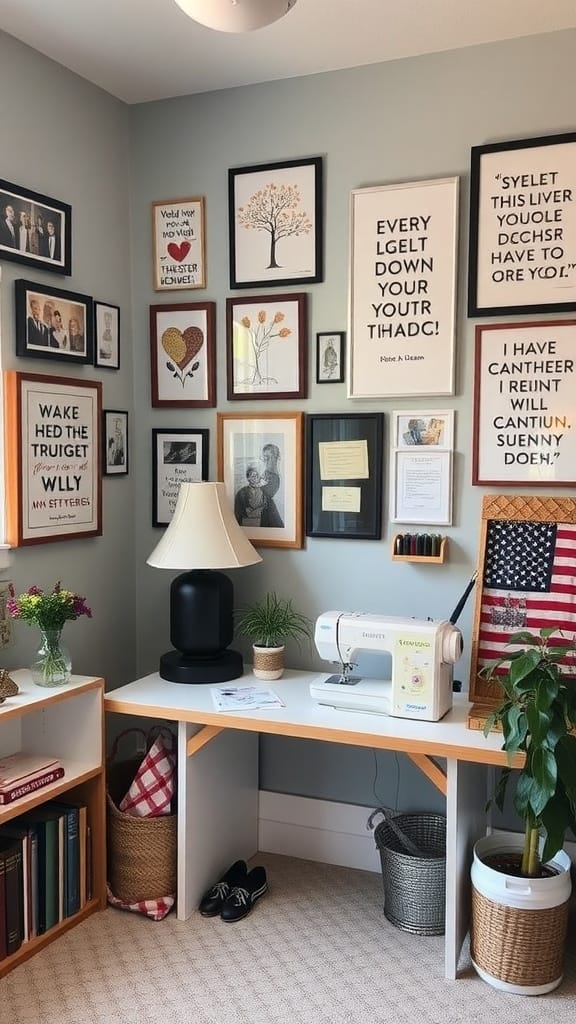
Creating a sewing room that inspires you can be a fun project. The image shows a cozy corner filled with personal touches. The walls are adorned with framed art and motivational quotes that spark creativity. Each piece tells a story and adds character to the space.
On the desk, a sewing machine sits ready for action, surrounded by plants and a lamp that provides warm light. This setup encourages you to dive into your projects. The organized shelves and baskets keep everything tidy, making it easy to find supplies when inspiration strikes.
Incorporating personal decor not only beautifies your sewing room but also serves as a reminder of your goals. Whether it’s family photos or your favorite quotes, these elements can boost your motivation and make your sewing space uniquely yours.
Crafting a Functional Workspace Layout
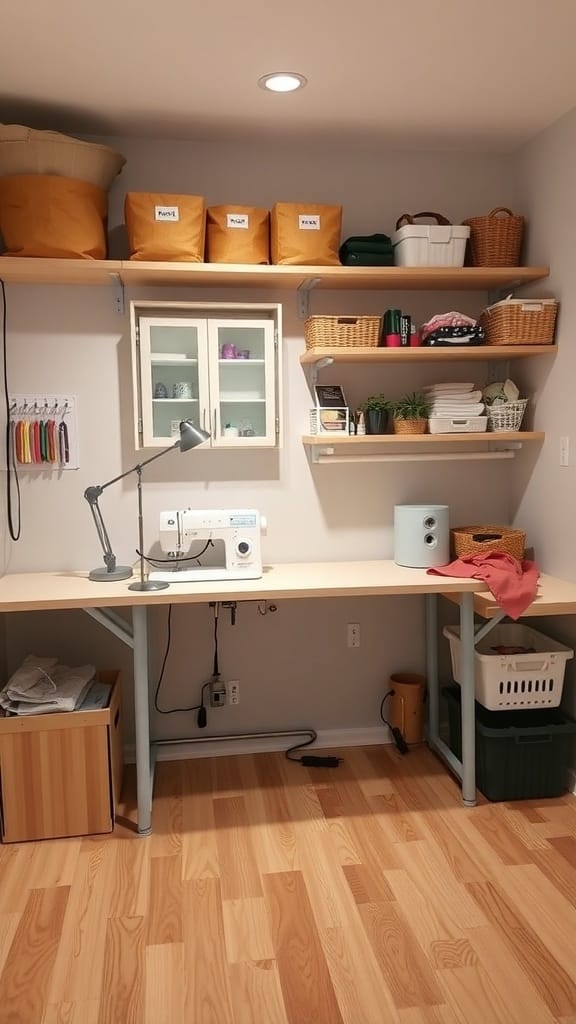
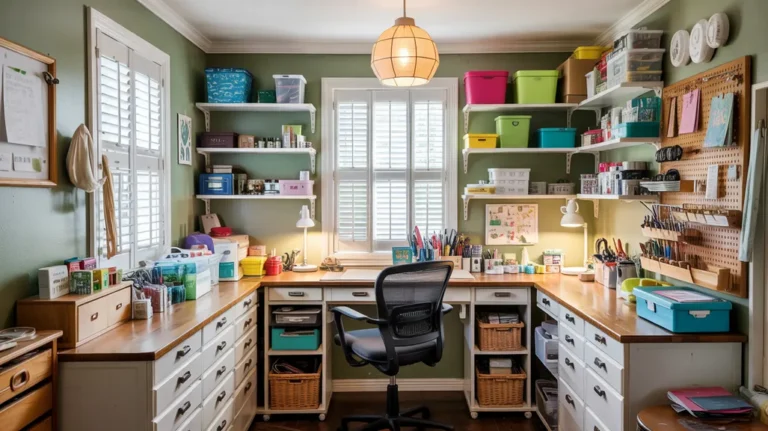
Creating a sewing room that works for you starts with a smart layout. The image shows a well-organized space that maximizes efficiency and comfort. Notice the spacious work table, perfect for cutting fabric and sewing projects. A clean, clutter-free surface helps keep your focus on your creative tasks.
Storage is key in any crafting area. The shelves above the table hold neatly labeled bins and baskets. This makes it easy to find supplies without rummaging through piles. Labeling containers helps maintain order, so you can quickly grab what you need.
Good lighting is essential, too. The desk lamp in the image provides direct light for detailed work, ensuring you can see every stitch clearly. A bright, inviting space can make a big difference in your sewing experience.
Lastly, consider the layout. The arrangement in the image allows for easy movement around the room. This is important for maintaining a flow while you work on different projects. A functional workspace layout can inspire creativity and make sewing much more enjoyable.
Incorporating Technology for Efficiency
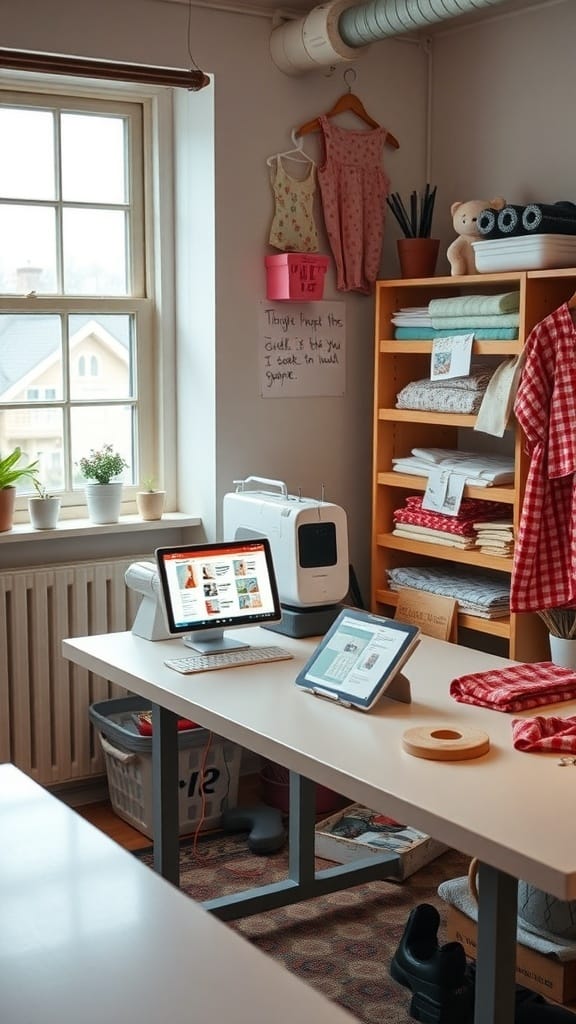
In today’s sewing rooms, technology plays a key role in keeping everything organized and efficient. The image shows a bright, inviting space filled with colorful fabrics and essential tools. A couple of screens are set up on the table, showcasing how tech can enhance your sewing experience.
Having a tablet or computer handy can make a big difference. You can easily access patterns, tutorials, and inspiration online. This eliminates the need for printed materials that can clutter your workspace. Plus, digital patterns can be resized and modified with just a few clicks, saving time and effort.
Another great addition is a smart sewing machine. These machines often come with built-in designs and features that can simplify your projects. They can connect to your devices, allowing you to download new patterns directly. This means more creativity and less hassle.
Don’t forget about organizational apps! Using apps to track your fabric inventory or project ideas can keep your mind clear and focused. You can take photos of your materials and keep notes on what you want to create next. This way, you’ll always have a plan.
Incorporating these tech tools not only makes sewing more enjoyable but also helps you stay organized. A tidy space leads to a more productive sewing session, and who doesn’t want that?
CONCLUSION
Creating an organized sewing room doesn’t require a full makeover—just the right systems in the right places. With these sewing room organizing ideas, you can improve workflow, save time, and make better use of every inch of space. Whether you add vertical storage, labeled bins, rolling carts, or a cozy sewing nook, small changes can make a big impact. Choose the ideas that fit your space and sewing style, and enjoy a tidy, efficient sewing room that supports creativity every day.
Once your sewing space is organized, the next step is making sure clutter does not come back.
This is what keeps everything working long term → pro organizing hacks to declutter your space