
Introduction
An entryway sets the tone for the entire home, yet it’s often the fastest place to become chaotic. Coats pile on chairs, shoes scatter across the floor, and bags land wherever there’s space. The right coat rack and shoe bench ideas create structure the moment you walk in. When vertical hanging and grounded storage work together, clutter has fewer chances to spread. If you’re organizing the entire drop zone, 23 Entryway Organization Ideas That Instantly Reduce Clutter explores additional ways to keep high-traffic spaces under control. Instead of adding random hooks and baskets, integrating thoughtful design transforms the space into something both practical and welcoming.
1. Wall-Mounted Coat Rack Above a Slatted Shoe Bench
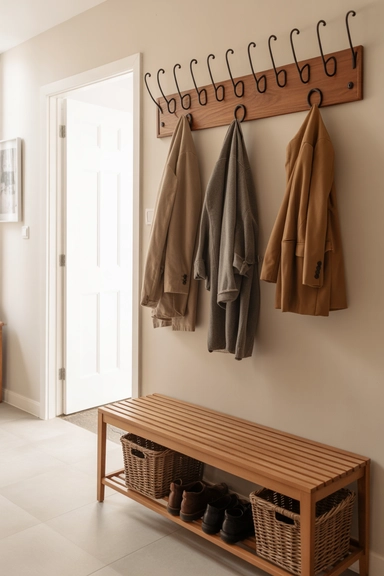
Mounting a structured coat rack directly above a slatted shoe bench creates a clean vertical zone for daily essentials. The slatted base allows airflow around footwear, reducing odor buildup and moisture retention. Above, evenly spaced hooks keep coats from overlapping excessively.
Keep the rack aligned with the bench width for visual balance. Add a narrow shelf above the hooks for hats or small baskets. This stacked design consolidates outerwear and footwear into one contained footprint, preventing clutter from spreading into adjacent rooms.
2. Built-In Entry Nook with Integrated Hooks and Bench
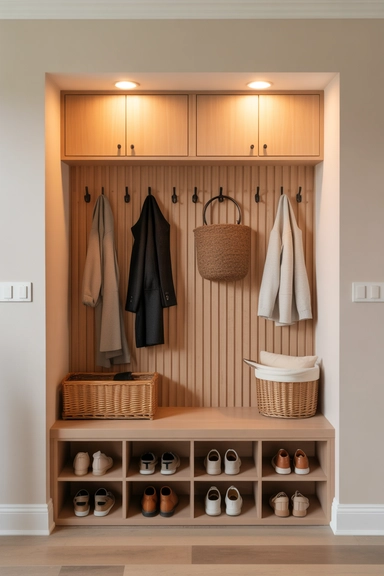
A recessed wall nook offers a polished solution that feels architectural rather than temporary. Install upper hooks for coats and a solid bench below with open cubbies or drawers underneath. This creates dedicated zones for each family member.
Keep compartments clearly defined to avoid overflow. Closed drawers work well for seasonal items, while open cubbies allow quick access. By embedding storage into the wall depth, the entry remains streamlined while accommodating daily traffic.
3. Freestanding Hall Tree with Storage Drawers
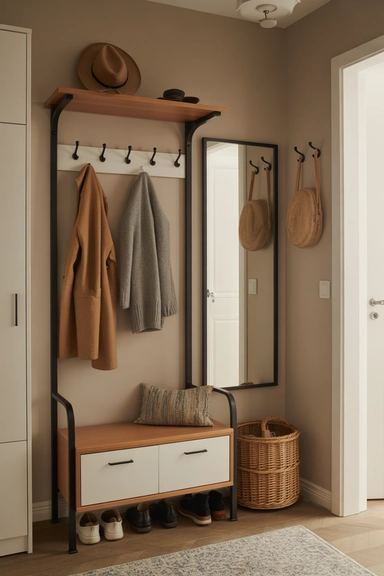
A hall tree combines vertical hooks, overhead shelving, and a lower shoe bench in one unified piece. Choose models with built-in drawers beneath the bench to prevent loose footwear piles. This compact solution works well in apartments where built-ins aren’t possible.
Position it against a main wall and anchor it securely for stability. Limit hook quantity to prevent overcrowding. The integrated structure visually anchors the entry while consolidating outerwear and shoes into a single organized station.
4. Floating Bench with Individual Hook Panels
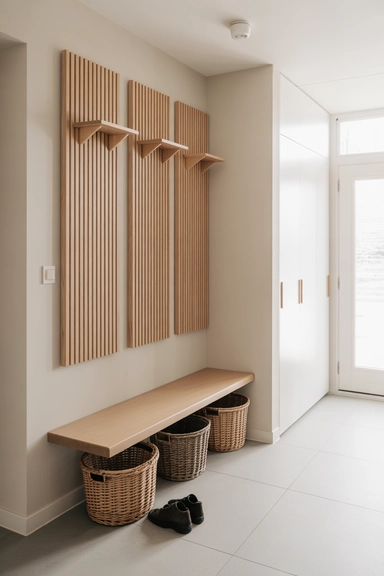
Instead of one long rack, install individual hook panels spaced evenly along the wall. Beneath them, mount a floating bench to keep the floor visually open. This separation creates rhythm and prevents one bulky block of storage.
Under the floating bench, add woven baskets or low-profile bins for shoes. Because the bench doesn’t touch the floor, the space feels lighter and easier to clean. This approach works especially well in narrow hallways.
5. Industrial Pipe Coat Rack with Wooden Shoe Shelf
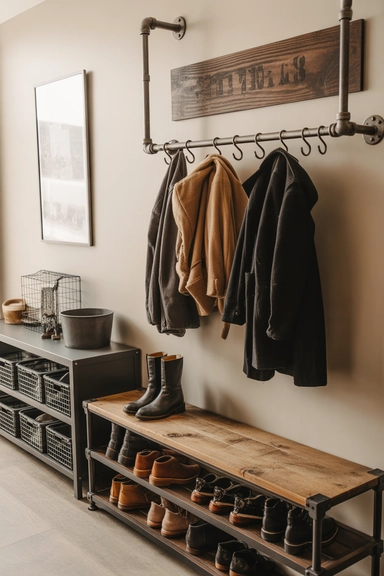
For a more rugged aesthetic, combine black pipe hooks with a solid wooden shoe shelf below. The exposed hardware adds character while the grounded shelf contains footwear neatly. Keep the shelf depth controlled to avoid obstructing walkways.
Add metal baskets on the lower tier for smaller items like gloves or scarves. The contrast between metal and wood introduces texture while maintaining structured storage.
6. Full-Height Vertical Panel System with Assigned Zones
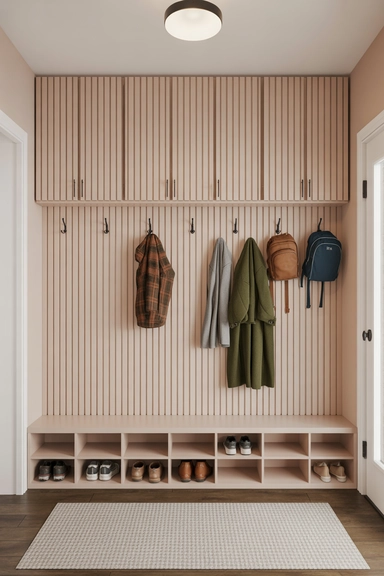
A full-height panel system transforms one entry wall into a structured storage grid. Instead of randomly placing hooks, install a vertical backing panel that spans from floor to ceiling. Mount staggered heavy-duty hooks at different heights for adults and children, then integrate a solid shoe bench at the base with divided cubbies. This layered structure prevents coats from overlapping excessively and keeps footwear from drifting into walkways.
Add upper cabinets or closed compartments above the hooks for seasonal items that don’t need daily access. Use durable finishes that resist scuffs from bags and shoes. By consolidating everything into one continuous vertical plane, the entryway feels intentional rather than pieced together.
7. Closed Cabinet Coat Rack with Ventilated Shoe Bench Base
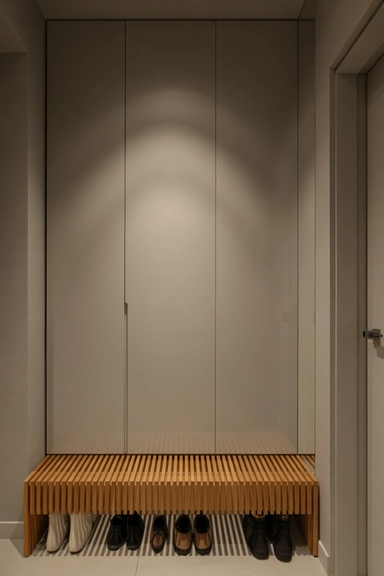
For homes that prefer a visually calm entry, a closed cabinet coat rack conceals outerwear entirely behind doors. Inside, install a combination of hanging rods and interior hooks to maximize vertical capacity. Beneath the cabinet, attach a ventilated shoe bench base with slatted construction to allow airflow around footwear.
Keep cabinet depth balanced — too deep wastes space, too shallow restricts coat movement. Use soft-close hinges for durability. The contrast between concealed upper storage and breathable lower shelving creates a structured, clutter-controlled system that still supports daily convenience.
8. Corner Coat Rack Bench Combination for Tight Entryways
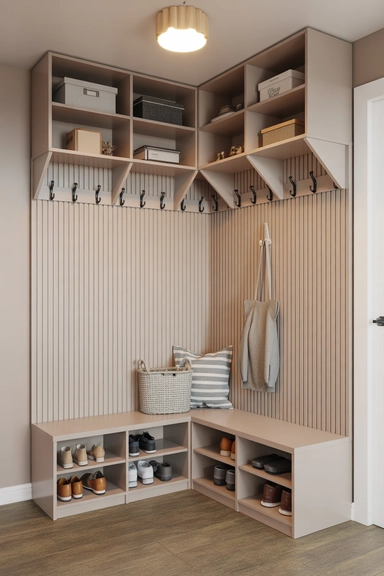
Corners are frequently underutilized in entry design. A triangular or L-shaped coat rack and shoe bench configuration can convert that dead space into efficient storage. Install vertical hooks along both walls of the corner and position a custom-fit bench beneath.
Under-seat drawers or angled cubbies prevent shoes from spilling outward. Keep hook spacing generous to avoid coat overlap. This layout pulls clutter into the corner rather than allowing it to spread along straight walls, preserving central walking clearance in compact entryways.
9. Double-Tier Hanging System Above Structured Shoe Drawers
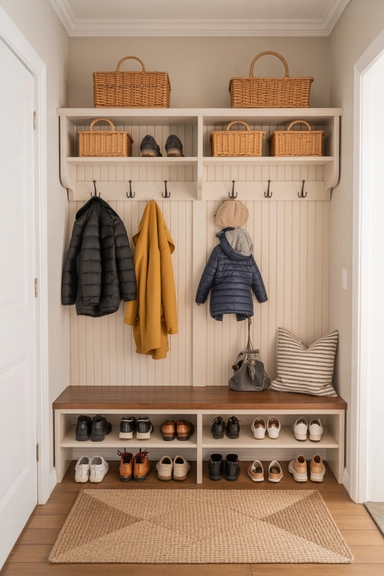
A single row of hooks often leads to overcrowding. Instead, install a double-tier system with one upper row for long coats and a lower row for shorter jackets or children’s items. Below, replace open shoe shelves with structured drawers to eliminate visual pileups.
Use full-extension drawer slides to ensure easy access to the back. Internally divide drawers by footwear type to prevent stacking chaos. The vertical separation of hanging space combined with concealed lower storage keeps the entry orderly even during high-traffic seasons.
10. Open Shelf + Hook Rail + Pull-Out Shoe Tray System
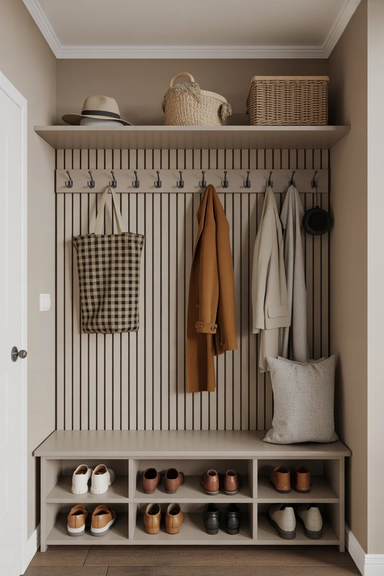
Layered organization works best when each function has its own plane. Install a slim open shelf at the top for hats and baskets, a sturdy hook rail below for coats, and a pull-out shoe tray beneath the bench. Pull-out trays prevent shoes from being pushed to the back where they’re forgotten.
Choose moisture-resistant tray materials to handle wet footwear. Keep spacing consistent to maintain visual symmetry. This tiered design ensures that coats, accessories, and shoes occupy distinct levels rather than blending into one congested zone.
11. Upholstered Storage Bench with Integrated Back Panel Hooks
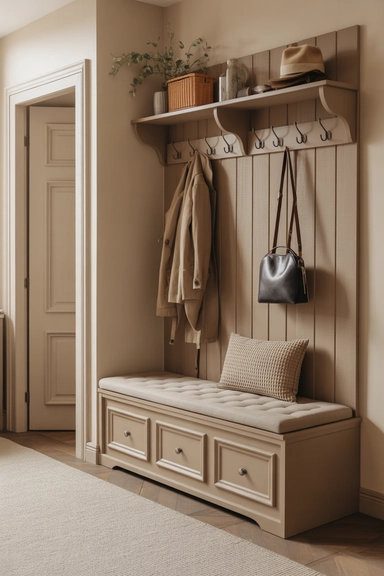
An upholstered bench softens the entry while still supporting heavy storage needs. Pair it with a vertical back panel fitted with evenly spaced hooks. The back panel protects the wall from scuffs and visually anchors the seating.
Under the cushioned seat, integrate lift-up compartments divided into separate bins. Avoid one large hollow space; segmentation prevents daily disarray. The padded surface adds comfort while the concealed interior absorbs seasonal overflow, making the entry feel both welcoming and structured.
12. Floor-to-Ceiling Built-In Locker System with Individual Compartments
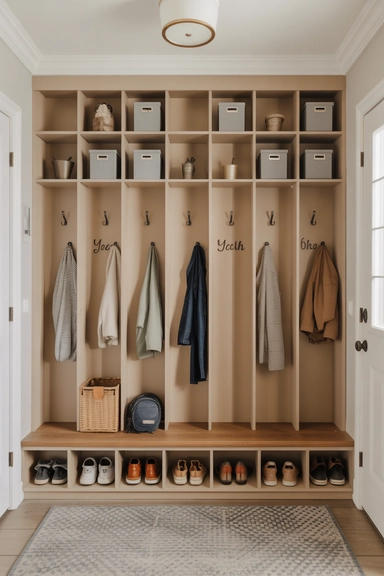
A locker-style built-in creates one of the most disciplined coat rack and shoe bench ideas for busy households. Instead of shared hooks and open shelving, divide the wall into tall vertical compartments — one per family member. Each section includes an upper hook rail or hanging rod, a small interior shelf for hats, and a lower cubby or drawer for shoes.
Clear physical boundaries prevent coats from overlapping and shoes from mixing. Add labeled nameplates or subtle number tags for accountability. Keep depth consistent across all lockers to maintain architectural symmetry. When every person has a defined vertical zone, clutter doesn’t migrate across the entryway.
13. Slatted Wood Feature Wall with Integrated Floating Bench
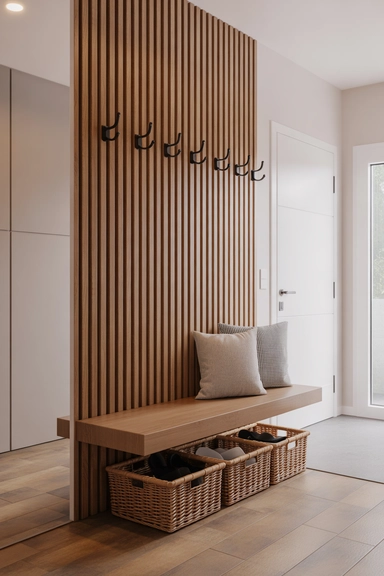
A full slatted wood backdrop transforms functional storage into a design statement. Install vertical wood slats across the entry wall, then mount minimalist metal hooks directly onto the slats. Beneath, secure a floating shoe bench with concealed brackets to keep the floor visually open.
Under the bench, use low-profile shoe trays or structured baskets rather than loose placement. The vertical slats guide coat placement and create visual rhythm that reduces the appearance of mess. By anchoring hooks and seating within one cohesive wall treatment, the system feels intentional rather than improvised.
14. Hall Tree with Overhead Cabinet and Closed Shoe Drawers
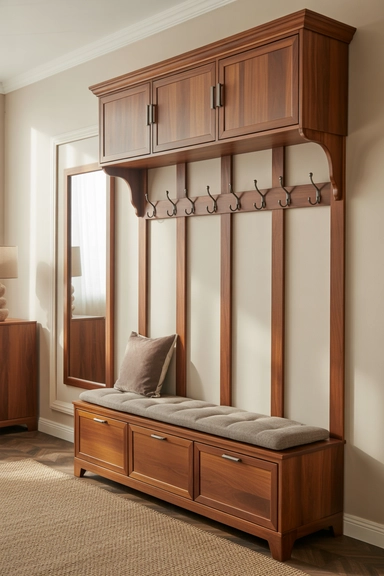
A high-function hall tree should not stop at hooks and a basic shelf. Look for a version that includes an enclosed overhead cabinet for off-season gear and fully closed drawers beneath the bench. Closed lower storage prevents visual shoe clutter, especially in high-traffic homes.
Install interior drawer dividers to keep footwear separated by type. Use heavy-duty hardware to withstand repeated daily opening. The layered structure — cabinet, hook rail, bench, and drawers — creates a complete vertical storage column that consolidates everything in one compact footprint.
15. Narrow Wall Rail System with Adjustable Hooks and Sliding Shoe Rack
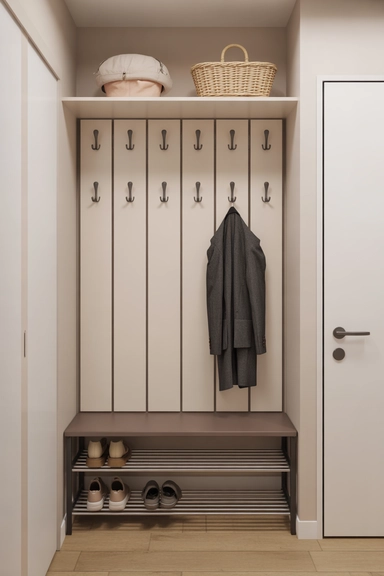
In tight hallways, flexibility is essential. A slim wall-mounted rail system allows hooks to slide horizontally, adapting to changing coat volumes. Beneath it, install a sliding shoe rack that tucks flush against the wall when not in use.
Spacing hooks strategically prevents bulky coats from overlapping excessively. Choose a shoe rack with angled tiers to maximize visibility and minimize depth. The adjustable configuration ensures the entry remains efficient during seasonal transitions without requiring structural changes.
16. Bench with Pull-Out Vertical Shoe Cabinets and Upper Hook Shelf
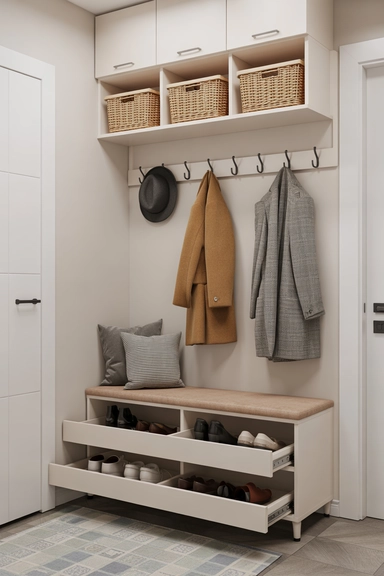
Instead of traditional horizontal shoe cubbies, consider pull-out vertical shoe cabinets built into the bench base. These narrow compartments swing outward and hold multiple pairs in a compact footprint. Above, install a structured hook shelf with a slim ledge for baskets.
The vertical orientation reduces depth and keeps footwear concealed. Ensure the cabinet doors include internal separators to prevent shoes from shifting. By combining upright shoe storage with elevated hanging space, you create separation between floor-level clutter and upper-level garments.
17. Recessed Entry Wall with Integrated Lighting and Structured Storage
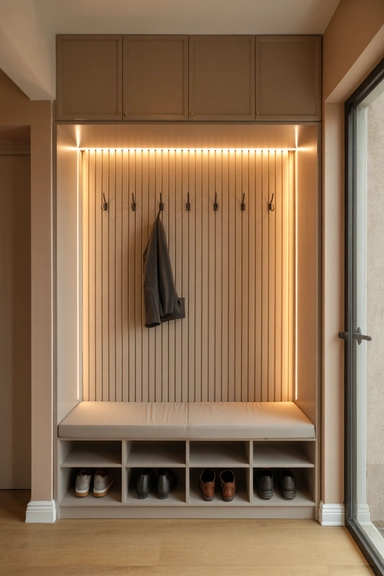
A recessed wall section can house both hooks and a shoe bench without projecting into the hallway. Frame the recess with subtle trim and add integrated LED lighting along the top edge to highlight the storage zone.
Within the recess, install evenly spaced heavy-duty hooks and a solid bench with divided cubbies or drawers below. The lighting draws attention to the designated drop zone, reinforcing use. Because the storage sits flush within the wall cavity, the entry maintains open flow while supporting high-capacity organization.
18. Dual-Sided Coat Rack Bench for Open-Concept Entryways
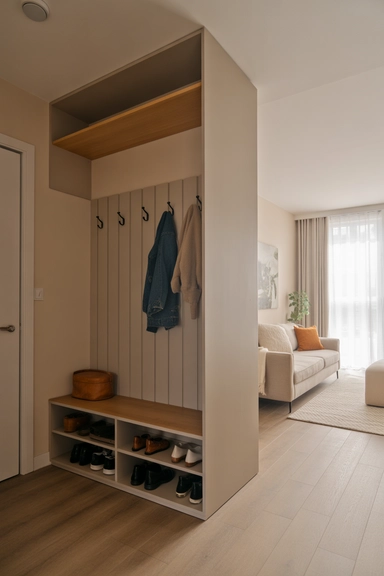
In open-concept layouts where the entry blends into the living area, a dual-sided coat rack and shoe bench can act as both storage and subtle divider. On the entry-facing side, install structured hooks and a ventilated shoe bench. On the opposite side, incorporate closed panels or shallow shelving to maintain a clean living-room view.
This approach prevents coats from visually spilling into adjacent spaces. Keep the structure stable with a wide base and secure anchoring. By consolidating storage into a freestanding architectural element, you define the entry boundary without building walls.
19. Ceiling-Mounted Hanging Rail Above a Structured Shoe Platform
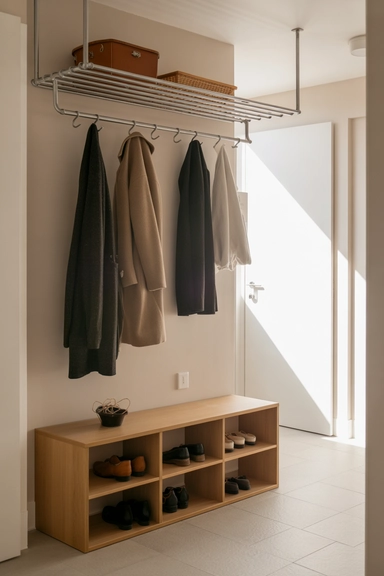
For entryways with limited wall space but adequate ceiling height, install a ceiling-mounted hanging rail directly above a grounded shoe platform. This lifts coat storage upward, freeing vertical wall area for mirrors or artwork.
Ensure the rail is anchored into ceiling joists and positioned at a reachable height. Below, construct a solid shoe platform with divided sections or pull-out trays to prevent random placement. The vertical separation between suspended coats and grounded shoes creates visual order and reduces congestion near the door.
20. Minimalist Metal Frame System with Integrated Storage Bins
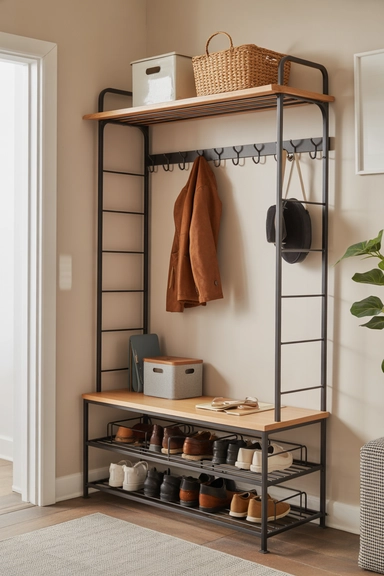
A slim metal frame system combines a hook rail, upper shelf, and lower shoe platform in one open structure. The key to avoiding clutter is integrating structured storage bins within the frame rather than allowing loose shoe stacking.
Choose stackable bins sized precisely to the frame width. Keep hook quantity controlled to prevent overcrowding. The open metal silhouette keeps the entry feeling airy, while the defined internal containers maintain discipline and organization.
21. Upholstered Bench with Backlit Hook Panel and Concealed Drawer Base
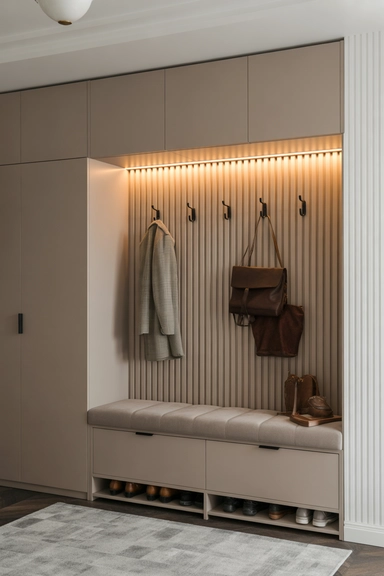
Elevate functionality with an upholstered bench featuring a concealed drawer base instead of open cubbies. Above, mount a back panel fitted with evenly spaced hooks and subtle backlighting to define the drop zone visually.
Drawer interiors should include adjustable dividers to prevent shoes from sliding into a pile. The backlighting enhances depth and subtly encourages correct placement. This layered configuration merges comfort, visibility, and containment into a cohesive entry feature.
22. Compact Modular Entry Unit with Expandable Sections
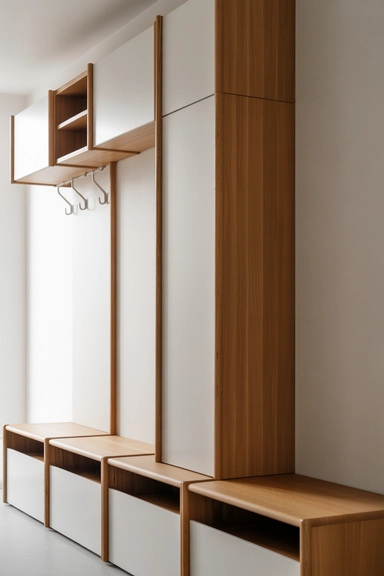
A modular entry system allows you to add or remove sections as needs evolve. Start with a base shoe bench featuring closed drawers, then stack vertical hook panels or narrow cabinets above. Additional modules can be attached later without redesigning the entire space.
Keep modules aligned vertically for visual cohesion. Choose consistent finishes to avoid a fragmented look. This adaptable approach ensures your coat rack and shoe bench setup grows with household needs while maintaining a structured, clutter-controlled entry.
Conclusion
A well-designed coat rack and shoe bench system does more than store outerwear — it creates immediate order at the threshold of your home. The most effective solutions separate hanging space from footwear, define clear boundaries, and integrate structure vertically. Whether built-in or modular, prioritize segmentation and proportion to prevent overflow. When coats and shoes have disciplined zones, the entry becomes welcoming rather than chaotic, setting a calm tone for the entire house.