Introduction
Ever walked into a narrow pantry and felt like everything’s plotting against you? Yeah… same. The space is not the real problem. The layout is. I have tried the “just add more shelves” trick before, and honestly, it made things worse.
In tight pantry setups, every bad decision shows up fast. Deep shelves hide items, clutter builds up, and suddenly finding pasta feels like a treasure hunt, and not the fun kind. What you actually need is smart visibility, easy access, and a layout that works with you, not against you.
So how do you fix it without knocking down walls? These narrow walk in pantry ideas focus on vertical space, shallow storage, and clear zones so everything stays in reach and easy to manage.
And if your whole kitchen still feels chaotic, you might want to fix the bigger system too → pantry cabinet ideas that make kitchen storage work harder
But if your kitchen storage still feels limited overall, fixing the bigger system first makes everything easier → pantry cabinet ideas that make kitchen storage work harder
Single-Wall Shelving Layout for Maximum Walking Space
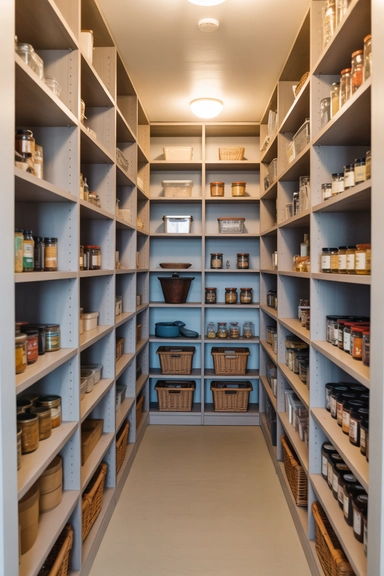
Putting shelves on both sides sounds like a win on paper. In a tight pantry, it turns into a hassle fast. You lose your walking room, and every grab feels like a mini obstacle course.
Go with one wall instead. Stack it from floor to ceiling and leave the other side open. That single choice gives you breathing room and makes the space feel usable, not cramped.
I’ve seen people try to “maximize” every inch and end up avoiding their own pantry. Not the goal. In small spaces, ease beats capacity.
Keep placement straightforward:
- Eye level: the stuff you reach for daily
- Lower shelves: heavy bags and bulk items
- Upper shelves: backups you don’t touch often
Visibility matters more than people think. If you can’t see it, you’ll forget it’s there and buy it again. Clear bins help, or even simple open baskets. Nothing fancy.
End result? You walk in, grab what you need, and get out. No twisting, no guessing, no mess building up. That’s the whole point..
This is where using height properly changes everything → vertical storage ideas
Double Shallow Shelving That Keeps Both Sides Functional
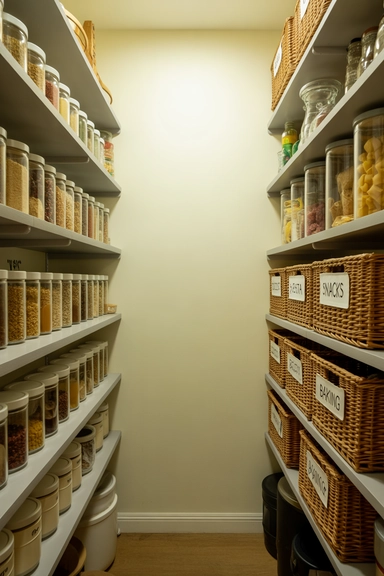
A bit more width changes your options. You no longer have to stick to one wall. But that does not mean you should go full depth on both sides. That is where people mess up.
The trick is simple. Keep both sides shallow so the center path stays usable. Shelves around 10 to 12 inches deep give you storage without turning the walkway into a squeeze zone. You still get access from both sides without feeling boxed in.
What makes this setup work is balance. You are not just adding storage. You are controlling how the space feels when you actually use it.
Set it up like this:
- Middle shelves (both sides): daily items you grab often
- Upper shelves: extra stock, bulk groceries, backup items
- Lower shelves: heavier items that need stability
Standing in the middle, you should be able to see most of what you have without stepping in and out repeatedly. That visibility cuts down time, effort, and random overbuying.
This layout works best when you stay disciplined. Once you start overloading shelves or mixing categories, it quickly loses its advantage. Keep it simple, keep it visible, and it will stay easy to maintain.
Vertical Floor-to-Ceiling Storage That Uses Height
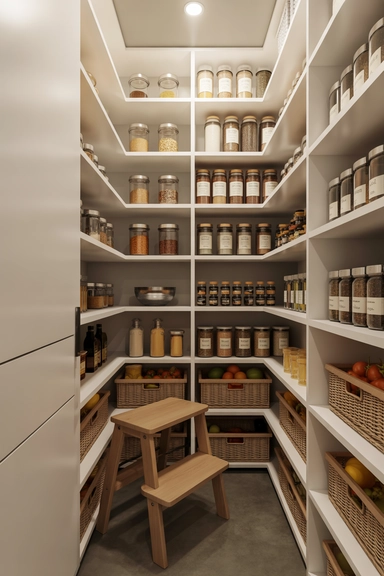
If your pantry runs long and skinny, spreading out isn’t really an option. You go up, or you stay stuck. Simple as that. The problem is, most people either ignore the top shelves or turn them into a random pile of stuff they never touch again.
Running shelves to the ceiling does give you more room, no doubt. But if your daily items end up above your head, you’ll stop using them properly. And then the whole system falls apart.
Think in terms of effort, not just space:
- Lower shelves: heavy things like flour, oil, or appliances you don’t want to lift from above
- Mid shelves: everyday stuff you grab without thinking twice
- Upper shelves: backup stock, extras, or things you only need once in a while
Quick question. Do you actually want to drag a chair every time you need something? Probably not. Keep a small step stool nearby if you plan to use upper shelves properly. Otherwise, let’s be honest, they’ll turn into a “deal with it later” zone.
Also, if you can’t see it, you’ll forget it. That’s just how it goes. Clear containers help, but even simple labeled baskets do the job. Nothing fancy needed.
When this setup works, you feel it. You stop digging around, you stop overbuying, and you actually know what you have. That’s the real win here.
Narrow Walk-Through Pantry Layouts for Small Kitchens
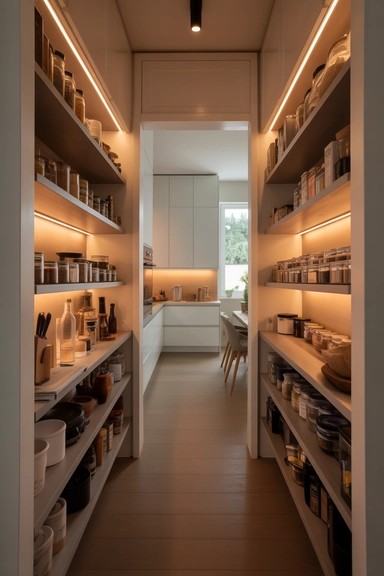
A walk through pantry can easily turn messy because people keep moving through it. Things get picked up, shifted, and not always placed back properly.
Keep both sides shallow so the center path stays clear. If walking feels tight, the layout will not work no matter how much storage you add.
Use a simple setup:
- Mid level: daily use items
- Upper shelves: backup stock
- Lower shelves: heavier items
Since this space gets used often, labels and matching containers help keep things in place. Good lighting on both sides also makes everything easier to see and use.
When the layout stays simple, the pantry feels easy instead of frustrating.
Drawer Storage to Replace Deep Lower Shelves
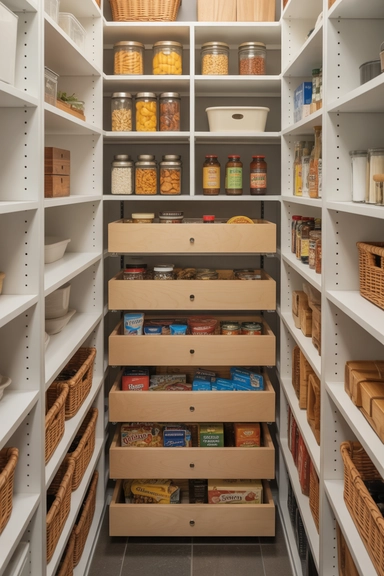
Deep lower shelves look useful until things start disappearing at the back. You forget what you have, and items just sit there unused.
Pull out drawers fix that instantly. Everything comes forward, so you can see and grab items without digging around.
Use them like this:
- Top drawers: snacks and small packaged items
- Middle drawers: baking supplies and daily use goods
- Bottom drawers: heavier items stored deeper
Adding simple dividers keeps things from mixing and sliding around. Without them, drawers can turn messy fast.
This setup works because it removes the “out of sight, out of mind” problem and makes everything easy to access.
Long Narrow Pantry Layouts That Prioritize Movement First
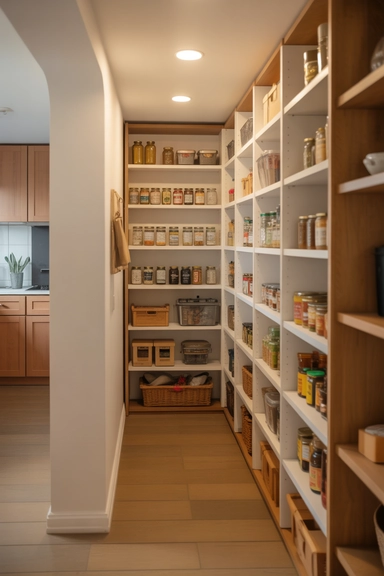
A long narrow pantry stops working the moment the walkway feels tight. You can add all the shelves you want, but if movement feels restricted, the space becomes annoying to use.
Start with the path first. Keep a clear, comfortable line from the entrance to the back. If you get this right, everything else becomes easier.
Build storage around that path:
- Near entrance: keep shelves shallow to avoid crowding
- Further inside: slightly deeper shelves where movement slows down
- Mid height zones: avoid anything sticking out too far
Most people ignore this and pack storage near the front. That creates congestion right where you need space the most.
When the walkway stays open, the pantry feels smooth to use and easy to reset after shopping.
Shallow Shelf Depths That Prevent Visual Overload
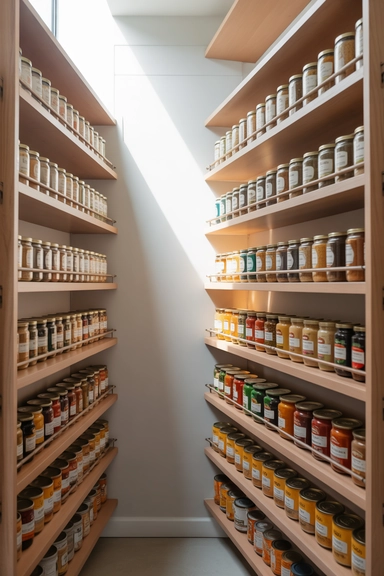
Deep shelves seem useful at first, but they quickly turn into a hiding spot for clutter. Items get pushed back, stacked, and forgotten.
Shallow shelves fix that. Everything stays in one row, so you can see what you have without digging around. This alone makes the pantry feel more organized.
A simple setup works best:
- 10 to 12 inch depth: enough for storage without losing visibility
- Tiered risers: keep cans and small items easy to spot
- Matching containers: help keep things aligned and clean looking
When everything stays visible, you stop overbuying and rearranging all the time. The space feels calmer and easier to manage.
Most clutter builds where visibility is poor. Fix that, and the pantry stays under control.→ small space storage ideas
Countertop Sections That Add Functional Workspace
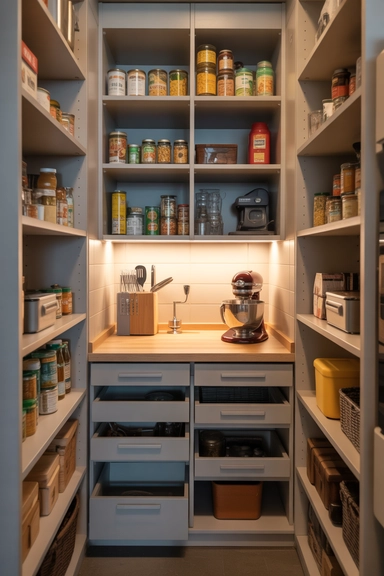
This is one of those things people skip… and then regret later.
Even a small countertop inside a narrow pantry changes how you use the space. You finally have somewhere to drop groceries, sort items, or place a mixer without juggling everything in your hands.
Without it, what happens? Stuff goes straight onto shelves. Then shelves get messy. Then you stop caring. Seen it too many times.
Keep it simple:
- Below: heavier items like flour bags or small appliances
- On top: quick drop zone while organizing
- Above: everyday items within easy reach
It also breaks that long wall of shelves, which makes the pantry feel less cramped visually.
Not a must-have, but once you add it, you will use your pantry very differently. In a good way.
End-Wall Storage That Uses the Back of the Pantry
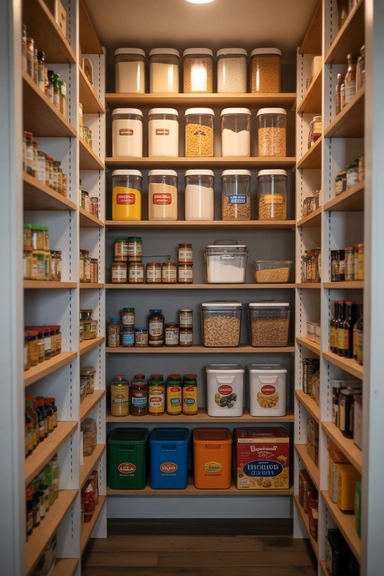
Most people ignore the back wall. Big miss. That spot can handle your overflow so the side shelves stay clean and easy to use.
Give the end wall its own job. Store bulk items or things you don’t reach for daily. That way your side walls stay focused on quick access.
Keep it controlled:
- Back wall: bulk packs, extras, rarely used items
- Slightly deeper shelves: more capacity, but don’t go too deep
- Bins or labels: so nothing disappears back there
If the back gets too deep, you’re back to digging and forgetting. Keep it visible enough to manage.
Done right, this adds storage without messing up your main walkway.
Mixed Storage Heights for Better Accessibility
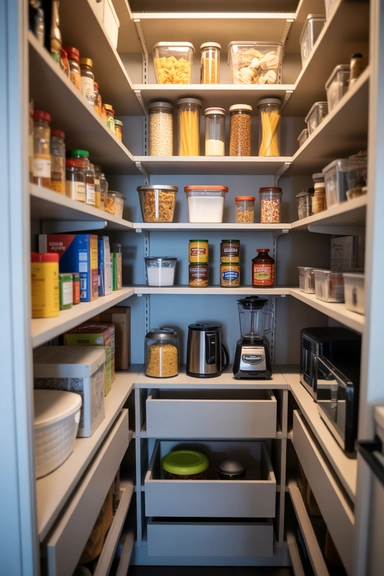
Uniform shelves look tidy, but they waste space. You end up with awkward gaps for small stuff and no room for taller items. Then you start stacking… and it gets messy.
Change the heights and give each section a purpose. It’s a small tweak, but it fixes a lot of daily annoyance.
Try this split:
- Tall sections: cereal boxes, oil bottles, small appliances
- Short sections: jars, cans, spice containers
- Middle zone (waist to eye level): things you grab all the time
Quick reality check. Do your groceries stay the same every month? Probably not. That’s why adjustable shelves help. You can shift things around instead of fighting the layout.
Once the shelves match what you actually store, everything fits without overthinking it. You reach in, grab it, done.
Pull-Out Pantry Columns That Keep Everything Visible
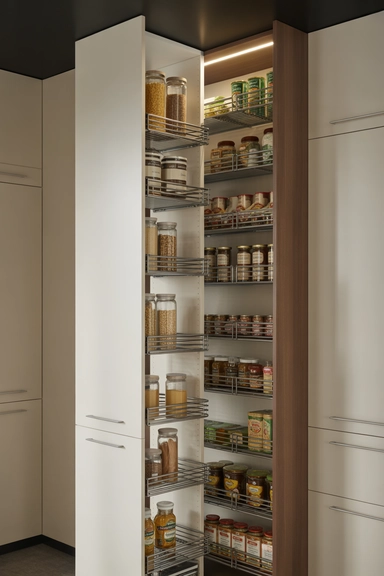
Deep corners waste more food than people realize. Stuff gets pushed back, forgotten, and then you find it weeks later. Not ideal.
Pull out columns fix that problem. You slide the whole rack out, and everything comes forward at once. No digging, no guessing what’s hiding behind.
Best way to use them:
- Middle racks: snacks and packaged items that stack easily
- Upper racks: lighter items you don’t grab as often
- Lower racks: heavier cans or bulk items for stability
Place them on the side where you have a bit more walking space. These need room to slide out properly, otherwise they become annoying instead of helpful.
Once you start using pull outs, it’s hard to go back. You see everything in seconds, and nothing quietly disappears at the back.
Tight spaces need smarter systems, not more items pushed inside.
This setup makes narrow areas much more usable → kitchen cabinet organization ideas
Long Narrow Pantry Zones That Follow Cooking Habits
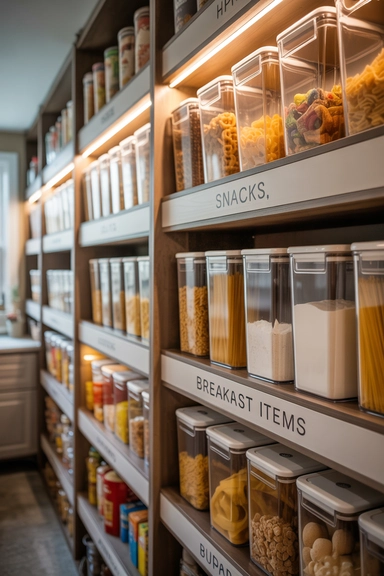
When everything sits randomly, the pantry falls apart fast. You put things wherever there’s space, and later nothing is where you expect it to be.
Zoning fixes that. Give each category its own spot so you don’t have to think every time you put something back.
Keep it simple:
- One section: breakfast items
- One section: snacks
- One section: baking supplies
- One section: canned goods
Use baskets or containers to make each zone obvious. If it looks separate, it stays separate.
Put the most used sections around eye level so you don’t keep reaching up or bending down. Less effort means you actually stick to the system.
Once zones are clear, the pantry runs on habit. You grab, use, and return things without messing up the whole space.
If everything feels mixed and hard to find, the issue is usually lack of clear zones.
This is what makes pantry organization actually work → pantry organization ideas
Lighting That Brightens Long, Tight Pantry Spaces
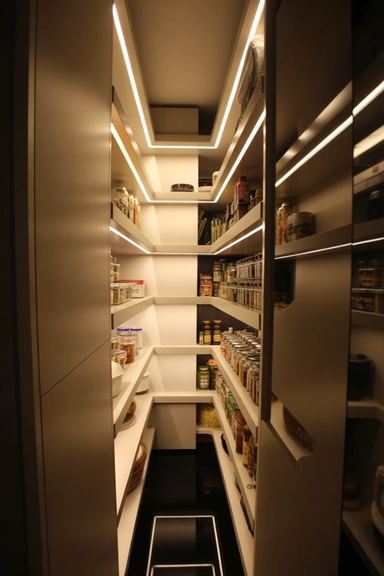
Bad lighting makes a narrow pantry feel worse than it is. Shadows hide items, and suddenly half your stuff feels invisible.
Good lighting fixes that fast. When everything is clearly visible, you spend less time searching and more time actually using the space.
Here’s what works:
- LED strip lights: along shelves or ceiling for even brightness
- Front placement: stops shadows behind jars and containers
- Motion sensor lights: turn on automatically when you walk in
If lighting is uneven, you will ignore darker spots without realizing it. Then those areas slowly turn into clutter zones.
Once the space is properly lit, the pantry feels bigger, cleaner, and easier to manage.
Sliding Door Entrances That Save Space
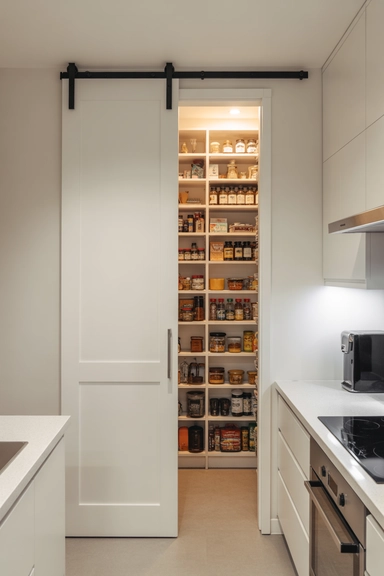
A tight pantry entrance gets worse when the door swings into your space. You open it, and suddenly your movement is blocked. Not ideal when your hands are full.
Sliding or pocket doors solve that. They keep the entry clear and make it easier to walk in and out without adjusting your position.
What makes a difference:
- Sliding doors: no swing, no wasted space
- Wider opening feel: easier access when carrying items
- Cleaner look: blends better with the kitchen
Inside, keep things visible right from the entrance. If you can see key items immediately, you spend less time searching.
Small change, but it improves flow every single day.
Vertical Basket Systems for Flexible Storage
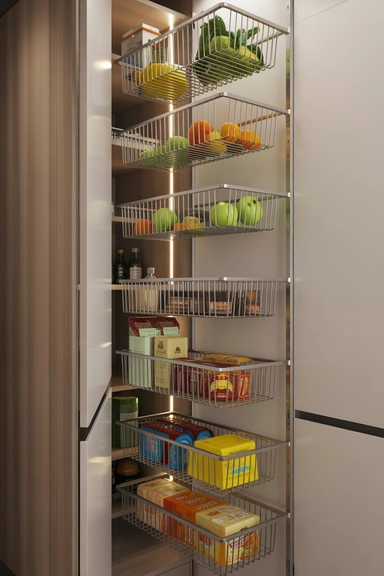
Loose items spread fast in a narrow pantry. One day it looks fine, next day everything is mixed and hard to find.
Vertical baskets fix that by keeping categories contained. You drop similar items in one place, and they stay there instead of drifting across shelves.
Best way to use them:
- Mid level baskets: snacks, daily items, quick grab stuff
- Upper baskets: extra stock or overflow items
- Pull out baskets: easy access without reaching deep inside
Wire or open baskets work better because you can see what’s inside. No guessing, no digging.
Once items stay grouped, the pantry becomes easier to manage and quicker to reset after shopping.
Long Narrow Pantry Layouts With One Deep Storage Zone
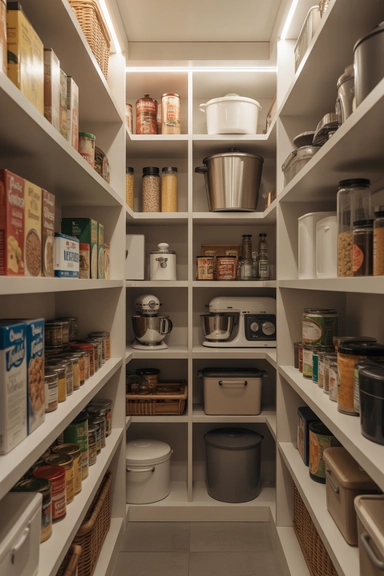
Trying to keep everything shallow sounds smart, but in very tight pantries it can limit how much you store. You need some depth, just not everywhere.
A better move is to create one dedicated deep zone. Usually at the far end or a lower corner. That’s where bulk items, appliances, or large containers go.
Keep the rest of the pantry shallow so daily items stay visible and easy to grab.
Simple layout:
- Deep zone: bulk goods, large containers, appliances
- Shallow shelves: everyday items you use often
This way, you don’t lose capacity, and you don’t ruin accessibility either.
When depth stays controlled in one area, the pantry feels organized instead of crowded.
Narrow Pantry Counter With Under-Shelf Drawers
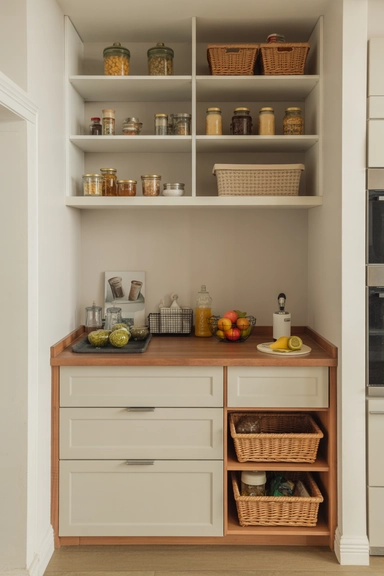
A narrow pantry feels limited until you add a small counter. Even a slim one gives you a spot to sort groceries or place items instead of stacking everything on shelves.
Drawers below the counter make a big difference. You can store heavier items without bending too much or digging through deep shelves.
Keep it simple:
- Countertop: quick drop zone while organizing
- Drawers below: snacks, flour, packaged items
- Shelves above: everyday items you want visible
This setup works because it adds function, not just storage. You start using the pantry as part of your routine instead of treating it like a storage corner.
Back-of-Door Storage That Adds Extra Capacity
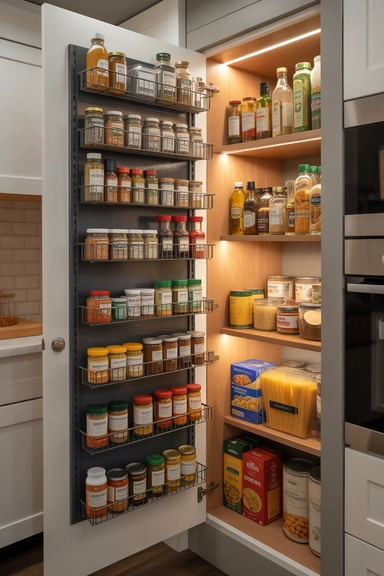
Most pantry doors do nothing. That’s wasted space, especially in a tight layout.
Add slim racks or shallow baskets to the back of the door. You get extra storage without touching your shelves or walkway.
Use it smartly:
- Door racks: spices, packets, small jars
- Light items only: avoid heavy stuff that strains hinges
- Clear or labeled bins: keeps things easy to spot
When the door opens, everything should be visible in one glance. No digging, no guessing.
Ignore the door, and you’ll keep fighting for shelf space → over the door storage ideas you → over the door storage ideas will regret not using sooner
Consistent Containers That Reduce Visual Clutter
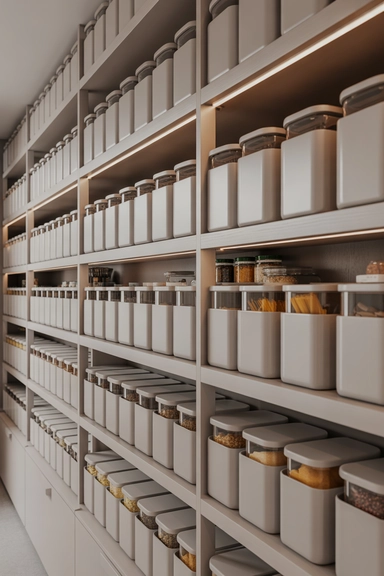
I used to think containers were just for looks. Then I realized most of my clutter came from packaging, not the actual items. Different box sizes and half-open bags made it hard to see what I had, so I kept buying duplicates.
When I switched to matching containers, the real benefit was visibility. I could check stock in seconds and stop guessing. That alone saved money and reduced waste.
Here’s what actually makes a difference:
- Clear containers: I can instantly see quantity, so I know when to restock
- Uniform sizes: shelves fit more without awkward gaps or stacking
- Labels: I don’t mix items, which keeps categories clean long term
One practical tip. I only transfer high-use items like flour, rice, and snacks. Everything else stays in original packaging. This saves time and avoids unnecessary work.
Since I set this up, I spend less time reorganizing and more time just using the pantry. It stays consistent without constant effort, which is what you actually want.
Narrow Walk-In Pantry Lighting Along Both Sides
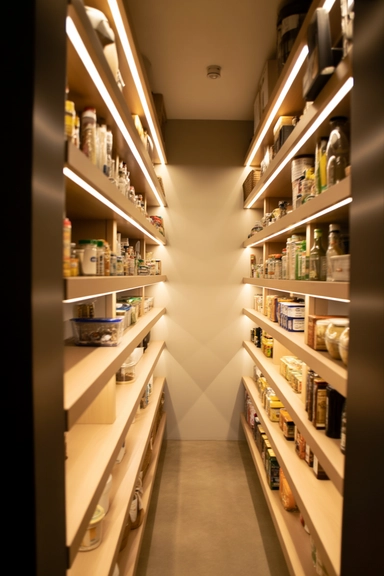
I used to rely on one ceiling light, and honestly, half my pantry stayed in shadow. The back corners? Completely ignored. That’s where things expired without me noticing.
Once I added lighting along the sides, everything changed. I could see every shelf clearly, and I stopped missing items during daily use.
Here’s what actually works:
- LED strips under shelves: light hits items directly, not just the floor
- Side lighting: removes shadows from both sides
- Motion sensors: lights turn on instantly when I walk in
One thing I noticed. If a section looks dark, I naturally avoid it. Over time, that area becomes cluttered without me realizing it.
After fixing the lighting, I started using the entire pantry evenly. Nothing gets forgotten, and I waste less food. Small upgrade, but it makes a big difference in daily use.
Adjustable Shelving That Evolves With Storage Needs
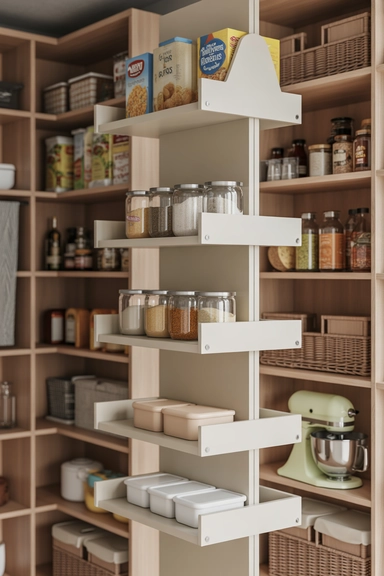
I learned this the hard way. My pantry worked fine at first, then my grocery habits changed and suddenly nothing fit right. Tall bottles had no space, and smaller items wasted shelf height.
Adjustable shelves fix that problem. I can move things up or down depending on what I actually store instead of forcing everything into a fixed layout.
Here’s how I use it:
- Mid shelves: daily items I need quick access to
- Upper shelves: overflow or less-used items
- Flexible spacing: adjust based on item height, not guesswork
One thing that helped me a lot. I stopped setting shelves once and forgetting them. Now I tweak them every few weeks based on what I buy.
This keeps the pantry working instead of becoming outdated. I don’t fight the space anymore, I just adjust it.
Narrow Pantry Workflow That Supports Daily Cooking
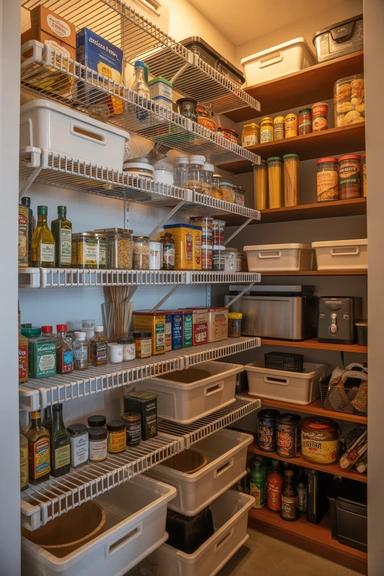
I used to organize my pantry by category only. Looked neat, but it slowed me down every time I cooked. I had to reach, search, and move things around just to grab basics.
What worked better was organizing based on how I actually cook. The items I use daily now sit right in front, easy to grab without thinking.
This is how I set it up:
- Near entrance or mid level: daily items like oil, spices, snacks
- Deeper shelves: items I don’t use often
- Upper shelves: backup stock or rarely touched ingredients
I also check the layout every few weeks. If something starts getting used more, I move it forward. No point keeping a “perfect” system that doesn’t match real use.
Once the pantry follows your routine, everything feels faster. You stop rearranging and just use it naturally.
Conclusion
I thought my pantry problem was space. It wasn’t. It was how I set it up.
Once I fixed the layout using a few narrow walk-in pantry ideas, everything got easier. I stopped digging for items, stopped overbuying, and stopped reorganizing every few days.
The main thing that worked? Keeping it simple. Easy to see, easy to reach, easy to put back.
If your pantry still feels messy, don’t overcomplicate it. Fix the layout first.
Ignore it, and the clutter just comes back → pro organizing hacks to declutter your space before it gets worse