
Introduction
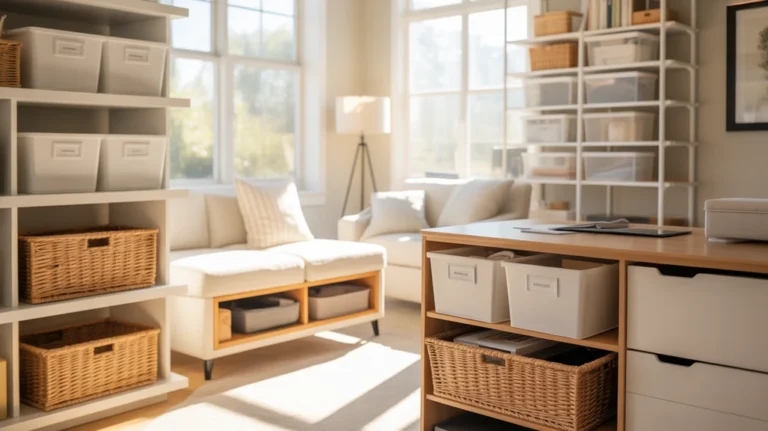
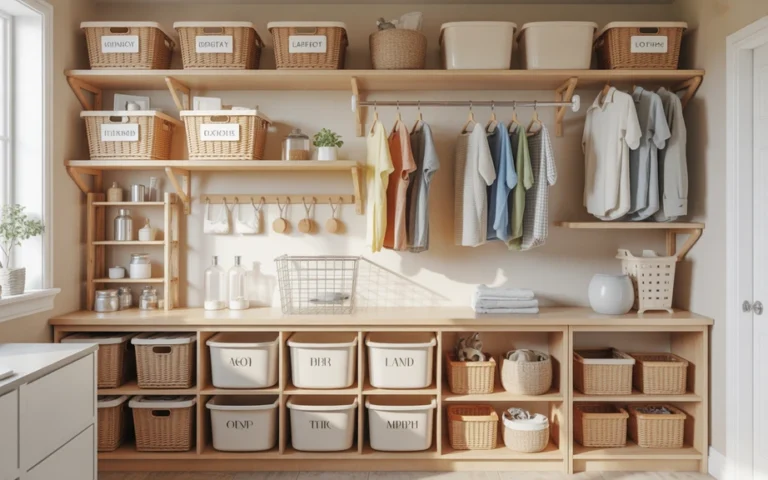
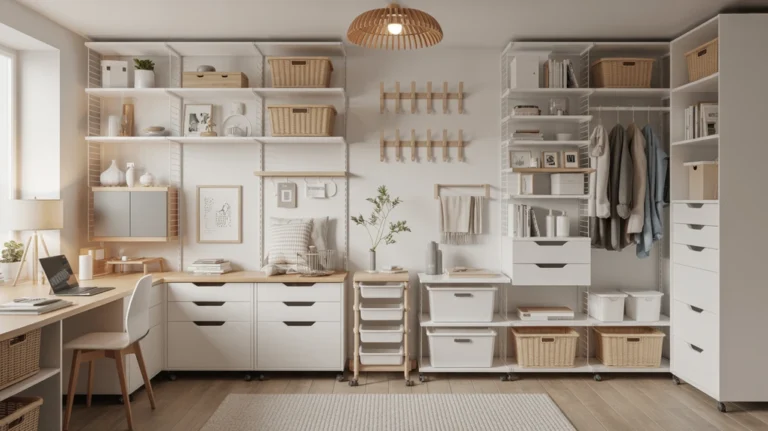
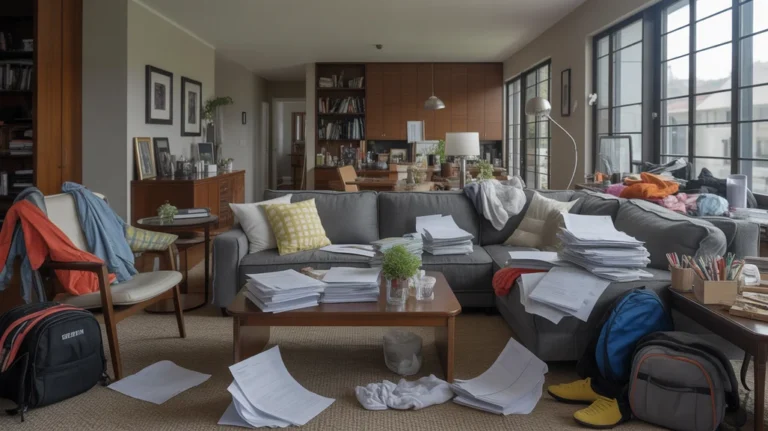
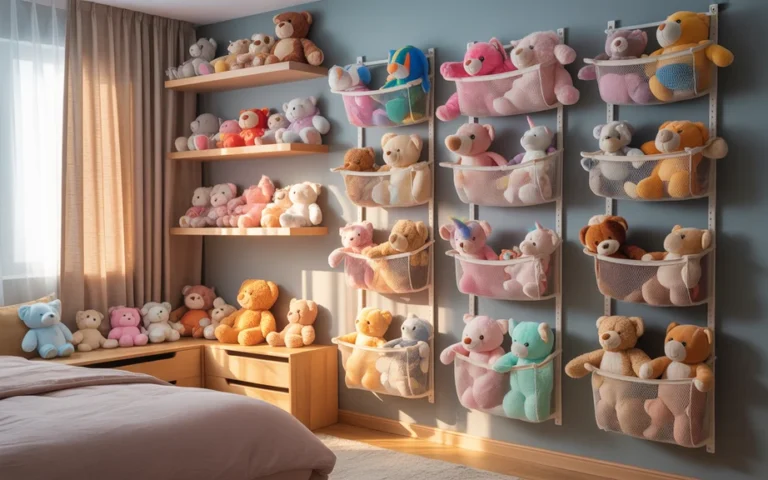
Wall organizer ideas are most effective when they reduce pressure on horizontal surfaces rather than simply adding more storage. Many homes feel cluttered not because they lack space, but because everyday items accumulate on desks, counters, and floors with no clear vertical system to support them. When walls are used intentionally, storage becomes visible, accessible, and easier to maintain. Well-planned wall organization shifts clutter upward, freeing surfaces for actual use. This approach mirrors the principles behind 21 Clever Hidden Storage Ideas for a Clutter-Free Home, where storage supports daily habits instead of competing with them.
1. Wall-Mounted Shelving for Everyday Essentials
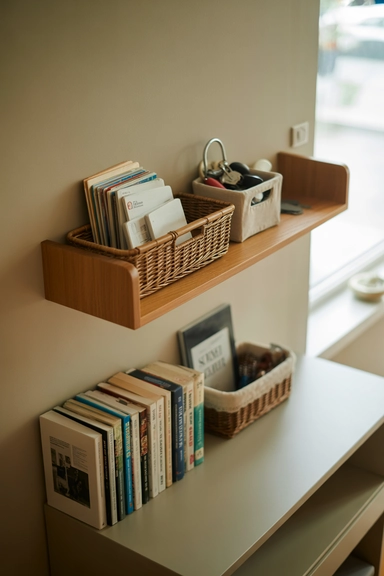
Wall-mounted shelving works best when it replaces surface storage rather than duplicating it. Instead of adding shelves purely for display, these shelves should hold items that regularly end up on tables or countertops. Everyday objects like mail trays, small baskets, or frequently used books benefit from vertical placement because they remain visible without occupying work surfaces. The key is shallow depth, which prevents shelves from becoming clutter collectors that visually overwhelm the wall.
Placement matters just as much as purpose. Shelves positioned at natural reach height reduce friction, making it easier to return items after use. When wall-mounted shelving is treated as functional infrastructure rather than decor, it supports cleaner surfaces and more predictable organization. Over time, this consistency is what keeps clutter from migrating back onto desks, consoles, and countertops.
2. Pegboard Systems for Flexible Wall Storage
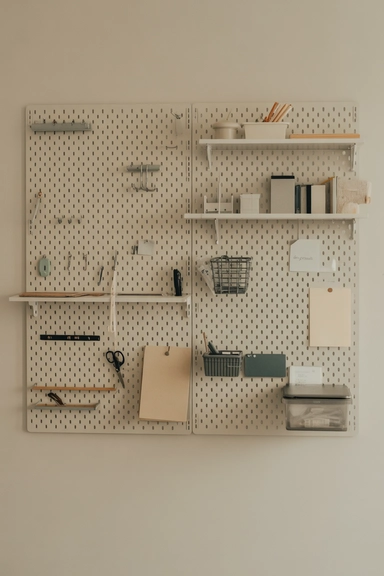
Pegboards are effective wall organizer ideas because they adapt as needs change. Unlike fixed storage, pegboards allow hooks, baskets, and shelves to be rearranged without new hardware. This flexibility makes them ideal for spaces where routines evolve, such as home offices, craft areas, or entryways. By keeping tools and accessories visible, pegboards reduce the habit of setting items down on nearby surfaces and forgetting them.
The most successful pegboard setups avoid overcrowding. Leaving negative space between elements preserves clarity and prevents visual noise. Grouping items by task rather than size also improves usability. When pegboards are planned intentionally, they function as dynamic storage that absorbs daily clutter instead of allowing it to spill onto surrounding surfaces.
3. Wall Organizers with Integrated Hooks and Bins
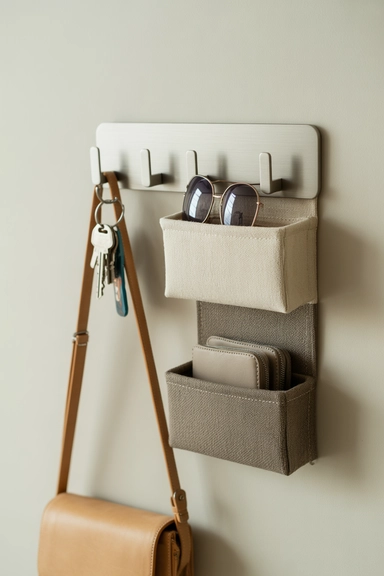
Wall organizers that combine hooks and bins are particularly effective in high-traffic zones where clutter accumulates quickly. Hooks handle items that need fast access, such as bags, keys, or headphones, while bins manage loose objects that would otherwise scatter across surfaces. This dual function reduces the need for trays or bowls on tables, keeping those areas clear and usable.
Balance is critical for these systems to work long term. Hooks should not be overloaded, and bins should have defined purposes to prevent random dumping. When integrated organizers are sized appropriately for the space, they act as landing zones that stop clutter at the wall before it reaches furniture surfaces.
4. Vertical File Organizers for Paper Control
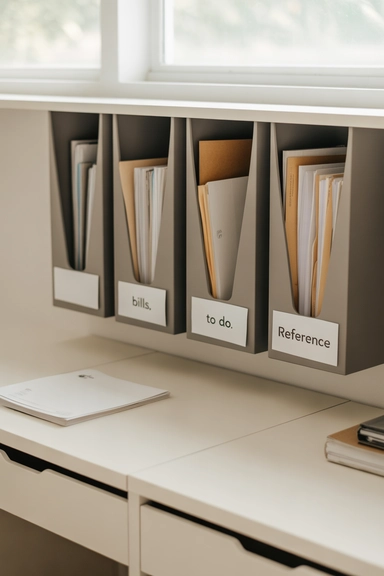
Paper clutter is one of the most common reasons surfaces become unusable. Vertical file organizers mounted on the wall keep documents visible and sorted without taking up desk space. Bills, forms, and reference papers stay accessible while remaining off work surfaces, which immediately improves visual order. This approach is especially useful in kitchens or home offices where paper tends to pile up quickly.
Clear labeling and limited categories are essential for success. Too many sections encourage overfilling, which defeats the purpose. A simple, vertical paper system supports surface clarity by giving documents a defined home that does not compete with daily work areas.
5. Wall-Mounted Baskets for Loose Items
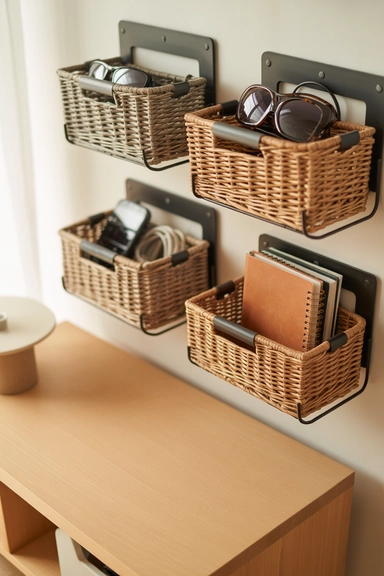
Wall-mounted baskets are ideal for controlling small items that frequently end up scattered across surfaces. Items like sunglasses, chargers, notebooks, or mail can be grouped into baskets positioned near where they are used. This keeps essentials within reach while preventing them from occupying tables, counters, or shelves meant for other functions.
The key to maintaining order with wall baskets is restraint. Each basket should serve a narrow purpose, avoiding mixed-use clutter. When baskets are used intentionally, they act as soft containment zones that absorb everyday mess before it spreads across the room.
6. Wall Rail Systems for Adjustable Storage
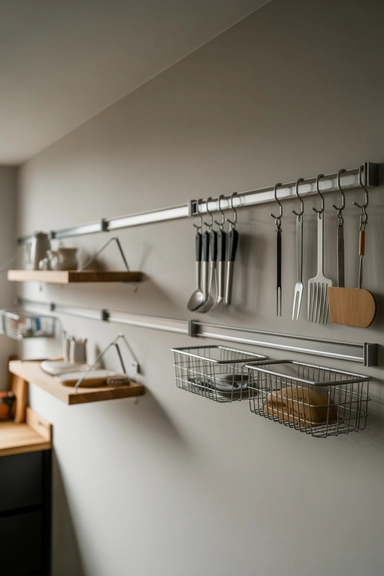
Wall rail systems are effective because they allow storage to evolve without redesigning the entire wall. Rails act as a backbone, supporting hooks, shelves, and containers that can be repositioned as routines change. This flexibility helps prevent clutter from returning to surfaces when needs shift. Items stay suspended and visible, which reduces the habit of setting things down temporarily and never moving them back.
Rail systems work best when limited to essentials rather than everything at once. Overloading rails creates visual clutter and weakens their purpose. When used intentionally, wall rails function as adaptable storage that absorbs daily activity while keeping desks, counters, and side tables consistently clear.
7. Wall Organizers for Entryway Drop Zones
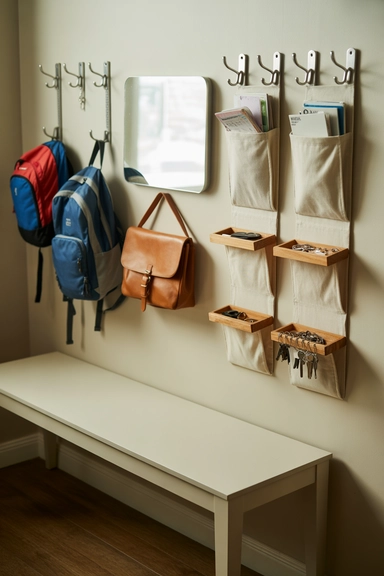
Entryways are prime clutter zones because they handle constant transitions. Wall organizer ideas work especially well here by intercepting items before they reach consoles or floors. Hooks for bags and jackets, paired with slim wall-mounted pockets, give each item a predictable landing spot. This structure keeps surfaces clear and improves daily flow in and out of the home, similar to the behavior-based systems found in 21 Closet Decluttering Hacks for a More Organized Space.
Height placement is critical in entryways. Organizers should align with natural reach points for adults and children, reducing friction and encouraging consistent use. When entryway storage is easy to use, clutter stops at the wall instead of spreading throughout the space.
8. Magnetic Wall Organizers for Small Essentials
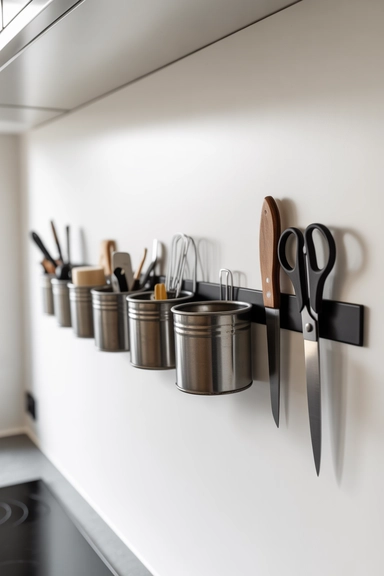
Magnetic wall organizers are ideal for controlling small items that often migrate across surfaces. Mounted strips or panels can hold metal containers, tools, or accessories without taking up shelf space. This approach works particularly well in kitchens, offices, or utility areas where small objects are used frequently and need quick access.
The advantage of magnetic systems lies in visibility and speed. Items are immediately accessible and easy to return, which reduces surface buildup. When magnets are used selectively rather than excessively, they provide controlled storage that feels light and unobtrusive while still keeping essentials organized.
9. Wall-Mounted Cabinets with Shallow Depth
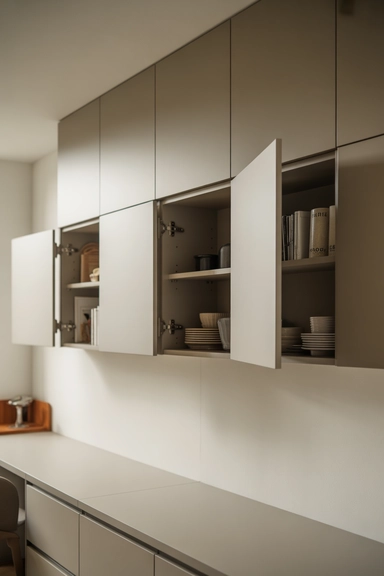
Shallow wall-mounted cabinets offer enclosed storage without dominating the room. Because they do not project far from the wall, they prevent visual heaviness while still absorbing clutter that would otherwise sit on surfaces. These cabinets are especially useful for items that benefit from concealment but still require frequent access, such as electronics, office supplies, or household paperwork.
Interior organization determines long-term success. Without internal structure, shallow cabinets can become compressed clutter zones. When shelves or small bins are used thoughtfully, these cabinets support surface clarity while maintaining a clean, streamlined wall profile.
10. Open Grid Wall Systems for Visible Organization
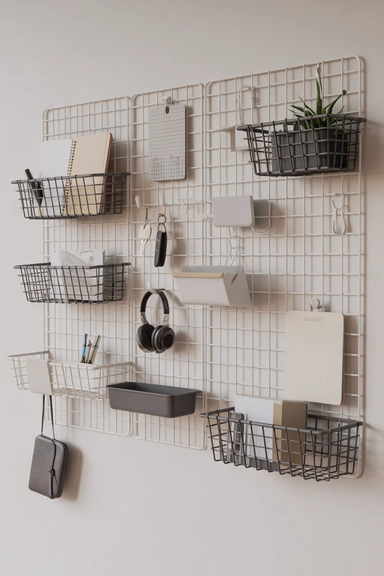
Open grid wall systems provide structure without enclosure, making them effective for areas where visibility matters. Grids allow accessories, baskets, and hooks to be added while keeping the wall visually light. This transparency discourages overloading and helps maintain order over time, since clutter is immediately noticeable rather than hidden.
Grids work best when zones are clearly defined. Grouping items by function prevents random accumulation. When used intentionally, open grid systems support daily routines and keep surfaces free by offering a visible, flexible alternative to tabletop storage.
11. Wall-Mounted Mail Organizers for Paper Flow
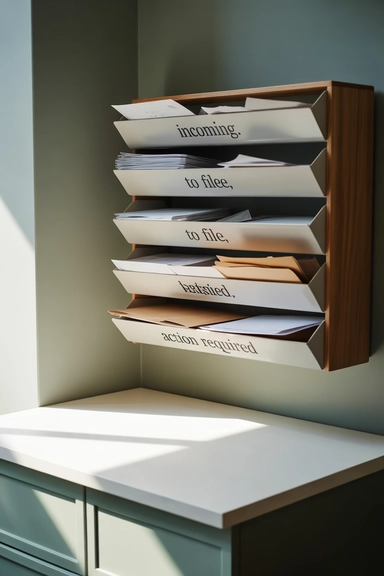
Mail is one of the fastest ways surfaces become cluttered, especially in kitchens and entryways. Wall-mounted mail organizers work by giving paper a vertical path instead of a horizontal one. Incoming mail, documents, and reminders are sorted immediately rather than stacked on counters or tables. This keeps surfaces usable while ensuring important papers stay visible and actionable.
The most effective mail organizers limit capacity. Too many slots encourage backlog, which recreates clutter in a different form. A small number of clearly defined sections supports daily processing habits. When paper has a clear vertical system, it stops spreading across surfaces and becomes easier to manage consistently.
12. Wall Organizer Ideas for Home Office Setups
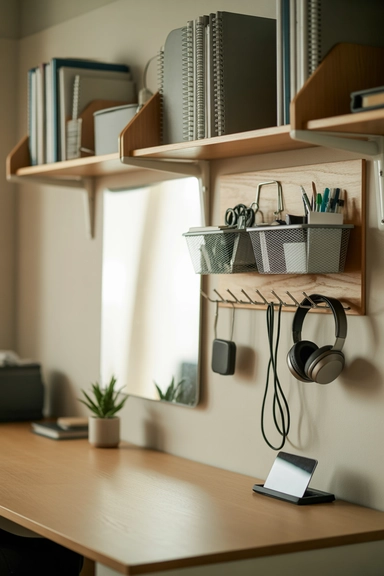
In home offices, wall organizer ideas help preserve desk space for actual work. Items such as notebooks, headphones, reference materials, and small tools often end up crowding desktops when vertical storage is missing. Wall-mounted organizers shift these items upward, keeping them accessible without interfering with workflow. This improves both focus and visual calm.
Successful office wall organization relies on proximity and purpose. Organizers should sit within arm’s reach of the desk and serve specific functions. When wall storage supports the tasks performed at the desk, surfaces remain clear and the workspace stays efficient throughout the day.
13. Wall Storage Panels for Craft and Hobby Areas
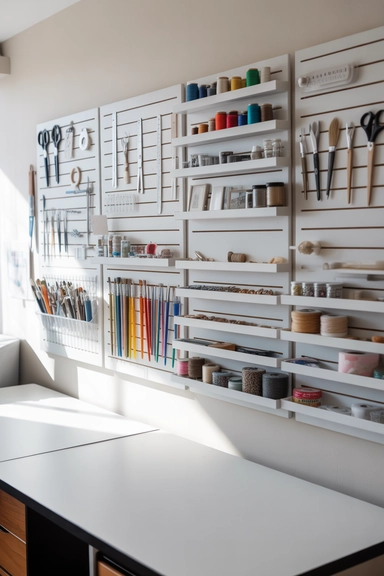
Craft and hobby spaces generate constant movement of tools and supplies, which quickly overwhelm flat surfaces. Wall storage panels provide a structured way to keep materials visible and reachable without spreading across tables. By assigning tools to the wall, work surfaces stay open for active projects rather than becoming permanent storage zones.
Panels should be arranged by workflow rather than category alone. Frequently paired tools should live close together, reducing friction during use. When wall storage supports the natural rhythm of creative work, clutter is contained vertically and surfaces remain usable even during busy sessions.
14. Slim Wall Organizers for Small Rooms
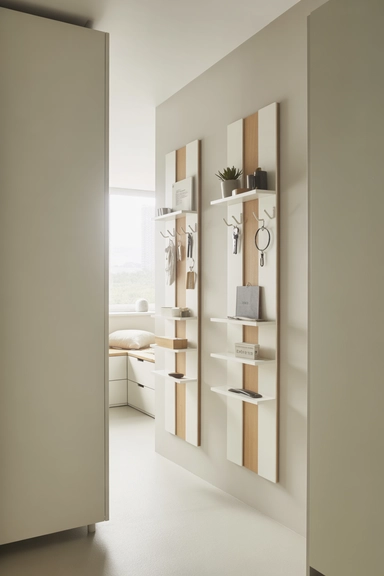
In small rooms, every surface counts, and bulky furniture often creates visual congestion. Slim wall organizers offer storage without consuming floor or tabletop space. Their shallow profile allows essentials to be stored vertically while maintaining openness. This is especially effective in bedrooms, bathrooms, or narrow hallways where surface space is limited.
To stay effective, slim organizers must be curated carefully. Overloading them defeats their purpose. When used selectively, they provide just enough storage to keep daily items off surfaces, helping small rooms feel lighter, more functional, and easier to maintain.
15. Wall Organizers with Hidden Compartments
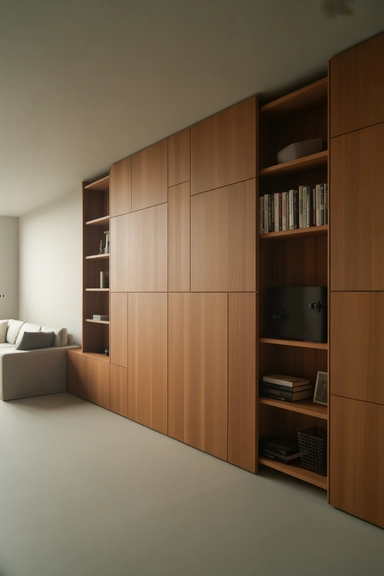
Hidden wall organizers balance surface clarity with visual simplicity. These systems conceal clutter behind panels or doors, preventing everyday items from becoming visual noise. They are ideal for spaces where aesthetics matter as much as function, such as living areas or shared rooms where exposed storage may feel overwhelming.
Internal structure is essential for these organizers to work long term. Without compartments or guides, hidden storage becomes a dumping ground. When thoughtfully designed, hidden wall organizers absorb clutter discreetly while allowing surfaces to remain clean and visually calm.
16. Wall Organizer Ideas for Kitchen Work Zones
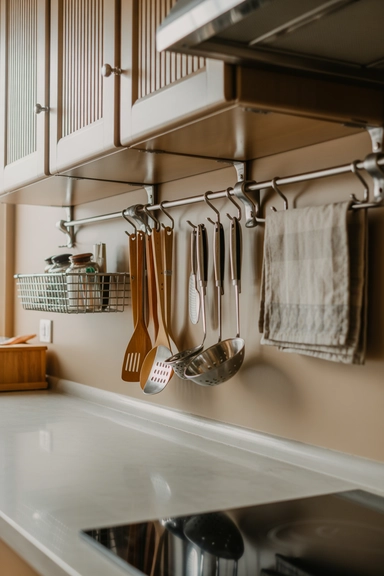
In kitchens, wall organizer ideas are most effective when they support specific work zones rather than general storage. Areas near prep surfaces benefit from wall-mounted holders for utensils, towels, or frequently used tools that otherwise end up on countertops. By assigning vertical homes to these items, work surfaces remain clear and easier to clean while still keeping essentials close at hand.
The key is restraint and placement. Organizers should sit just outside active prep space to avoid visual crowding. When kitchen wall storage aligns with how tasks are performed, it reduces surface buildup and supports smoother, more efficient routines throughout the day.
17. Wall Organizers for Bathroom Essentials
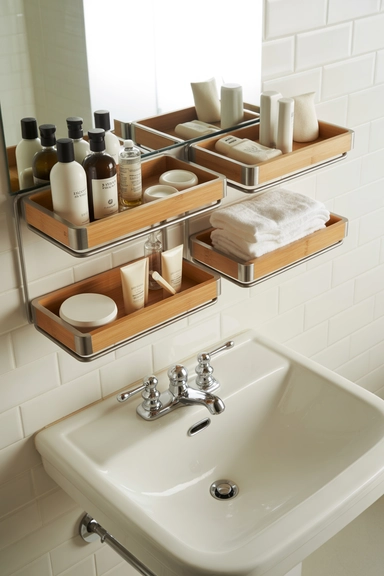
Bathrooms often suffer from limited counter space, making wall organization especially valuable. Wall organizers help relocate everyday items like toiletries, grooming tools, and towels off sinks and vanities. Vertical storage keeps these essentials accessible without competing for limited surface area, improving both function and visual order.
Moisture-resistant materials are essential for longevity. Organizers should be easy to clean and positioned where they do not interfere with movement. When bathroom storage moves to the wall, surfaces stay clearer and the space feels calmer and more intentional.
18. Wall Organizer Ideas for Children’s Spaces
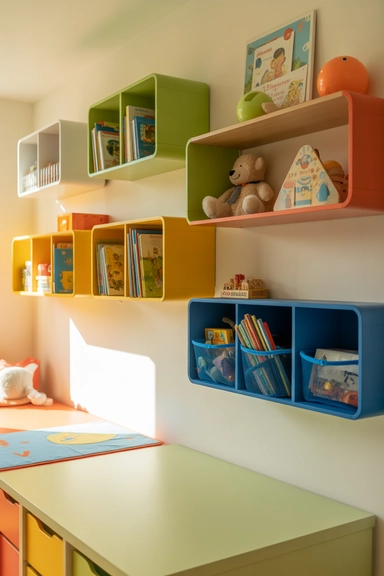
Children’s rooms and play areas generate constant clutter because items are frequently used and rarely returned. Wall organizer ideas help by giving toys, books, and supplies visible, reachable homes that do not rely on floor storage. When items live on the wall, cleanup becomes simpler and surfaces remain usable for play or study.
Accessibility is critical in these spaces. Organizers should be mounted at child-friendly heights to encourage independence. When wall storage supports autonomy, clutter is managed proactively instead of accumulating on desks, beds, or floors.
19. Wall-Mounted Organizers for Bedroom Storage
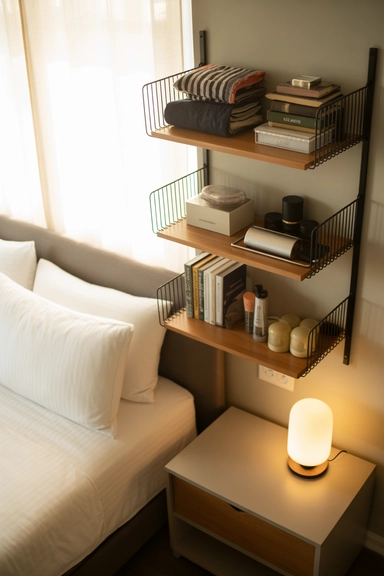
Bedrooms often accumulate surface clutter through items like accessories, books, and daily essentials. Wall-mounted organizers help relocate these items vertically, preserving nightstands and dressers for their intended use. This improves visual calm and supports better rest by reducing surface noise.
Placement should feel intentional rather than decorative. Organizers positioned near dressing or sleeping zones work best when they replace surface habits. When bedroom storage shifts to the wall thoughtfully, the room feels more spacious and easier to maintain.
20. Wall Organizer Ideas for Shared Living Areas
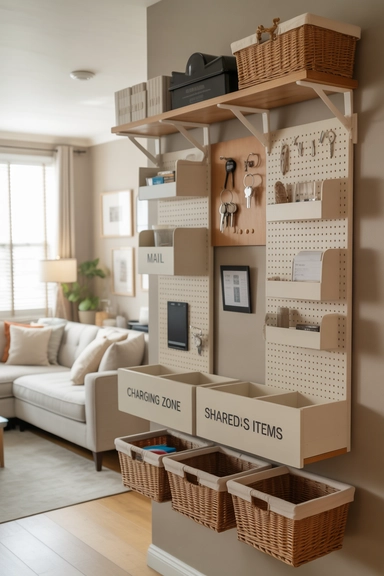
Shared spaces present unique challenges because clutter comes from multiple users. Wall organizer ideas help establish shared systems that keep items off communal surfaces. Hooks, pockets, or shelves assigned by function prevent items from spreading across coffee tables, consoles, or dining surfaces.
Clarity and simplicity matter most here. Overly complex systems break down quickly. When shared wall storage is intuitive and easy to use, it absorbs daily clutter without requiring constant oversight, keeping common areas cleaner and more functional.
21. Wall Organizers That Support Long-Term Maintenance
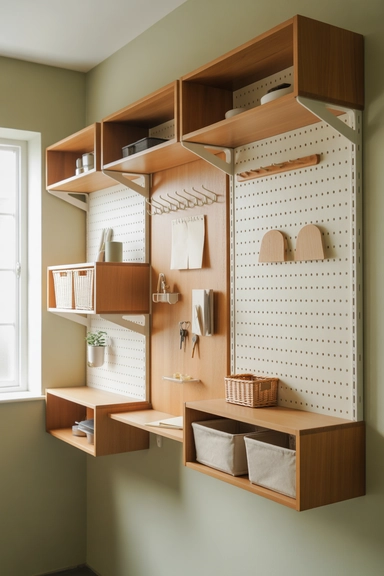
The most successful wall organizer ideas are those that remain easy to maintain over time. Systems that require constant adjustment or strict rules tend to fail. Wall storage should support natural habits, allowing items to be returned effortlessly without disrupting surrounding organization.
Flexibility plays a key role. Organizers that can adapt to changing needs prevent clutter from migrating back to surfaces. When wall storage balances structure with ease of use, it becomes a long-term solution rather than a temporary fix.
Conclusion
Wall organizer ideas are most effective when they reduce reliance on horizontal surfaces and align with everyday habits. By shifting storage upward, walls become functional tools rather than decorative afterthoughts. Thoughtful placement, limited capacity, and purpose-driven design keep clutter contained before it spreads. When wall organization supports how spaces are actually used, surfaces stay clearer, rooms feel calmer, and maintaining order becomes part of daily routine rather than an ongoing struggle.